
The digital world is growing faster than ever, and 2026 is shaping up to be the best year to start selling Digital Products to Sell. Whether you’re a student, working professional, freelancer, or someone looking to build a side income, digital products offer an easy and low-cost way to start earning online. The best part? You only create the product once, and it can be sold again and again—without any inventory, shipping, or physical work.
From AI-powered templates to online courses and automation tools, people across the world are buying digital products every single day to save time, learn new skills, or grow their businesses. With just a laptop and a little creativity, anyone can build a profitable digital shop. In this article, we’ll explore the top 15 digital products that will be in huge demand in 2026, along with tips, tools, and strategies to help you get started quickly and confidently.
Trends Shaping the Digital Product Market
- Artificial intelligence is transforming digital product creation, enabling creators to design templates, images, content, and automations faster and with higher quality.
- Learners are shifting towards micro-learning formats such as short courses, AI-assisted study modules, and modular knowledge packs that deliver faster results.
- Personalization has become a major customer expectation, with users preferring customizable templates, AI-powered recommendations, and niche-specific solutions.
- Subscription-based digital ecosystems—like communities, template clubs, and learning hubs—are outperforming one-time purchases due to recurring monthly revenue.
- Hybrid digital products that combine AI-generated tools with human expertise (e.g., AI templates + coaching calls) are gaining traction as high-value offerings.
Why Digital Products Are the Best Business Model
- Digital products eliminate the need for manufacturing, warehousing, shipping, or inventory management, which drastically reduces startup costs and operational headaches.
- Once created, the same digital file can be sold infinitely without any additional production cost, allowing creators to scale revenue without increasing workload.
- Creators can reach a global audience instantly, with customers able to purchase and download products 24/7 from anywhere in the world.
- Automation tools handle delivery, payment collection, onboarding, and updates, making it possible to run the business almost entirely on autopilot.
- Digital products are perfect for beginners and working professionals since they require minimal risks, offer flexible work hours, and generate passive income over time.
How to Choose the Right Digital Product to Sell
- Start by identifying a niche where people actively spend money to solve problems—such as productivity, business growth, AI tools, parenting, fitness, or education.
- Choose a product category that matches your strengths, whether it’s writing, designing, coding, teaching, consulting, or building AI-driven tools.
- Validate demand by analyzing keyword data on Etsy, Gumroad, Google Trends, YouTube searches, and competitor listings to ensure people want the product.
- Build a simple MVP version first to test audience interest, gather feedback, and refine the product before investing time into a full-scale version.
- Pick a product that has long-term scalability, meaning you can expand into bundles, subscriptions, add-on upgrades, or niche-specific variations.
List of Top 15 Best Digital Products to Sell in 2026
1. AI-Powered Notion Templates

AI-enhanced Notion templates are becoming extremely popular as individuals and businesses seek automated workflows for planning, project management, journaling, and productivity. These templates combine structured layouts with an AI prompt generator and smart AI prompts, making everyday work faster, clearer, and easier.
Creators who can blend aesthetics, automation, and real productivity value will lead this niche. Since these templates are fully digital, they offer high margins and infinite scalability. They can be sold on marketplaces, your own website, or bundled as subscription packs. As AI usage skyrockets, buyers are actively looking for smarter, ready-to-use templates to save time.
Tools Required
- Notion
- Canva / Figma for design
- ChatGPT or similar AI tools
- Gumroad / Lemon Squeezy for selling
- Screen recording tools for demos
Marketing Strategies
- Create short tutorial videos for Reels/YouTube Shorts
- Share productivity tips on LinkedIn and Twitter
- Offer one free template to build an email list
- Collaborate with productivity influencers
- Give limited-time discounts on bundle packs
Investment Needed: $0–$50
2. Digital Planners & Journals
Digital planners continue to trend among students, professionals, and digital note-taking enthusiasts. The demand will increase because more people will use tablets and styluses for daily planning, making digital planners one of the most in-demand Digital Products to sell. These planners can be designed for niches like fitness, finance, mental health, study planning, or business goals.
You can create themed bundles, seasonal planner packs, and yearly updates to generate recurring income. With attractive layouts and easy navigation, digital planners offer a smooth, modern alternative to paper planners.
Tools Required
- Canva / Affinity Designer
- iPad + Apple Pencil (optional)
- Goodnotes / Notability testing environments
- Etsy / Shopify for sales
- PDF editing tools
Marketing Strategies
- Show “before-and-after” productivity transformation posts
- Create TikTok/Instagram videos showing page-flip previews
- Collaborate with students and lifestyle influencers
- Run seasonal sales (New Year, academic year, Q1 reset)
- Use Pinterest for organic traffic
Investment Needed: $0–$100
3. Online Courses & Mini Workshops

Online courses remain one of the highest-earning digital products. Micro-courses and 60–90-minute paid workshops will dominate because people prefer fast learning instead of long programs. You can teach skills like coding, AI tools, editing, fitness training, language learning, or career development.
Courses can be sold on platforms like Udemy or Teachable, or directly through your own website for full control. The revenue potential is huge if you build a personal brand around your expertise.
Tools Required
- Teachable / Thinkific / Kajabi
- Canva for slides
- Screen recording & mic setup
- ChatGPT for script creation
- Payment gateway integrations
Marketing Strategies
- Offer free webinars to attract leads
- Post practical tips on YouTube and LinkedIn
- Build an email sequence for nurturing
- Collaborate with niche communities
- Use retargeting ads for warm audiences
Investment Needed: $50–$300
4. Print-on-Demand Digital Art
Print-on-demand (POD) lets you sell posters, illustrations, wall art, and merch without holding any stock. Minimalistic line art, AI-enhanced illustrations, and motivational wall prints will dominate customer demand, making POD artwork one of the most creative Digital Products to Sell. You just upload the digital artwork, and the POD platform handles production and shipping.
This business model is attractive because it combines creativity with passive income. Each design can generate recurring sales across multiple platforms like Etsy, Redbubble, and Amazon Merch.
Tools Required
- Procreate / Photoshop / Midjourney
- Canva for mockups
- Printful / Gelato / Redbubble
- Etsy seller account
- SEO tools for listing optimization
Marketing Strategies
- Showcase “real room mockups” on Pinterest
- Trend-spot on TikTok to create viral designs
- Use Instagram carousel previews
- Collaborate with interior designers or décor pages
- Run targeted ads for niche designs
Investment Needed: $0–$150
5. E-Books & Guides

E-books are one of the simplest but most profitable digital products to start in 2026. You can write guides on finance, self-improvement, health, productivity tools, AI skills, or niche-specific knowledge. They are easy to produce, update, and bundle, making them perfect for passive income.
Readers prefer short, actionable guides instead of long books, and this trend will continue. If you build authority on a topic through content, your e-books can become a consistent revenue stream.
Tools Required
- Google Docs / MS Word
- Canva for cover design
- KDP / Gumroad / Payhip
- Grammarly for editing
- Email automation tools
Marketing Strategies
- Publish snippets on LinkedIn or Twitter
- Run “$1 launch week” campaigns
- Offer free chapters to grow email subscribers
- Turn your e-book into a YouTube explainer for traction
- Use Amazon Kindle SEO
Investment Needed: $0–$50
6. AI-Generated Stock Photos
AI-generated stock images are becoming a major digital product category as businesses prefer unique visuals over generic stock photos. In upcoming time, brands will increasingly look for niche, hyper-specific, and diverse imagery for ads, websites, and social posts. Creators who can produce high-quality AI imagery with consistent styles will have a strong competitive advantage.
Selling AI stock photos on platforms like Adobe Stock, Shutterstock, or your own website offers passive income opportunities. With new AI models allowing stunning photorealism, this product will attract massive demand across industries.
Tools Required
- Midjourney / DALL·E / Stable Diffusion
- Photoshop or Lightroom for touchups
- Stock selling platforms (Adobe Stock, Shutterstock)
- Canva for mockups
- Cloud storage for organizing images
Marketing Strategies
- Share timelapse “AI image creation” reels
- Upload themed collections (fitness, corporate, aesthetic)
- Collaborate with graphic designers
- Offer bundles for specific industries
- Use Pinterest boards for traffic
Investment Needed: $20–$150
7. Website Templates (WordPress, Webflow, Shopify)
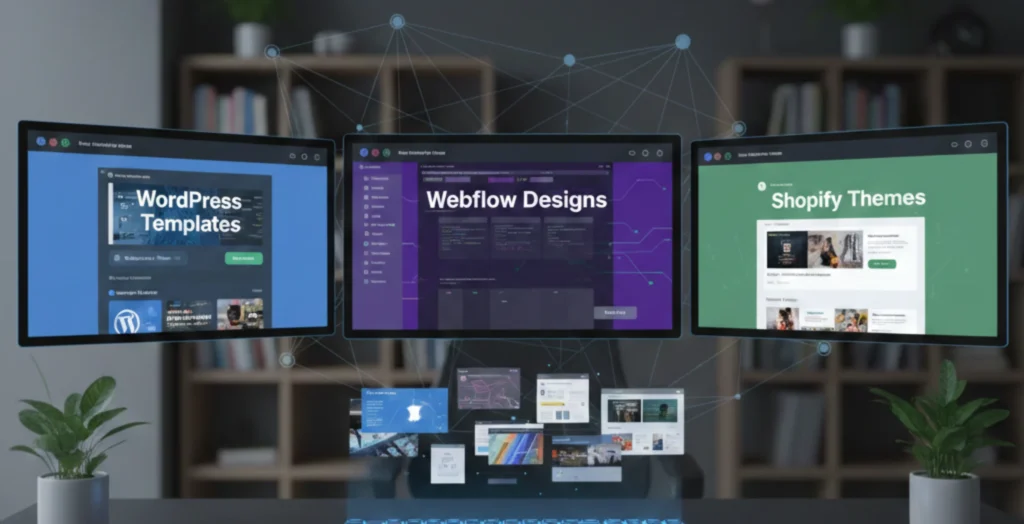
Website templates remain one of the most profitable digital products for creators with UI/UX or web development skills. The demand for clean, mobile-first, SEO-optimized templates with integrated AI chatbot functionalities will make website themes one of the most reliable Digital Products to sell. Selling templates ensures repeat sales because buyers need designs for portfolios, agencies, restaurants, coaches, and online stores.
Since templates are replicated and sold multiple times, margins are extremely high. Developers can also offer customizations as an add-on service, creating multiple income streams from a single product.
Tools Required
- Figma for design
- Webflow / WordPress / Shopify
- Elementor or Oxygen Builder
- Hosting for demo pages
- Marketplace accounts
Marketing Strategies
- Showcase template demos on YouTube
- Run targeted ads to small business owners
- Use SEO blogs to rank for “best templates” keywords
- Collaborate with digital agencies
- Offer launch-week discounts
Investment Needed: $50–$300
8. Mobile App UI/UX Kits
The App UX market will keep expanding as more startups and solo developers build mobile applications. Ready-made UI kits save them weeks of design time, making these kits highly valuable. Creators who can offer modern UI components, dark/light modes, and complete design systems will stand out.
These UI kits can be built for specific niches such as fintech, health, productivity, or e-commerce. Once created, the assets can be sold endlessly on platforms like UI8, DesignBundles, or your own portfolio site.
Tools Required
- Figma / Sketch / Adobe XD
- Icon sets & design assets
- Mockup generators
- Marketplace platforms
- Version control for updates
Marketing Strategies
- Share UI micro-interaction videos
- Publish case studies on LinkedIn
- Offer free components to attract designers
- Collaborate with app developers
- Build themed bundles to increase sales
Investment Needed: $0–$100
9. Membership Communities
Membership communities will continue thriving in 2026 because people want ongoing learning, accountability, and personalized guidance. These communities can focus on coding, fitness, business, finance, content creation, or any niche where you have expertise. Members usually pay monthly fees, making this a reliable recurring income stream.
You can offer exclusive content such as tutorials, templates, Q&A sessions, or a private discussion space. With consistent value, your community can grow into a loyal audience willing to support long-term.
Tools Required
- Discord / Circle / Slack
- Patreon or Memberstack
- Canva for content
- Google Meet / Zoom
- Email automation tools
Marketing Strategies
- Use free webinars to drive sign-ups
- Show testimonials and community success stories
- Share “behind-the-community” sneak peeks
- Offer early-bird pricing
- Post helpful short-form content daily
Investment Needed: $50–$200
10. Digital Music Packs & Sound Effects

With the growth of YouTube shorts, podcasts, and indie game development, the demand for copyright-free sound effects and music packs is exploding. This makes audio packs one of the most creative Digital Products to sell. Creators producing beats, ambient loops, transitions, and sound textures can earn consistently by selling digital audio packs. AI-assisted music generation tools will further empower musicians to scale their output.
These audio packs can be sold on platforms like AudioJungle, BeatStars, and Gumroad. Once uploaded, each sound asset becomes a passive income generator that requires no inventory or physical distribution.
Tools Required
- FL Studio / Logic Pro X / Ableton
- AI music tools
- AudioJungle / BeatStars accounts
- Studio headphones
- Audio mastering plugins
Marketing Strategies
- Upload sample reels on TikTok
- Collaborate with YouTubers and indie game developers
- Offer genre-specific bundles
- Create a portfolio website
- Run ads targeting content creators
Investment Needed: $50–$400
11. AI Chatbot Automations
AI chatbot automations are becoming essential for small businesses, creators, coaches, and service providers. In the upcoming time, companies will rely heavily on automated chat systems for lead-generation, customer support, booking management, and FAQ handling. Creating and selling pre-built chatbot workflows allows non-technical clients to plug-and-play automation without needing coding skills.
You can build niche-specific chatbot templates for real estate, fitness coaching, restaurants, digital agencies, and more. These can be sold as one-time purchases or subscription-based services, making it a scalable digital product with high profitability.
Tools Required
- ChatGPT / Claude / Dialogflow
- ManyChat / Botpress / Tidio
- Canva for visual guides
- Zapier for integrations
- Hosting platform for a landing page
Marketing Strategies
- Show “automation before vs after” case studies
- Target small businesses through Instagram ads
- Create explainer videos showing chatbot flows
- Offer free demo bots for trial
- Collaborate with SaaS founders and agencies
Investment Needed: $50–$250
12. Digital Printables for Kids & Education
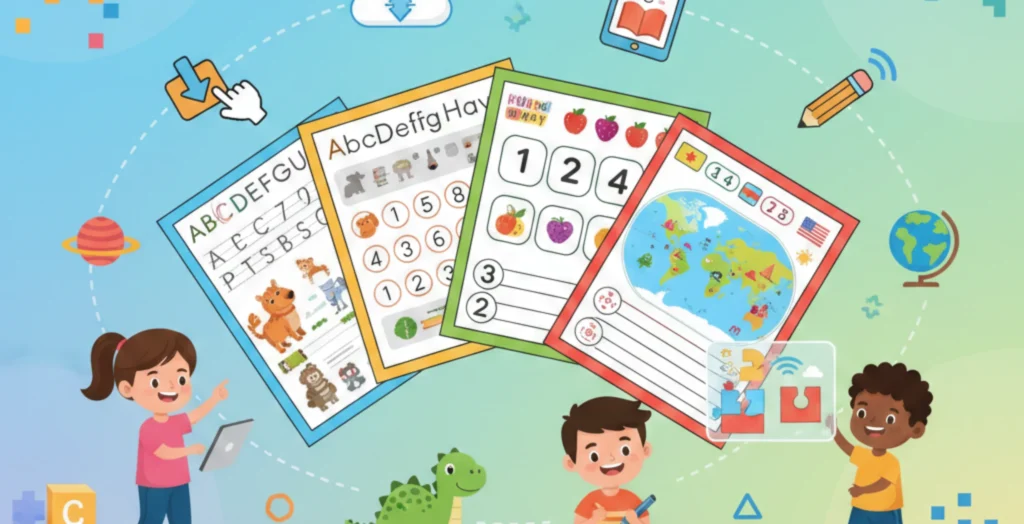
Educational printables—activity sheets, worksheets, flashcards, games, and learning kits—are a booming niche. Parents and teachers constantly search for engaging digital content that makes learning fun and interactive. Creators focusing on STEM, early learning, handwriting practice, and creative activities will see strong demand.
These printables can be bundled as monthly packs or themed collections like festive activities, math practice, or reading comprehension. They are easy to produce, require no physical inventory, and can generate recurring passive sales on platforms like Etsy.
Tools Required
- Canva / Adobe Illustrator
- PDF formatting tools
- Etsy or Gumroad store
- Tablet (optional for drawing)
- Keyword research tools
Marketing Strategies
- Share sample worksheets on Pinterest
- Create “kids learning hacks” content
- Run seasonal campaigns for holidays
- Collaborate with parenting influencers
- Offer free printable packs for email list growth
Investment Needed: $0–$100
13. Coding Scripts & Automation Tools
Ready-made scripts—Python automations, web scraping tools, Chrome extensions, data cleaning scripts, and productivity automators—will be extremely valuable in the coming year. As businesses adopt AI and automation, they will pay for tools that save time, reduce manual work, and improve accuracy. Developers can sell these scripts as one-time downloads or subscription-based utilities.
The best part is that once built, scripts can be resold unlimited times, making the model highly scalable. Non-tech customers especially love pre-built automation templates that require minimal setup.
Tools Required
- VS Code / JetBrains
- GitHub for hosting
- Gumroad / Lemon Squeezy
- API testing tools
- Documentation tools
Marketing Strategies
- Publish GitHub demos
- Create short tutorials on YouTube
- Partner with SaaS companies
- Offer custom automation services
- Run targeted search ads
Investment Needed: $0–$50
14. Virtual Coaching & Consulting Sessions

Virtual coaching continues to grow across niches like career coaching, fitness, personal finance, productivity, content creation, and business strategy. Customers prefer personalized guidance rather than generic information from online courses, making virtual coaching one of the most valuable Digital Products to sell. This makes 1:1 digital coaching a powerful and high-ticket digital product.
Coaches can offer one-time sessions, monthly subscriptions, or guided transformation programs. With strong branding and proven results, virtual coaching can become one of the highest-income digital products in the list.
Tools Required
- Zoom / Google Meet
- Calendly for scheduling
- Canva for worksheets
- Notion for client management
- Payment platforms like Stripe
Marketing Strategies
- Share client success stories
- Post value-packed short-form videos
- Offer mini-audit calls
- Build authority through LinkedIn
- Run webinars for lead generation
Investment Needed: $0–$100
15. NFT Membership Passes for Communities
NFT membership passes are evolving beyond collectibles and now function as digital keys for exclusive communities, perks, courses, or events. Businesses and creators will use NFT passes to offer token-gated access to premium experiences. This model adds scarcity, exclusivity, and resale value for members.
Creators can build membership ecosystems around learning platforms, investment communities, creative groups, or specialized skills. Once the system is established, revenue comes through both initial mint sales and secondary royalties.
Tools Required
- OpenSea / Rarible
- Metamask wallet
- NFT design tools (Figma/AI generators)
- Discord/Telegram community
- Smart contract tools (no-code or developer support)
Marketing Strategies
- Launch teaser campaigns
- Use community AMAs and live sessions
- Collaborate with web3 influencers
- Offer early-access perks
- Create a strong roadmap for holders
Investment Needed: $50–$500
Conclusion
In conclusion, exploring the best Digital Products to sell is one of the easiest and smartest ways to make money in 2026. There is a digital product category that suits your abilities, whether you are technical, creative, or just getting started. With the right idea, a little perseverance, and the tools covered in this article, you can build a successful online revenue stream from anywhere. The demand for digital products will continue to rise as technology evolves and consumers seek faster, smarter, and more convenient solutions. Start small, experiment, see what your audience loves, and scale your digital business step by step.
FAQs
How Much Money Can I Earn From Digital Products?
Your income depends on the quality of your product and your marketing efforts. Some creators earn a few hundred dollars a month, while others make thousands. The best part is that digital products can become passive income once set up.
Which Digital Product is The Easiest for Beginners?
Templates, digital planners, and simple e-books are great beginner-friendly options. They require very little investment and can be created using free tools.
Where Can I Sell My Digital Products?
You can sell on platforms like Etsy, Gumroad, Payhip, Shopify, or your own website. Many creators also sell directly through social media using link-in-bio tools.
How Do I Know if My Digital Product Idea Will Sell?
Do keyword research on Etsy, Google Trends, and YouTube. Look at what’s trending, what people are searching for, and what competitors are offering. If you see demand and low competition, your idea has potential.
Can I Use AI Tools to Create Digital Products?
Yes! AI tools like ChatGPT, Midjourney, and design assistants make it easier than ever to create content, images, templates, scripts, and automations. Just make sure your final product is unique and adds real value.