
If one thing in life is guaranteed, then there will always be laundry that needs washing. Going into the laundromat business in 2026 would be an absolutely genius decision if what you are seeking is a reliable, profitable business venture. Believe it or not, the success rate in the laundromat business stands at an astonishing 95%, an unheard-of number compared to any other business venture you can think of right now.
With the US industry valued at over $6.8 billion, the average owner can generate around $150,000 in annual revenue with the proper setup. This business is famously recession-proof because clean clothes are a necessity, not a luxury, regardless of the state of the economy. In addition, you can expect an annual return on investment (ROI) between 15% and 35%, making it a favorite for those who want their money to work for them. It is a community-focused venture that offers flexibility, steady cash flow, and long-term growth. In this article, we will explain everything you need to know to launch your own laundromat business plan. Read on!
What is a Laundromat Business?

A laundromat is a business that provides professional washing and drying machines to the public or specific commercial clients. Most laundromats are self-service, with clients paying to use the machines with coins, cards, or even mobile payments. A laundromat business mostly includes:
- Self-Service Hubs: Offering a clean and safe environment where people can use high-capacity washers and dryers to take care of their laundry needs.
- Wash-and-Fold Service: Providing a luxurious service where your staff can wash, dry, and fold clothes on a fee-for-service basis for the convenience of time-conscious professionals.
- Commercial Accounts: The processing of large orders of linens, towels, and uniforms for commercial establishments, for the purpose of generating a second income stream.
- Consumer Add-ons: Offering necessary products like detergents, softeners, snacks, or even coffee to consumers waiting in the showroom to increase the daily profit margins.
In addition to the basic function of cleaning clothes, the laundromat has also become a community hub where people meet and socialize while their clothes finish the washing cycle.
Why Laundromat Business is an Attraction for Entrepreneurs
This type of business provides its operators with a special combination of stability and simplicity, which is difficult to find in other retail business segments. Several individuals choose this business for the following reasons:
- Consistent Demand: One constant thing is that people will always require clean clothing, irrespective of the state of the economy. Therefore, this business is always busy throughout the year.
- Passive Income: After you have established your systems and equipment, your business can be virtually self-running and require little direct daily monitoring, unlike most other types of services.
- Low Labor Requirements: Unlike in restaurants and retail shops, you will not require a gigantic workforce to keep the business open and its machinery running efficiently.
- High ROI: The return on investment for your money is much higher when compared to the return one would get when investing in stocks and properties.
- Scalability Options: It is very easy to start with one small shop and grow into a multi-location empire once you understand the basic business model.
Why You Need a Laundromat Business Plan
Writing a business plan for a laundromat is the best way to ensure your vision becomes a profitable reality. Here are some reasons why this document is essential:
- Secures Funding: You must demonstrate to bankers and venture capitalists that you have a plan by writing it down and understanding your numbers.
- Clarifies Goals: This helps in specifying what you want in your first year and establishing milestones that you will follow in your future growth.
- Manages Risks: You get to identify risks, such as high utility bills or competitive forces, before you actually spend a penny from your savings.
- Marketing Map: It details how you will reach your very first customers and how you will retain them on a weekly visit to your shop.
- Financial Tracking: This enables you to track your actual earnings and compare them to your projections to determine if you are on target.
Laundromat Business Plan: Step by Step (2026)
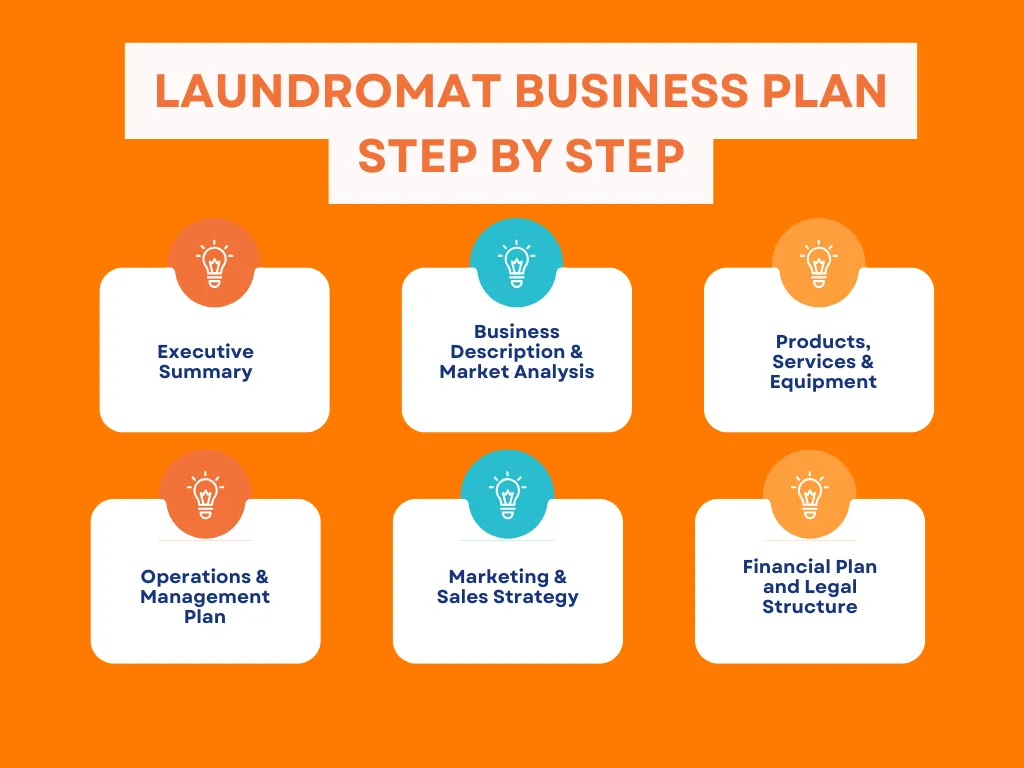
Building a successful laundry empire starts with a clear roadmap that covers everything from local demographics to your final financial projections. This guide breaks down the essential components of a winning laundromat business plan to ensure your shop is ready for a profitable launch in 2026.
Step 1: Executive Summary
The executive summary is the overall preparation for the whole business plan for the laundromat, and this is done last. This summary has to hook the reader with information regarding the mission, the location, and how the particular laundromat would be the success story in the area. This is kind of like the “elevator pitch” to show that the idea is the winning idea.
What it Includes:
- Mission Statement: It’s a one-sentence version of an elevator pitch that says who your company is and what it is all about.
- Competitive Edge: A description of what differentiates your laundry service from other laundromats in the neighborhood that consumers can currently use.
- Financial Summary: A brief review of your startup expenses and projected earnings for the first three years in business.
- Leadership Team: This section showcases who is behind the scenes running the business. Their experience will ensure the success of the company.
Step 2: Business Description & Market Analysis
This part of the laundromat business plan explores the “where” and “who” of the business. To the reader, you must demonstrate an awareness of the demographics of the area, including the proportion of rental versus property-owning residents, and an appreciation of the chosen location’s pedestrian traffic volume. It also explains the structure you have adopted for the business, seeking to shield your personal assets from risk, should the business fail.
What It Includes:
- Location Details: A detailed examination of the area, the amount of parking, and how close it is to your competitors.
- Target Market: Identifying exactly who your customers are, whether it is college students, apartment-dwellers, or large, busy families.
- Industry Trends: These include the latest technology that the industry has to offer, such as energy-efficient equipment and payment apps.
- Legal Entity: A statement on whether you are running your business as a sole proprietorship, a partnership, or a limited liability company (LLC).
Step 3: Products, Services & Equipment
It is here that you must enter into some detail as to what exactly it is that you are providing to the customer. Your laundromat business plan should include each one of these options, beginning with simply providing a facility in which one may do their laundry without much assistance, right through to top-of-the-line delivery and cleaning options, including dry cleaning. Not only this, but you should include exactly what kind of machines you plan to put into each location, so as to ensure that your expenses related to water and electricity remain as low as possible, through using only high-efficiency machines such as front-load and top-load.
What It Includes:
- Service Menu: An itemized list of all the services you provide, including wash-and-fold, drying only, and laundry supplies for resale.
- Equipment List: Detailed specifications regarding the number of washers and dryers needed to fulfill the demand of the local area.
- Pricing Strategy: It should clearly outline the pricing structure you will use in relation to the competition to ensure that you are always competitive.
- Technology Features: Emphasizing modern conveniences such as Wi-Fi connectivity, mobile payment options, and high-definition security cameras for consumers’ safety purposes.
Step 4: Operations & Management Plan
A successful shop requires efficient daily routines and defined roles for all the players. This section and explanation of the laundromat business plan are going to help the shop run efficiently on a daily basis. It is going to make sure your machines remain in the best condition, along with a clean environment for the customers.
What it Includes:
- Staffing Requirements: Whether you need to employ full-time attendants to assist customers and services of a cleaning staff visiting once a day.
- Maintenance Schedule: Ensures that the machines are checked and repaired before the peak weekend periods, when a breakdown would result in high maintenance costs.
- Safety Measures: Details about how you will ensure the safety of customers through the installation of security cameras and lights.
- Operating Hours: Determining the optimum hours of operation, whether this involves 24/7 hours or particular hours in the mornings and evenings.
Step 5: Marketing & Sales Strategy
It doesn’t work to throw open the doors and wait for patrons to materialize: you must plan effectively for how you will reach the community and get the word out about your business. Your business plan for the laundromat must address how you will reach potential customers both on and offline, including everything from social networking sites to specials for the customers you seek to attract for the grand opening.
What it Includes:
- Digital Marketing: Creating a simple website and maintaining your Google Business Listing to ensure you are listed in localized search results.
- Local Advertising: This can be done by utilizing physical media such as flyers, banners, and advertising in the local newspaper to reach people who are within walking distance.
- Loyalty Rewards: Developing schemes to ensure customers become regulars, such as punch cards with the reward of “buy ten washes, get one free.”
- Brand Identity: Creating an easily recognizable logo and a positive name of the company that customers will recognize and trust.
Step 6: Financial Plan and Legal Structure
Arguably, this is the most crucial aspect of your laundromat business plan for survival. You must forecast how you will generate revenues and expenses over the next three to five years to ensure that the math adds up. More importantly, you should itemize all the licenses needed to run the business as per the regulations of the local government to avoid being penalized.
What it Includes:
- Startup Costs: Complete list of all costs that must be incurred in the startup process, including the cost of all the equipment, plumbing, and even the starting marketing budget.
- Cash Flow: A breakdown of income and expenses on a month-to-month basis to make sure you have enough money to pay your bills.
- Break-even Point: Finding out how long it will take your business to repay the initial loan and actually turn a profit.
- Insurance Requirements: Ensuring that you have the necessary insurance to cover
damage to property, liability protection, and machinery failure.
How to Begin a Laundry Business at Home: Easy Step-by-Step Guide
Laundry businesses are always in demand because everyone needs clean clothes. However, if you are not ready or capable of operating a storefront business, you can begin by offering a service from home. Here’s how you can do so:
- Market Research: You may research whether your neighbors or local organizations within the community require assistance with washing, and at what rate.
- Legal Check: Ensure that your local zoning regulations and homeowner association standards permit the operation of a service business from a residence.
- Equipment Upgradation: Invest in a commercial washer/dryer with greater capacity than the usual washer/dryer found in a typical home.
- Service Menu: Determine whether you can offer your customers the complete pickup and delivery service or whether customers have to deliver their soiled clothes to you.
- Marketing Effort: To get your first few steady customers, utilize local Facebook groups, Nextdoor, or physical community boards.
- Financial Tracking: Make sure that all expenses related to running your business (for instance, laundry detergent or increased water usage) are kept totally separate from those of your household budget.
Laundromat Equipment Required when Starting the Business
Your machines are the lifeline within your business, and therefore, it is critical that you select the most appropriate machines for the job. This entails:
- Front-Load Washers: They consume less water and less detergent compared to top-loader machines. They also treat your customers’ garments better.
- Capable Stackable Dryers: These machines are ideal for organizations with little space, and even then require ample drying power.
- Change Machines: It is required if you are using a coin-operated system. It helps customers who have money with them.
- Laundry Carts: The cart assists customers in carrying heavy, dripping loads through the store without struggling or causing a mess.
- Folding Tables: It is necessary that you create enough clean and smooth spaces where individuals can accomplish their laundry chores before leaving.
Starting Costs for a Laundromat Business:
The start-up of a laundromat business plan is capital-intensive but has very high returns. The cost analysis for a standard 2,000 sq. ft. laundry is given below:
| Expense Category | Estimated Cost (Low) | Estimated Cost (High) | Description |
| Commercial Equipment | $150,000 | $350,000 | 20–30 high-efficiency washers and stackable dryers. |
| Lease & Security Deposit | $5,000 | $20,000 | First month’s rent plus security deposit for a prime location. |
| Renovations & Build-out | $50,000 | $150,000 | Plumbing, electrical upgrades, gas lines, and venting. |
| Payment Systems / POS | $5,000 | $15,000 | Card readers, mobile app integration, and coin changers. |
| Furniture & Signage | $3,000 | $10,000 | Folding tables, seating, and high-visibility outdoor signs. |
| Permits & Licensing | $1,500 | $5,000 | Impact fees, health permits, and local business licenses. |
| Initial Marketing | $2,000 | $7,000 | Grand opening ads, Google My Business setup, and flyers. |
| Working Capital | $10,000 | $30,000 | 3–6 months of cash for utilities and emergency repairs. |
| TOTAL Laundromat STARTUP COST | $226,500 | $587,000 | Variation based on equipment tech and local real estate. |
Is a Laundromat Business Profitable?
Yes, it certainly is one of the most profitable small business enterprises you can consider owning in today’s market. Here are some reasons behind it:
- High Margins: When you have paid off your machines, you are only spending money on electricity and rent, ensuring that you have high margins.
- Cash Flow: Since you get paid immediately when you deliver the service, you do not have to wait for customers to pay you.
- Value Adds: You can increase your earnings potently and with minimal effort by selling additional products such as snacks, drinks, and luxury soaps.
- Tax Benefits: The owners would be able to deduct their expensive equipment depreciation costs, thus saving them a substantial amount of taxes.
- Asset Growth: The business itself grows in value as you develop customers so that you can sell the business as an asset later on.
Legal Structure & Do You Need an LLC?
The decision of which legal path to pursue is an integral component of your business plan for a laundromat business. This entails:
- Liability Protection: LLCs protect your personal home, car, and money if your business is ever involved in litigation or owes funds.
- Tax Flexibility: Establishing an entity structure will enable you to control how you pay taxes so that you can save thousands of dollars in the process.
- Professional Image: Having “LLC” or “Inc” following your business name instills an immediate sense of trust when you go to banks, landlords, and equipment vendors.
- Easy Setup: It has become very easy and inexpensive to register your business online with only a few minutes in most states.
- Partner Options: Having a legal structure ensures that you easily establish partnerships with either investors or family members at a later stage.
Pros and Cons of Laundromat Ownership
The Pros (Why You Should Invest)
- Recession-Proof Demand: Clean clothes are a basic human requirement that guarantees a steady business no matter what economic conditions, because people stop spending on luxuries in a recession but don’t stop wearing clean clothes.
- High Success Rate: With a success rate of 95% over five years, this industry is much safer for start-ups than the restaurant or retail industry.
- Minimum Inventory Management: As compared to the retail business, you are not concerned with rotting food or seasonal inventory, since the core product is the utilization of the machine.
- Semi-Passive Scalability: After the establishment of your systems, the business can run on a semi-passive level, allowing you to continue your day job or open multiple locations.
- Instant Cash Flow: You will not have to collect receivables since customers pay for the service in advance of their use of your machines.
The Cons (The Challenges to Watch)
- Heavy Upfront Capital: The entry barriers are high, as commercial plumbing and energy-efficient equipment demand a heavy capital outlay, either initially or through loans.
- Unpredictable Maintenance: As your income source is solely dependent upon machines, a mechanical shutdown on a busy Saturday can easily translate into lost income.
- Increasing Costs of Utilities: You are highly exposed to changes in water, gas, and electricity costs, which can eat into your profit margins if the machines you are using are old.
- Safety and Vandalism Risk: When your shops are unattended, there is always a danger of vandalism or petty theft, which means that you will need to invest in top-notch security systems that monitor the shops remotely 24/7.
- High Competition: When operating in densely populated areas, be prepared for “price wars” from established laundromats, which may drive you to be more innovative with your laundry services and facilities.
Marketing the Laundromat Business
Getting people through the door is all about building visibility and a good reputation in the neighborhood. Here is how you can market your laundromat business plan:
- Social Media: Post pictures of your bright, modern laundry business to entice new customers who are fed up with dirty, outdated laundromats.
- Google Maps: Ensure that your store appears with the right hours and location when people look for “laundry near me” via their cell phone.
- Community Events: Sponsor a Little League team or a school event for the exposure of the business name to parents and families within the community.
- Referral Deals: You could offer a free wash or a discount to your loyal customers with every referral that tries out your service.
- Signage: Use vibrant and readable signs so that vehicles can easily identify your shop from a distance on the main road.
Conclusion
Opening a laundromat business plan in 2026 is a great way to leave a lasting legacy of riches while doing something that everyone in your surrounding area will need. Although the startup costs may seem prohibitive, the success rate and cash flow make it a very safe investment for the long-term future.
With a good business plan in place, you can ensure that your laundry business remains busy, clean, and lucrative for years to come. It is the perfect time to begin searching for locations and bringing your business vision to life!
FAQs
1. How much can a laundromat owner make each year?
The average annual profit earned by most laundromat owners ranges between $30,000 and $100,000 for a single store. This profit can increase significantly depending on the additional services provided by high-performing laundromats.
2. Do I have to be at the laundromat facility every day?
No, most modern laundromat owners are using remote monitoring systems and part-time staff, so the owner only needs to be at the facility a few times a week.
3. How many machines do I need to be successful?
To support a medium-sized shop, you can start with around 15 to 20 washers and an equal number of dryers to accommodate the heavy volume of customers on the weekends, so they won’t have to wait in line.
4. How long is it before you can break even on the investment?
This is typically two to three years for owners to realize a return on their investment, or sooner if you are providing high-demand services such as wash-and-fold.
5. Is a laundromat a recession-proof business?
Yes, because when a recession strikes, money is going to be a problem, but one thing is sure: the clothes won’t stop getting dirty. People who lose their own washer and dryer in their home because they can’t afford it may be forced to go to a laundromat.