
As long as Indian snacks are mentioned, the name Haldiram immediately comes to your mind. Since it started as a small bhujia shop in Bikaner, Rajasthan, Haldiram has come a long way to become one of the most valuable food empires in India. Understanding Haldiram’s net worth reveals how a traditional family-owned business evolved into a modern FMCG giant competing with brands worldwide.
The Haldiram net worth currently stands at an astonishing ₹83,000 crores, and it is one of the most successful Indian home-based brands. Such an amazing valuation can be attributed to decades of effort, innovation, and the relentless dedication to quality that have ensured Hadiram is a household name not only in India but also in 60+ countries worldwide.
Haldiram — The Snack Brand That Rules Every Indian Household
Ganga Bhishen Agarwal, whom we all fondly refer to as Haldiram Ji, began the brand in 1937 with a small sweet shop in Bikaner. When he launched his new product using moth flour instead of the traditional chickpea flour in his bhujia, it was an immediate success, hence marking the beginning of a snacking empire.
- Growth in India: Haldiram grew into Kolkata during the 1950s then into Nagpur in the 1980s and Delhi in the 1984. The family’s branches became the rulers of various parts of the country and formed a network in which manufacturing units, restaurants, and stores were established all over the country.
- Innovation and Modernisation: The Agarwal family introduced innovations in modern packaging for the snack sector in India through zip pouches, four-layer packaging, and a fully automated option for the manufacture of conventional snacks.
- International Presence: Haldiram exports to more than 60 countries today, including the USA, UK, Australia, Singapore, the Middle East, and New Zealand.
Updated Haldiram Net Worth (2026 — Latest Estimates)
However, to comprehend the Haldiram net worth, one should examine several aspects that contribute to the total valuation of the company:
Haldiram Net Worth & Revenue Breakdown (2026)
| Segment / Entity | Metric | Estimated Value (2026) |
| Total Group Valuation | Market Value | ~$10 Billion (₹84,000 Crore) |
| Annual Revenue | FY 2024-25 | ~₹12,800 Crore |
| Delhi Division | Annual Revenue | ~₹5,000 Crore |
| Nagpur Division | Annual Revenue | ~₹4,000 Crore |
| Bikaji (Bikaner) | Market Cap | ~₹1,600 Crore |
- Company Value: As of 2026, the Company is valued at ₹84,000 crore in Indian rupees.
- Brand Value: ₹2.15,000 crore as an independent amount.
- Temasek Investment: Temasek, a Singapore-based company, purchased more than 9% shares worth 10 billion dollars in 2026.
- Other PE Stakes: Alpha Wave Global and IHC bought 6% of shares together.
- Annual Operating Profit: About 200 million dollars (32) ( $200 million 0 ) (0.)
- Market Position: 13% of the ₹51,000 crore savoury snack market of India.
- Growth Rate: Growth in valuation by 72% in the last few years.
- Export Revenue: 60+ countries contribute significantly worldwide.
- IPO Plans: It may have a projected valuation of ₹93,500 crore on the way to the market.
The Haldiram net worth has been steadily increasing, and it is larger than most foreign fast-food restaurants operating in Indian.
Want to invest in Haldiram? Check Haldiram Franchise Cost in India.
Who Is the Owner of Haldiram?
Haldiram Owner Name(s)
It is majorly owned by the family of Agarwal, the descendants of the founder, Ganga Bhishen Agarwal. Its key stakeholders are Manohar Lal Agarwal and Madhusudan Agarwal (Delhi operations), who hold a 56% share, and Shiv Kishan Agarwal (Nagpur operations), who owns 44% in the new company Haldiram Snacks Food Private Limited (HSFPL).
On the promoter side, these three brothers still hold the family line but have introduced professional management and foreign investors, including Temasek, Alpha Wave Global, and IHC, which hold a combined 15% stake.
The Agarwal Legacy — Generations That Built the Haldiram Empire
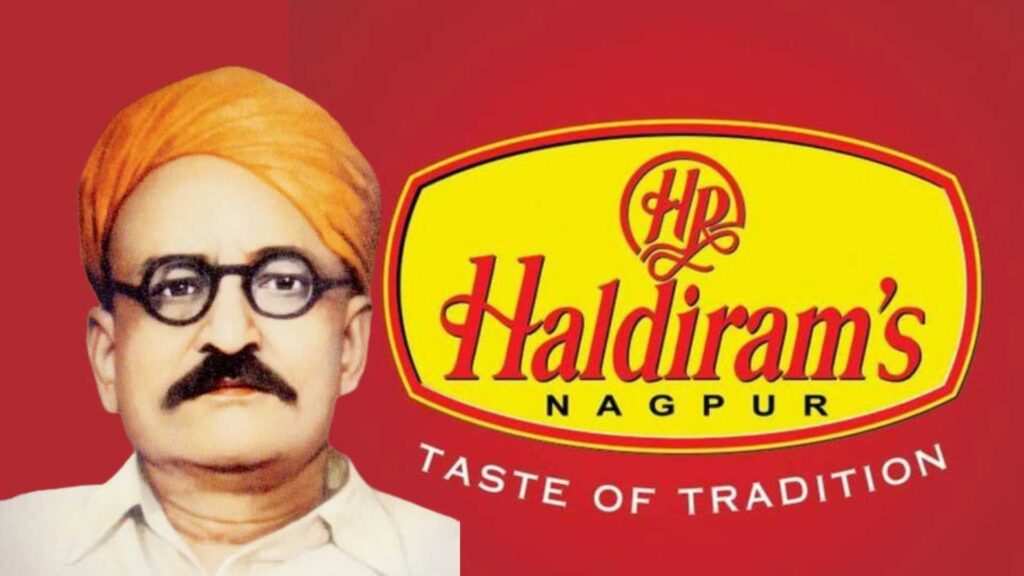
The Agarwal family has a 6-generation history that started with Ganga Bhishen Agarwal at Bikaner. His sons, Moolchand and Rameshwar Lal, went to Kolkata in the 1950s, with the business being taken to new heights by the grandson, a.k.a. grandsons. Its operations began in Nagpur in 1980 under Shiv Kishan Agarwal, who has established a strong presence in the western and southern markets.
Meanwhile, the operations in Delhi were initiated in 1984 by Manohar Lal and Madhusudan Agarwal, and later it became the highest revenue earner. Although still traditional in values, the family has adopted modern business approaches, thus overcoming family disagreements and territorial boundaries to become a recently formed common business entity.
Haldiram Owner Net Worth
Although the personal net worth of its individual members is not publicly available, the Haldiram net worth and brand valuation provide strong indications of the family’s wealth. The collective wealth of the entire family is enormous, with the Haldiram brand alone valued at 7,000 crore and the whole company valued at 10 billion dollars.
That the family still owns the majority stake (around 85 per cent) in the resulting merger is equivalent to high levels of personal wealth. Their humble life with great wealth hides their traditionalism. Still, their entrepreneurship has made them one of the most valuable food empires in India, making them one of the wealthiest business families in India.
Haldiram Turnover Year-by-Year
The trend of Haldiram’s net worth is shown by the overwhelming increase in its revenues year by year:
FY 2013-14: ₹3,500 crore (combined operations)
- Delhi operations: ₹2,100 crore
- Nagpur operations: ₹1,225 crore
- Kolkata operations: ₹210 crore
FY 2015-16: ₹4,000 crore+ (13% growth)
- Delhi operations: ₹2,136 crore
- Nagpur operations: ₹1,613 crore
- Kolkata operations: ₹298 crore
FY 2021-22: ₹5,250 crore
- Significant expansion in packaged foods
- Growth in exports
FY 2022-23: ₹6,430 crore (22% revenue CAGR)
- Delhi operations showed strong growth
- EBITDA grew at a 48% CAGR
FY 2023-24: ₹12,800 crore (combined Delhi & Nagpur)
- Delhi operations: ₹5,000 crore
- Nagpur operations: ₹4,000 crore
- Significant growth post-pandemic
FY 2024-25 (Estimated): ₹14,000+ crore
- Continued expansion
- Merger synergies
FY 2025-26 (Estimated): ₹84,000+ crore
How Haldiram Earns Money — Revenue Sources Breakdown
A variety of revenue sources in various product lines and business areas fuels Haldiram’s net worth expansion:
Key Revenue Sources:
- Packaged Snacks & Namkeens (40-45% of the revenue): Classical hits such as bhujia, sev, mixes, and chips.
- Sweets and Confectionery (20-25%): Gulab jamun, Rasgulla, Soan papdi, seasonal sweets.
- Ready-to-Eat Foods (15-20%): Minute Khana line, frozen food, curries, rice, dishes.
- Restaurant operations (15-18%): 275+ restaurants in India, a QSR chain.
- Frozen Foods (5-8%): Parathas, tandoori naan, phulkas, samosas.
- Beverages and Other (3-5%): Sherbets, mixes> instant drinks, pickles.
- Export Business (8-10%): Sales to 60+ countries in the world.
- Franchising & licensing (2-3%): Restaurant franchises, brand licensing.
Revenue Distribution Table
| Revenue Source | Percentage | Estimated Annual Value (₹ Crore) |
| Packaged Snacks & Namkeens | 40-45% | 5,120-5,760 |
| Sweets & Confectionery | 20-25% | 2,560-3,200 |
| Ready-to-Eat Foods | 15-20% | 1,920-2,560 |
| Restaurant Operations | 15-18% | 1,920-2,304 |
| Frozen Foods | 5-8% | 640-1,024 |
| Exports | 8-10% | 1,024-1,280 |
| Beverages & Others | 3-5% | 384-640 |
| Total | 100% | ₹12,800 Crore |
Haldiram CEO — Leadership & Management Team
There is no “Global CEO” for the entire legacy due to the fragmented business across regions. However, they have started hiring professional CEOs for different divisions of the company:
- Krishan Kumar Chutani was appointed CEO of the merged entity Haldiram Snacks Food in May 2023 to professionalize the brand.
- Family Oversight: The group’s third-generation leaders, such as Shiv Kishan Agarwal (Nagpur) and Manohar Lal Agarwal (Delhi), serve as strategic visionaries and chairmen of their respective businesses.
The management at Haldiram is an ideal mix of family and professionalism. Krishan Kumar Chutani is the Chief Executive Officer of Haldiram Snacks Food Private Limited, with extensive international FMCG experience in the position. Chutani worked for 26 years at Dabur International before joining Haldiram, serving as CEO and overseeing its operations in the Middle East, Africa, the USA, the UK, and emerging markets, with annual turnover exceeding AED 1.2 billion.
Chutani has a Master’s degree in Business Economics Management from the University and was an executive student at IIM Ahmedabad, INSEAD and the Global Advanced Leadership Program at the Kellogg School of Management. During his rule, Haldiram was able to amalgamate Delhi and Nagpur operations in the year 2025, producing a single FMCG juggernaut. The management team comprises family members: Manohar Lal Agarwal, Madhusudan Agarwal, and Shiv Kishan Agarwal are examples of promoter directors, and operations, marketing, supply chain, and exports are handled by professionals with diverse backgrounds in the FMCG sphere.
Is Haldiram Profitable? — A Look at Margins and Earnings
Haldiram’s net worth shows strong profitability ratios, suggesting an economically stable company. Hadiram has been stable in profitability for years, with estimated profit margins of 15-20%. FY23 shows an improvement of 52.69 in EBITDA and 16.16 in the company’s net worth. Its annual operating profit is around 200 million dollars (1,650 crore), demonstrating high operating efficiency.
The factors that have contributed to the company’s profitability are high brand loyalty, an efficient supply chain, a diversified product portfolio, and premium pricing power in key categories. Unlike many startups that prioritise growth over profits, Haldiram has remained bootstrapped, reinvesting profits to grow while still posting healthy margins.
What Is the Value of Haldiram?
Brand Valuation
The Haldiram brand enjoys very high equity in the Indian market and in other markets as well—estimates of independent brand value place Haldiram at ₹7,000 crore, excluding the company valuation.
Snacks, Sweets and Packaged Food Industry: Market Share
Haldiram enjoys a sizable market presence across numerous segments, which adds to its net worth. Hadiram controls about 37% in the ethnic namkeen category in the traditional snacks segment. It has a 23% market share in salty snacks, directly competing with PepsiCo Lay (13% market share). In total, Haldiram has approximately 13% of the Indian savoury snack industry.
Haldiram vs McDonald’s — Which Giant Is Bigger in India?
Although McDonald’s is a giant in the fast-food market in terms of revenue generation, Haldiram’s is catching up fast in the “Ethnic Snacks” and “Ready-to-Eat” market segments and is often ahead of the giant in market penetration in South Asia.
It is an interesting comparison that accurately reflects Haldiram’s net worth and business activities.
| Parameter | Haldiram | McDonald’s India |
| Annual Revenue (FY23) | ₹12,800 Cr | ₹2,500 Cr |
| No. of Outlets | 275+ restaurants + extensive retail | 500+ QSR outlets |
| Countries Present | 60+ (exports) | 100+ globally |
| Product Range | 410+ products | 50-70 menu items |
| Market Positioning | Mass to premium | Aspirational urban |
| Price Range | ₹10 – ₹1,000+ | ₹50 – ₹400 |
| Revenue from Food Service | 15-18% | 100% |
| Revenue from Packaged | 82-85% | Minimal |
| Market Share (Snacks) | 13% in India | N/A |
Also Read: McDonald’s Franchise Cost in India
- Cultural Staple: Unlike McDonald’s, which is considered a “treat” in India, Haldiram’s is a “daily essential.”
- Vertical Integration: Unlike most of its peers, Haldiram’s manufactures everything from moth flour to high-end fine dining.
- Retail Presence: The vast number of retail stores and distributors carrying Haldiram’s products exceeds the reach of any Western QSR network in India.
Final Take: McDonald’s may be better known worldwide, but Haldirams, which focuses on the Indian and South Asian markets, along with its wide product range and deep cultural attachment, wins in local market penetration and daily consumption.
Haldiram Products — Bestsellers & Business Drivers
The Haldiram net worth is anchored in the variety of its products, which number over 410. The bestsellers that are responsible for driving revenue are:
Traditional Namkeens:
- Aloo Bhujia (signature product)
- Original Bikaner. This is the original Bhujia, pasteurised. Classic Bhujia.
- Navratan Mix (premium mixture)
- Khatta Meetha (sweet & sour mix)
- types of Sev (plain, masala, ratlami).
Sweets:
- Gulab Jamun (ready-to-eat)
- Soan Papdi (favourite of the festival)
- Rasgulla
- Kaju Katli
- Sweet delicacies(barfi, laddoo) are seasonal.
Ready-to-Eat Range:
- Minute Khana curries
- Paneer dishes
- Dal Makhani
- Rice preparations
- Chole varieties
Western Snacks:
- Potato chips (different flavours)
- Cornflakes mixture
- Cheese balls
- Crackers & cookies
Frozen Foods:
- Parathas (various stuffings)
- Tandoori roti & naan
- Samosas
- Spring rolls
Beverages:
- Instant drink mixes
- Traditional sherbets
- Flavoured milk concentrates
Gift & Festive Packs:
- Assorted namkeen boxes
- Sweet collections
- Premium gift hampers
- Corporate gifting solutions.
Restaurant Specialities:
- Chaat varieties
- North Indian meals
- South Indian breakfast products.
- Thalis & combo meals
All these products contribute to Haldiram’s impressive net worth, as packaged bhujia and namkeens account for more than 40 per cent of total revenue.
Controversies & Challenges
Although the company has experienced tremendous growth in its history of six generations, it has not been without its share of controversies and challenges. Some of these are as follows:
- Family Feuds: The company has been in a legal battle for over 15 years regarding the “Haldiram Bhujiawala” trademark. The Delhi branch gained full ownership in 2013.
- Territorial Limits: The unique territorial divisions of India for different members of the Haldiram family often created tension between members.
- Quality Consistency: Maintaining the same quality “Bikaner taste” in different independent regions is a challenge.
- Pesticide Allegations: Like many food giants, the brand has also been accused of violating international food safety standards in exports.
- Health Trends: The shift of global markets towards “zero oil” and “sugar-free” snacks has become a threat to their conventional “deep-fried and syrup-coated” products.
The Future: Haldiram 2.0 and the IPO
The brand is undergoing a massive transformation from a family-run business to a professionally managed organization. The following are some of the developments that have taken place in this regard:
- Major Funding: The company has secured substantial investments from Temasek, Alpha Wave Global, and Abu Dhabi’s IHC at a $10 billion valuation.
- IPO Horizon: The company plans a massive IPO after the successful listing of its cousin brand, Bikaji.
- Global Expansion: The company has set up a new factory in London to serve the European market directly and avoid export costs.
- Product Diversification: The company has ventured into the premium bakery segment through a partnership with Brioche Dorée, the second-largest bakery brand in the world.
- Operational Consolidation: The merger of the Nagpur and Delhi businesses under Haldiram Snacks Food Pvt Ltd marks the end of fragmented companies.
Final Words
This is a very optimistic future for Haldiram; the Haldiram net worth position is to keep growing exponentially. The recent merger of India operations between Delhi and Nagpur brings specific operational synergies. It puts the company in a strong position, as it is expected to have an IPO in 1-2 years that would value it at ₹93,500 crore ($11 billion). Temasek Strategic Investments, Alpha Wave Global, and IHC Investments have not only capital but also international expertise in brand extension for FMCG worldwide.
The next phase of growth will be realised through the company’s commitment to innovation, modern retail formats, e-commerce development, and its entry into the global market. The Haldiram net worth story, from a small shop in Bikaner to a $10 billion global enterprise, is a good example of how old Indian brands can both compete on the international stage without losing their original cultural authenticity.
FAQs
What is Haldiram’s net worth as of the current date (2026)?
In 2026, the Haldiram net worth is estimated at $10 billion (₹83,000 crore) following any potential investments by Temasek, Alpha Wave Global, and IHC. The brand is valued at 7000 crore in itself.
Who owns Haldiram currently?
The Agarwal family is the major shareholder of Haldiram, with Manohar Lal and Madhusudan Agarwal holding a 56 per cent stake, and Shiv Kishan Agarwal owning 44 per cent of the shares in the newly merged firm. PE investors have about 15% JV.
Is Haldiram planning an IPO?
Yes, Haldiram plans to issue an IPO within the next 1-2 years, following the recent merger of its Delhi and Nagpur businesses. The IPO may be worth 93,500 crore, 11 billion dollars.
What is the annual revenue of Haldiram?
Haldiram’s overall revenue for the year (FY24) was ₹12,800 crore, with substantial contributions from the Delhi and Nagpur operations of ₹5,000 crore and ₹4,000 crore, respectively, demonstrating strong demographic growth over the years.
What are the products of Haldiram that are most loved?
Haldiram’s list of top-selling items includes Aloo Bhujia, Classic Bhujia, Navratan Mix, Khatta Meetha, Gulab Jamun, Soan Papdi, Minute Khana instant meals, and a wide range of traditional sweets and snacks, encompassing 410+ product varieties.