

Opening an auto dealership in the United States can be a profitable opportunity for entrepreneurs with knowledge of the automotive market and consumer purchasing patterns. A well-designed auto dealership business plan serves as your roadmap to success, covering initial capital requirements, profit estimates, and operational plans. The auto retail business is still among the largest economic activities in America, with hundreds of billions of dollars in revenue being brought in each year.
Nevertheless, starting a dealership is an expensive, capital-intensive venture that requires licensing, strategic positioning, and a strong understanding of the industry. This is a detailed how-to manual that will help you develop a successful auto dealership business plan, the startup costs involved in the business will be between $100,000 to millions of dollars, the profit margins that could be achieved, and how you can build your dealership in the current competitive motor industry.
Overview of the US Automotive Retail Market
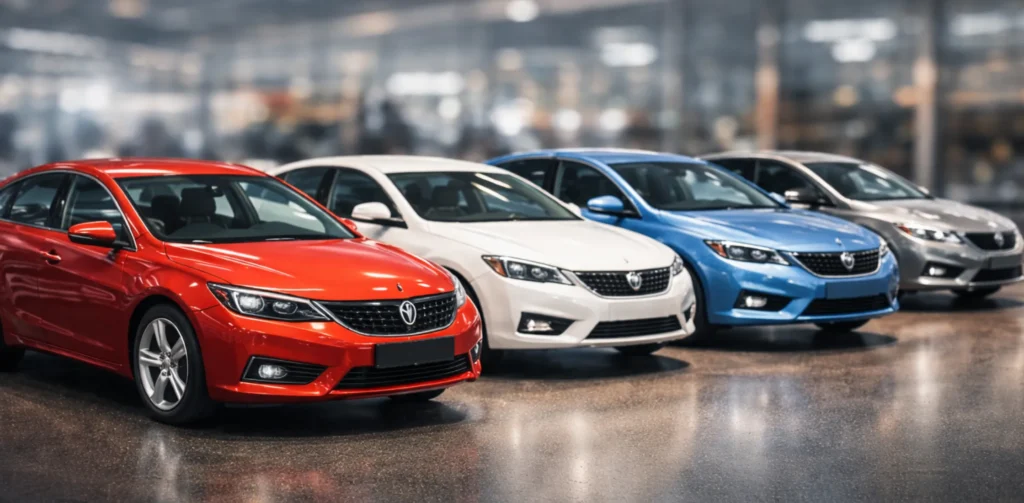
The US motor vehicle retail sector is a giant industry, with Americans buying more than 15 million new and used cars yearly. Franchised new car dealerships, independent used car lots, and specialty dealers that either specialize in luxury cars, electric cars, or vintage cars are all included in the market.
The U.S. new‑vehicle retail market is expected to remain steady at around 16 million units in 2026, following a 13% growth in early 2025. The broader automotive dealership market, including sales, service, and finance, was valued at $2.95 trillion in 2025 and is projected to reach $3.68 trillion by 2030 (~4.5% CAGR). Buyers continue to favor SUVs and trucks over sedans, shaping dealership inventories and profits.
Is the Auto Dealership Business Still Profitable in the US?
Yes, the Auto Dealership Business Plan is still very profitable in spite of challenges in the industry. Car dealerships usually make a profit of 1-2% on the sale of vehicles, but earn a significant amount of revenue through financing options, insurance policies, warranties, and service departments. Car dealerships in the used business also maintain a high margin of 8-12cars per vehicle.
The average size of the dealership in America makes a revenue of $50-75 million per year with profit margins of between 1-3 million net profit based on size and efficiency. Services and parts departments account for half of profits but generate only half of revenue. Yet, location, relationships with manufacturers, inventory management, and operational efficiency would also greatly determine profitability, and thus a sound auto dealership business plan is an absolute necessity.
Step-by-Step Auto Dealership Business Plan (USA)
Step 1: Understand the Auto Dealership Business
- The study’s income includes vehicle sales, financing commissions, service contracts, warranties, and parts/service departments.
- Educate on manufacturer franchise deals, requirements, and territory limitations that plague new-car dealerships.
- Study the distinction between new car franchise, used car lot and buy-here-pay-here (BHPH) dealership models.
- Learn about inventory control, store layout, and dealers financing their car inventories with specialised lenders.
- Get accustomed to automotive retail laws, consumer protection and Federal Trade Commission laws.
Step 2: Choose the Right Type of Dealership
- A franchised new-car dealership business plan requires a significant capital investment ($3-10 million) and manufacturer endorsement, yet offers brand recognition.
- Independent used-car dealerships require less capital ($100,000-500,000) and offer greater operational flexibility.
- Buy-here-pay-here (BHPH) auto dealership business plan are focused on credit-challenged customers, and they provide in-house financing with increased profit margins.
- Luxury or speciality dealerships target a niche market for high-end brands, old cars, or exotic cars.
- The online-hybrid model will combine physical locations with a strong digital presence to target tech-savvy modern consumers.
Step 3: Analyze Your Local Market
- The local demographics, such as population size, median income, employment rates, and consumer purchasing power.
- Assess the current competitive landscape by visiting dealerships near the location and reviewing inventory, pricing models, and service offerings.
- Single out unserved market segments, including first-time purchasers, commercial fleets or vehicle types that are not well represented.
- Research the local economic indicators such as housing growth, business expansion and development of infrastructure that indicate a healthy market.
- Evaluate traffic patterns and visibility at potential locations, as high-traffic areas significantly increase walk-in customers.
Step 4: Estimate Startup Costs
- It requires an initial inventory of between $50,000 in small used lots to between $2-5 million in franchised in auto dealership business plan.
- Property expenses consist of land purchase ($200,000-$1 million and above) or renting facilities ($5000-$20,000 every month) that have sufficient display space.
- Initial legal and licensing costs amount to between $5,000 and $15,000 that will include dealer licenses, business formation, and compliance costs.
- Software Technologies: Dealer management software (DMS), web development and digital marketing tools cost between $10,000 to $30,000.
- Reserved operational costs within the first six months of operations before profitability are taking place and range between $50,000 and $200,000.
Step 5: Register & Get Licensed
- Get your state dealer license through application, sureties (bonds of $25,000 to $50,000) and attendance of dealer schooling.
- Incorporate your business as either an LLC or a corporation at the office of the Secretary of State of your state.
- Obtaining a federal Employer Identification Number (EIN) to pay tax and hire employees.
- Obtain local business permits, zoning opportunities and certificates of occupancy to your auto dealership business plan location.
- Get necessary insurance policies such as garage liability, the open lot of the dealer, garage keepers, and workers compensation cover.
Step 6: Buy Inventory
- Develop household connections with auto auctions, wholesalers, trade-in systems as well as manufacturer fleet schemes to source vehicles.
- Get a secure floor plan financing loan from lenders like NextGear Capital or AFC, and buy inventory without running out of cash.
- Buy cars at strategic prices and according to market surveys of the quickest selling make, model and price that is available in the area.
- Invest in vehicle history, pre-purchase inspections, and reconditioning to deliver high-quality inventory that builds customer confidence.
- Maintain a diverse inventory mix of entry-level, mid-range, and premium vehicles to attract different customer segments.
Step 7: Build Your Team & Set Commissions
- Get qualified sales managers who are conversant with the F&I (finance and insurance) products and capable of advising the less expert employees.
- Hire salespeople with commission plans that are 20-25% of front-end gross profit and volume bonuses.
- Hire certified technicians to staff your service department, and pay them good wages (between $20 and $40 per hour) with productivity bonuses.
- Staff finance managers earning a base salary of $80,000-150,000 a year plus commissions, and have good credit knowledge and lender relationships.
- Designed performance measures and continuous training initiatives and explicit compensation packages, which promote motivation without promoting malpractices.
Step 8: Set Prices & Profit Goals
- Price research using services such as Kelley Blue Book, NADA Guides, and local price data of competitors.
- Target gross profit of 1500-3000/used vehicle and $1000-$2000/new vehicle as expectations.
- Additional profit in the form of F&I economic (average) of $1,200-$1800 in finance reserve, warranty, and insurance.
- Develop reconditioning budgets of between $500 and $1500 per car to guarantee quality and healthy margins.
- Devise monthly unit sales targets (15-50 vehicles according to the size of the auto dealership business plan) along with their revenue and profit specifications.
Step 9: Market Your Dealership
- Design a professional site that is optimised for search engines and includes auto parts for vehicles, finance calculators, and is friendly.
- Take advantage of online advertising on Google Ads, Facebook/Instagram, and automotive listing platforms such as Autotrader and Cars.com.
- Cultivate an online presence with the help of Google My Business optimisation, customer review management, and a responsive social media presence.
- Adopt the conventional marketing techniques such as local radio airings, billboards and sponsorship of local community events to create brand awareness.
- Create referral programs that offer current customers incentives ($100-$500) for referring friends and family to your dealership.
Step 10: Identify Red Flags & Manage Risks
- Keep a close eye on cash flow because lack of working capital results in most Auto Dealership Business Plan failing in the first and second year.
- The market should not be overstocked with inventory that ties up capital in depreciating assets and requires interest payments on the floor plan.
- Vet their customers to avoid fraud, identity theft and financing transactions that end up defaulting and undermining profitability.
- Stay on top of ever-changing laws by conducting regular staff training and seeking legal advice to avoid costly fines.
- Ensure there is adequate insurance coverage and legal liability protection against claims arising from accidents, discrimination, or contract disputes.
Conclusion: Is an Auto Dealership the Right Business for You?
The establishment of an auto dealership is a great entrepreneurial chance having a great profit making potential, however, it requires a lot of capital, industry knowledge and committed dedication. The full auto dealership business plan is your key to survival in the startup, available capital, and eventual success. The business has several sources of revenues, possibility to be scaled, and the satisfaction of the transportation demands of your community.
Nonetheless, it takes making adjustments to the market shifts, ethical practices, financial complications, and outstanding customer experiences to succeed. In my opinion, dealership ownership can offer not only a high level of income but also personal satisfaction in case you are a good salesperson, financialu ath, people manager, and you are passionate about the automotive industry. This is a challenging but rewarding business venture and you require the availability of resources, risk tolerance and commitment before venturing into it.
Explore More Niches:
FAQs
What is the cost of setting up an auto dealership in the USA?
Independent used car lots start at $100,000-500,000 as a start up cost; franchised new car dealerships start at 3-10 million, including inventory, property, licensing, and working capital.
Does the experience in automotive come before I open a dealership?
Automotive sales or management experience is not a must, but it greatly enhances the chances of success. Inexperienced owners employ practiced managers or collaborate with seasoned managers in the industry to pay up the lack of experience.
What is the time to break even?
Depending on the location, capital adequacy, market conditions, and operational efficiency most dealerships break-even in 6-12 months and make profits in 12-24 months.
How much is the difference between the profitability of new and used car dealerships?
Car dealerships which deal in used cars usually have higher profits per-unit (8-12%) with lower volume and those dealing with new cars have lower profits per-unit (1-2%) with incentives and service revenues provided by the manufacturers and larger volumes.
Is it possible to start an auto dealership at home?
Majority of states do not allow home-based dealerships as they are usually done requiring commercial zoning, sufficient display space, customer parking and facilities which satisfy specified state licensing standards of dealership business.