

Artificial intelligence technologies have made a revolutionary change to the landscape of market research. Businesses realize the benefits of AI For Market Research solutions (especially when it comes to understanding consumer information better, streamlining repetitive tasks, and coming to conclusions based on data faster than ever).
These intelligent instruments utilize machine-learning mechanisms, natural language processing, and predictive analyses to transform raw information into useful intelligence. Whether it is the automation of survey creation or the sentiment analysis of discussions on social media, AI-powered solutions are radically changing how organizations learn to know their target audiences.
The market research methods that were performed traditionally and usually took weeks or months to be executed can now be performed within days or even hours. Businesses using AI for Market Research applications state that those who use them experienced a massive increase in the accuracy and cost savings of research and time-to-delivery of insight.
The ultimate guide will discuss the most pioneering AI-driven market research services and tools on the market today before assisting companies in pinpointing the solution that best fits their unique business requirements and research goals.
What Is Market Research?
Market research involves the study and analysis of customers, competition, and markets to enable businesses to make wise decisions. Consider it as detective work whereby companies find out what people want, what they are willing to pay, and what the competitors are doing. This can be done by carrying out surveys, interviews, focus groups, or the use of analysis of existing reports and statistics.
There are two primary methods used by the companies, namely primary research that collects new information directly and secondary research that considers the existing information collected in industry estimates or government research.
The major objective is to eliminate business risk through the elimination of guesswork with facts. Market research assists companies to experiment with new products, learn about their target market, determine the correct price, and the right marketing strategies. It is also helpful in indicating the new trends and opportunities in their industry.
Essential Features to Look for in an AI For Market Research
When comparing the platforms, it is essential to realize the best features, which define outstanding AI for Market Research applications and regular analytics tools. Such characteristics define the effectiveness of the platform in providing correct insight and able to simplifying the research process.
- Automated Data Processing: Smart algorithms that will be able to gather, clean up, and sort multiple data sources such as surveys, social media, interviews, and online reviews automatically, without the involvement of human beings.
- Natural Language Processing: Complex text processing that can read the context, detect key topics, sentiment, and analyze qualitative feedback of open questions and dialogues.
- Predictive Analytics: Algorithms that could be used to predict future patterns, their industrial behavior, and new opportunities in the market after viewing the previous results and current market conditions.
- Real-time Monitoring: Full-time tracking and analysis functions that deliver immediate responses and notifications concerning brand posts, competitor action, and developing trends in the market.
- Integration Capabilities: Free interconnection of current business toolsets, CRM solutions, social networks, and data warehouses to develop a unifying research environment.
Comparison Table for AI for Market Research
| Tool | Rating | Best Feature |
| Appen | 4.5/5 | Comprehensive AI training data services |
| Speak | 4.3/5 | Advanced audio/video transcription and analysis |
| quantilope | 4.7/5 | AI co-pilot Quinn for end-to-end research |
| Browse AI | 4.2/5 | No-code website data extraction |
| Pecan | 4.4/5 | Predictive analytics and forecasting |
| Glimpse | 4.1/5 | Emerging trend identification |
| Brainsuite | 4.6/5 | Creative asset effectiveness measurement |
| Crayon | 4.3/5 | Real-time competitive intelligence |
| Hotjar | 4.5/5 | User experience insights and heatmaps |
| Brandwatch | 4.4/5 | Comprehensive social media monitoring |
Top 10 AI for Market Research
1. Appen
Rating: 4.5/5
Website: https://www.appen.com/
Best Use Cases: AI model training, data annotation, linguistic processing services
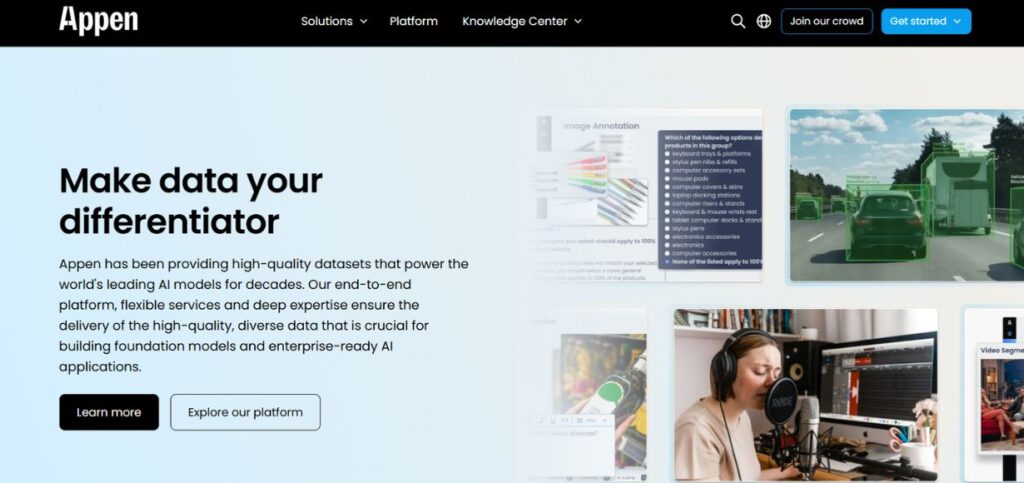
Appen is a holistic market research company that provides a wide range of data solutions, including data collection, preparation, and model testing. The platform specifically deals in offering high-quality training datasets that are necessary for developing and refining artificial intelligence models in different industries. They have knowledge that encompasses various forms of data, such as images, videos, audio files, and text material, which makes them an indispensable asset for companies that wish to undertake AI for Market Research.
Appen has an advantage because of the heavy workloads of annotating large quantities of data with high requirements of quality control. Their linguistic services include a range of natural language processing, staging duties, translation services, and language prediction algorithms, and thus, these would be highly useful in international research projects.
Key Features:
- AI training datasets
- Multi-format data annotation
- Linguistic processing services
- Quality assurance protocols
- Global workforce network
Pros:
- Extensive data coverage
- High-quality standards
- Scalable solutions
Cons:
- Complex pricing structure
- Lengthy project timelines
- Limited self-service options
Pricing: Custom pricing
2. Speak
Rating: 4.3/5
Website: https://speakai.co/
Best Use Cases: Audio transcription, video analysis, qualitative research automation
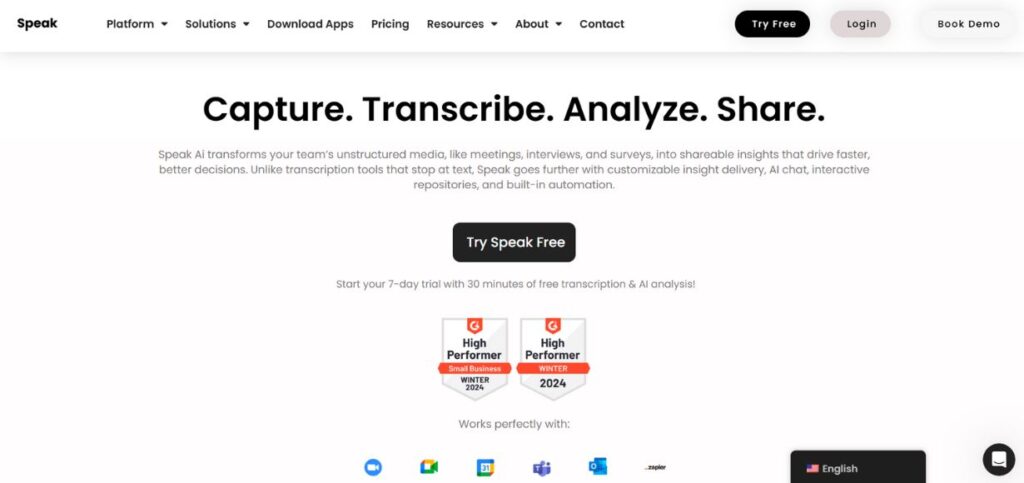
Speak can revolutionize qualitative research because it can take unstructured audio and video data and turn it into consumable data about consumers using the capability of natural language processing. This unlimited platform allows research teams to turn interviews, focus groups, podcasts, and digital recordings into rich datasets that can be analyzed.
The advantage of the tool is its capacity to handle various file formats at once, which makes it a fine option that can be adopted by teams of individuals who have to work with a variety of content units. The Speak Magic Prompts option allows researchers to save a lot of time setting up an analysis because templates are available, and the results of different projects will be similar. The integration functionalities of the platform enable the smooth incorporation of the workflow with well-used video conferencing and content platforms.
Key Features:
- Automated transcription technology
- Magic Prompts templates
- Bulk file processing
- Multi-platform integrations
- NLP-powered analysis
Pros:
- User-friendly interface
- Fast processing speeds
- Multiple format support
Cons:
- Limited customization options
- Subscription-based pricing model
- Accuracy varies with audio quality
Pricing: Free plan available
3. quantilope
Rating: 4.7/5
Website: https://www.quantilope.com/
Best Use Cases: End-to-end survey research, advanced methodology automation, real-time insights
Quantilope marks an AI for Market Research platform that was designed with an advantage using artificial intelligence to perfect every mode of the research experience. Quinn is an advanced AI co-pilot and the strongest trait of the platform, which guides researchers through the entire research process, from setting up the survey to creating insights.
This ultimate solution comes up with a total of fifteen superior research methods that are programmed automatically, and one is ready to be used instantly. Real-time data monitoring and automated charting functions of the platform also help researchers to monitor the movement of progress and change strategies dynamically. This particular feature makes Quantilope a suitable choice in fast-paced business contexts where efficient real-time decision-making is a critical requirement.
Key Features:
- Quinn AI co-pilot
- Automated survey setup
- Fifteen advanced methodologies
- Real-time data visualization
- Emotion sentiment analysis
Pros:
- Comprehensive feature set
- AI-guided workflows
- Real-time insights
Cons:
- Steep learning curve
- Premium pricing tier
- Complex advanced features
Pricing: Custom pricing
Suggested Read: Top Market Research Companies in India
4. Browse AI
Rating: 4.2/5
Website: https://www.browse.ai/
Best Use Cases: Website data extraction, competitive monitoring, automated data collection
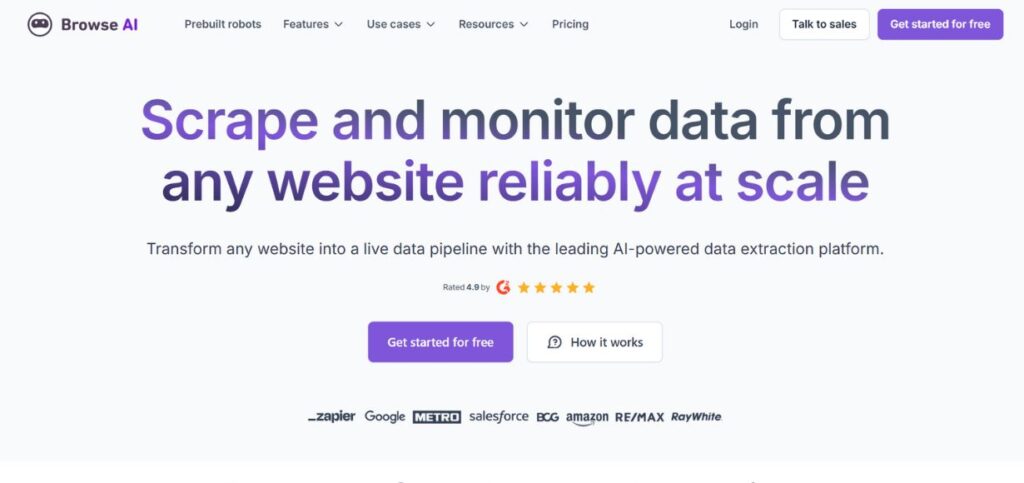
Browse AI democratizes web data extraction and evolves into a zero-code tool to observe and analyze site data, Internet-wide. With this new platform, the user can use such robots which are already constructed so that they may mine out the n in some or all of the data points and fill empty cells of the spreadsheets automatically, so any non-technical user gets a chance to access it as well. This device is best at tracking changing content, e.g., the advertisement of new jobs, business listings, search results, and competitor alerts, and is alerted in real-time when information changes.
The user-friendly experience in an otherwise daunting task of extracting information from complex data sets can be seen as an aspect of the Browse AI mission to make accessibility on the internet more open to everyone. The advantage of the platform is that it turns any website into a structured information source, which allows carrying out market research in all areas of digital interaction.
Also Read: Franchise Business in Tamil Nadu
Key Features:
- Pre-built extraction robots
- No-code browser extension
- Automated monitoring alerts
- Self-filling spreadsheets
- Real-time data updates
Pros:
- No coding required
- Easy setup process
- Affordable pricing
Cons:
- Website-dependent functionality
- Limited analysis features
- Potential data inconsistencies
Pricing: Free plan available
5. Pecan
Rating: 4.4/5
Website: https://www.pecan.ai/
Best Use Cases: Predictive analytics, demand forecasting, customer retention analysis
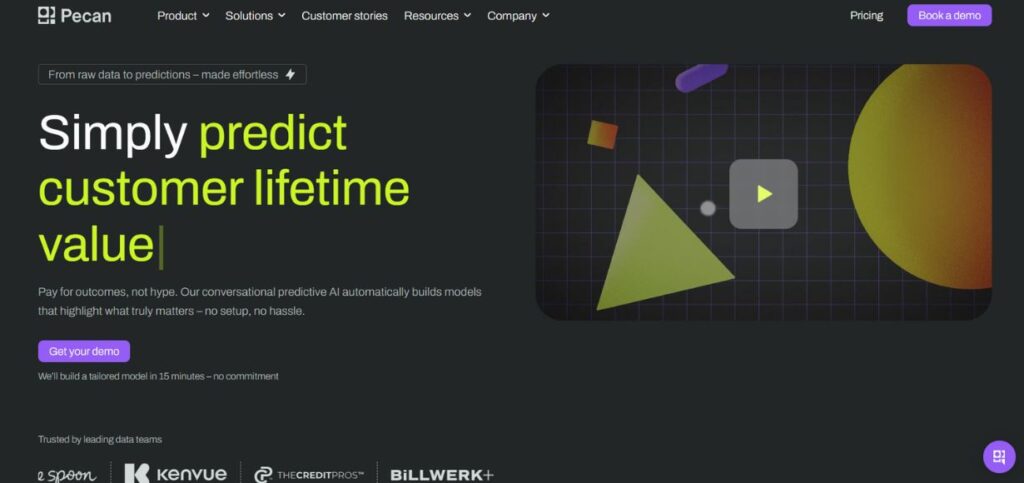
Pecan uses powerful business-oriented machine learning algorithms to turn the prevalent datasets into effective predictive insights. The platform is strongest at handling certain business questions via analysis of imported data and forecasting business outcomes like customer lifetime value, customer retention rate, and the derivation of revenue flow.
Pecan is also unlike conventional research platforms, where users are obliged to carry out studies within the platform; rather, it is designed to study data assets users may already have in platforms such as Salesforce, Oracle, and Amazon S3. The platform is strong in that it can deliver clear answers to complex business questions in days, and hence only suits organizations that already have large existing data repositories. Pecan features more security as the company has kept sensitive data in business safe during the analysis of the data.
Key Features:
- Predictive analytics engine
- Business tool integrations
- Automated scheduling capabilities
- Enterprise security protocols
- Custom prediction models
Pros:
- Easy integration setup
- Fast prediction delivery
- High accuracy rates
Cons:
- Requires substantial data
- Limited real-time processing
- Enterprise-focused pricing
Pricing: Custom pricing
6. Glimpse
Rating: 4.1/5
Website: https://meetglimpse.com/
Best Use Cases: Trend identification, consumer behavior analysis, market opportunity discovery
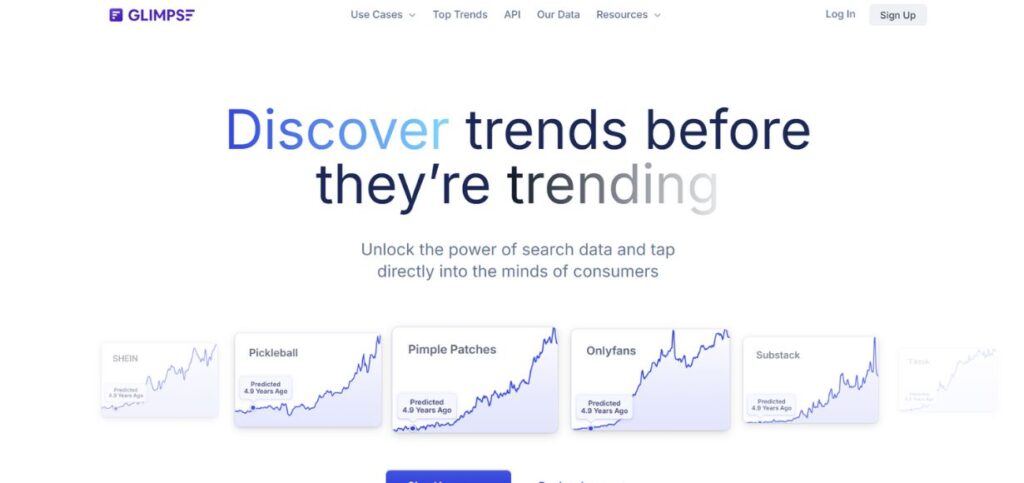
Glimpse is a company that specializes in finding new trends in the market through an analysis of various online sources, such as searches, discussions in social media, reviews of products, and online stores. The tool is valuable in that it helps various firms uncover new markets before they flood the market. The interactive dashboards provided by the platform allow the user to examine the trends and filter the insights in line with their demographic standards and other useful criteria.
Sentiment analysis offered by Glimpse offers an in-depth insight into consumer feelings of emerging trends and how to determine the acceptability of trends in the business market. It has several stakeholders, such as the researchers developing consumer surveys, marketers developing new campaigns, strategic planners expecting shifts in behaviours, and product developers who want early-stage information on prototyping.
Key Features:
- Web-wide trend analysis
- Interactive data dashboards
- Sentiment analysis tools
- Demographic filtering options
- Opportunity identification alerts
Pros:
- Early trend detection
- Comprehensive data sources
- Intuitive visualization tools
Cons:
- Trend accuracy varies
- Limited historical data
- Subscription required for full access
Pricing: Professional plans starting at $99/month with enterprise options available
7. Brainsuite
Rating: 4.6/5
Website: https://brainsuite.org/
Best Use Cases: Creative asset testing, marketing effectiveness measurement, brand performance analysis
Brainsuite integrates decades of neuroscience, psychology, and marketing experience to form a platform that measures and enhances any creative marketing asset uniquely. This advanced technology utilizes the power of more than one billion data points to train over 100 AI models to enable it to anticipate the reactions of consumers to different aspects of marketing, such as attention, branding, emotional appeal, and effectiveness of persuasion.
The competitive benchmarking feature of the platform, which is supported by 2.5 million tested creative assets across industries, allows specifying how materials of customers correspond to industry standards and other key competitors. Real-time recommendation system advice is a highly intelligent tool that can turn insights into actionable advice that enables marketing teams to maximize creative concepts to gain the greatest potential in their campaigns. The platform can meet either preliminary testing requirements or asset campaign readiness.
Key Features:
- Predictive AI models
- Competitive benchmarking database
- Real-time recommendations
- Multi-asset analysis capabilities
- Expert-validated insights
Pros:
- Science-backed predictions
- Comprehensive benchmarking
- Actionable recommendations
Cons:
- Premium pricing structure
- Complex feature set
- Learning curve required
Pricing: Custom pricing
8. Crayon
Rating: 4.3/5
Website: https://www.crayon.co/
Best Use Cases: Competitive intelligence, sales battlecard updates, market positioning analysis
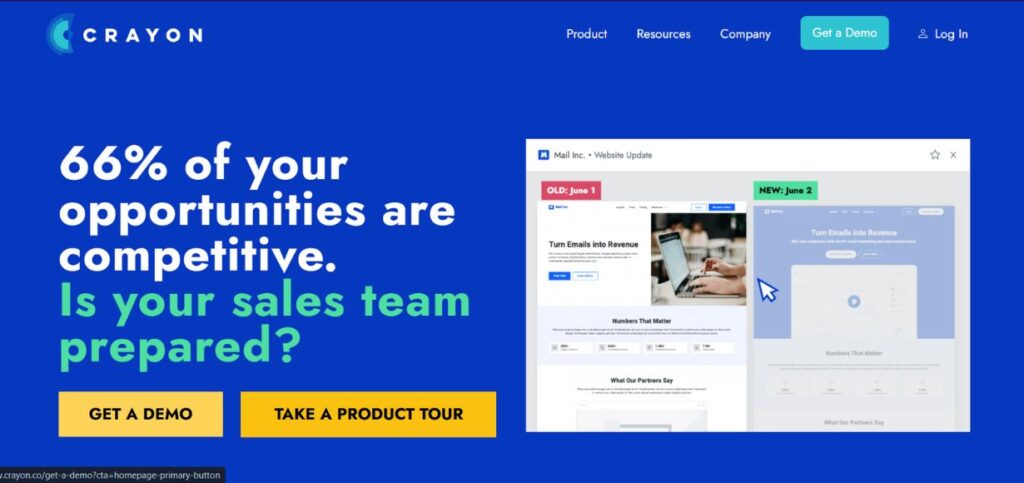
Crayon specializes in competitive intelligence and continuously tracks activities in several digital channels by competitors and alerts sales and marketing teams promptly. The AI-based analysis engine of the platform monitors competitor websites, review sites, publications, and other applicable sources continuously to determine key changes and opportunities. The integration of the sales battlecard in Crayon has made it possible to provide teams access to recent competition details, which has put them in a better position to address the market dynamic.
This capability of the platform makes it powerful because it can give impersonal competitive intelligence structured in such a way that can be quickly turned into profitable sales. Integration with top tools such as Salesforce, HubSpot, Slack, etc., means that competitive intelligence comes to the relevant team members at the best possible time.
Key Features:
- Multi-source intelligence gathering
- Automated competitor monitoring
- Sales battlecard integration
- Real-time alert system
- CRM platform connectivity
Pros:
- Focused competitive intelligence
- Real-time monitoring
- Sales team integration
Cons:
- Narrow use case focus
- Limited analytical depth
- Requires ongoing monitoring setup
Pricing: Pricing available upon request, with custom packages for different team sizes
9. Hotjar
Rating: 4.5/5
Website: https://www.hotjar.com/
Best Use Cases: User experience analysis, website optimization, customer journey mapping
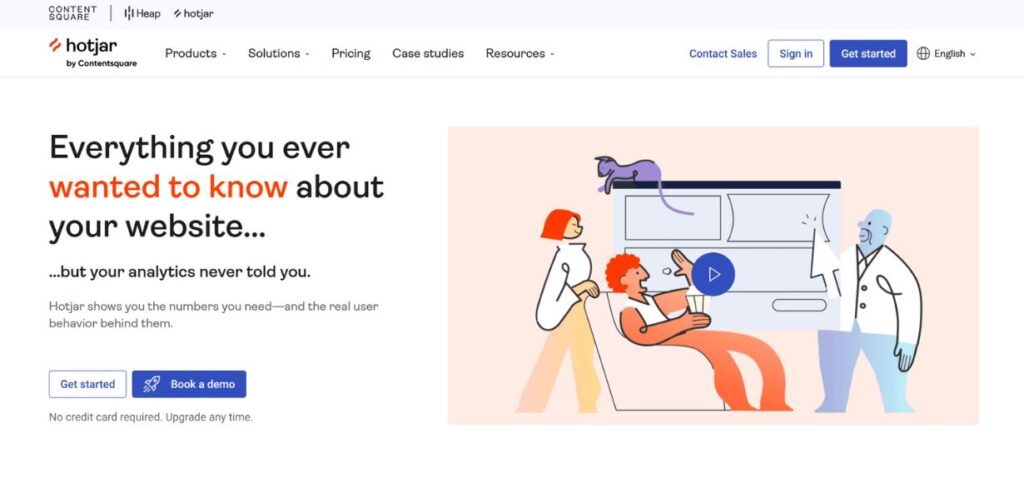
Hotjar offers a full picture of the user experience with the ability to get a clear understanding of the way visitors engage with websites, integrating visual analytics with the AI for Market Research functionalities. The recording feature of the platform records the real user sessions, displaying the mouse movements and clicks as well as the navigation patterns in a detailed representation, recorded in playback format. Heatmap data can be utilized through visual heatmaps that show where people place their gaze, so that optimization of websites can be made in more data-driven decisions.
The Artificial Intelligence (AI)-driven feedback pop-up tool developed by Hotjar actively involves the website visitors to collect in real-time such information as the degree of their satisfaction and their ideas on improvement. The specific survey that the platform aims to use to target the offered service verifies business assumptions by contacting targeted user segments when the user is interacting with the site. The Engage tool provides user interviews in a one-on-one format with automatic recording and transcription services.
Key Features:
- Session recording technology
- Visual heatmap analysis
- AI feedback popups
- Targeted survey deployment
- Interview transcription tools
Pros:
- Visual user insights
- Easy implementation
- Comprehensive UX toolkit
Cons:
- Website-focused only
- Privacy considerations
- Limited offline capabilities
Pricing: Free plan available
10. Brandwatch
Rating: 4.4/5
Website: https://www.brandwatch.com/
Best Use Cases: Social media monitoring, brand sentiment analysis, competitive social intelligence
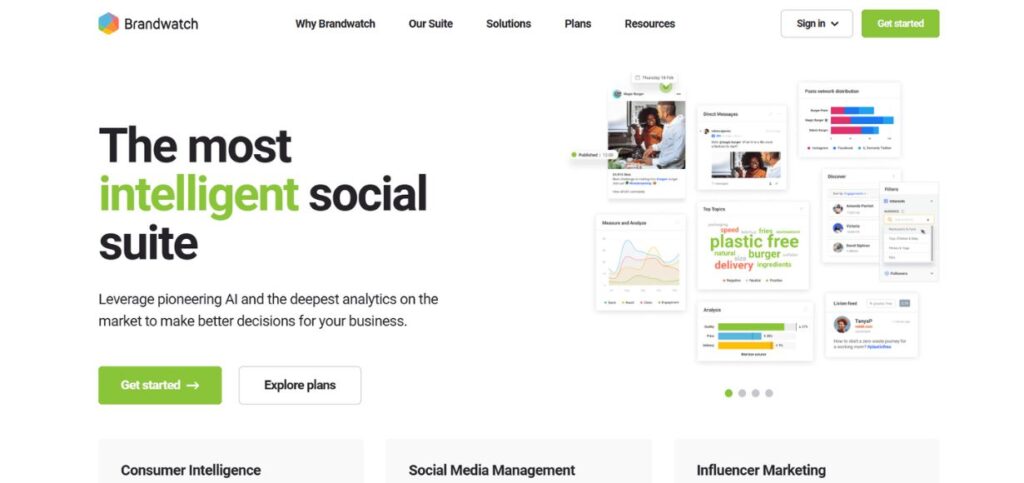
Brandwatch is a company focused on social media intelligence, summarizing, and observing conversations, references, and discussions on numerous social sites. The AI analyst on the platform gathers and analyzes social media data automatically, making it possible to have immediate insights that would be helpful in making strategic decisions. Other than merely analyzing text, Brandwatch also supports image recognition, so it could determine what is going on in pictures, visuals, and logos, thus gaining a deeper insight into brand presence.
The machine learning algorithms included in the platform automatically divide datasets according to user-selected categories, automating the procedure of analysis procedure. Using AI, Brandwatch search allows users to retrieve particular brand mentions or subjects in large data in a matter of seconds, so that teams can act more rapidly on the discussions and opportunities that matter to them.
Key Features:
- AI-powered analyst automation
- Image recognition technology
- Automatic data segmentation
- Intelligent search capabilities
- Multi-platform aggregation
Pros:
- Comprehensive social monitoring
- Advanced image analysis
- Automated segmentation
Cons:
- Social media focuses only
- Complex interface navigation
- High-tier pricing requirements
Pricing: Custom pricing
Also Read: How to Start a Bottled Water Business
How to Choose the Right AI for Market Research
It is important to, based on your organization’s needs, infrastructure, and the available research objective, select the most appropriate platform. The appropriate AI for Market Research software must scale according to your team’s capabilities and give space to grow or expand.
- Budget: Factor in not only an initial implementation cost but also the costs of having a subscription, which can include future costs of having to scale up the research requirements across different departments and projects.
- Integration: Assess the level of compatibility potential platforms have with your current stack of technology platforms when there is an intent to have a seamless workflow.
- Scalability: Deploy solutions that are able to handle the increase in data volume, the number of users, and the expansion of needs in the research field without the need to migrate the platform to a new location or make new extensive investments.
- Expertise: Evaluate the technical capacity of your staff and choose those platforms that meet their level of competence, considering the help sources and products that are supplied with and the quality of customer service.
- Compliance: The regulated industries have to ensure that the chosen platforms comply with the regulations of their industry, data privacy, and security standards.
Conclusion
AI for Market Research is changing and is reshaping the manner in which organizations collect, analyze, and even use consumer knowledge. These advanced platforms have disrupted conventional approaches to research as they have brought automation and predictive analysis together with real-time tracking capabilities that could not be realized before. Owing to the AI-powered capabilities, tools allow research teams to participate in higher-order thinking when it comes to automation of survey creation, sentiment analysis, and competitive intelligence, etc.
The selected platforms considered in the present universal guide are the state-of-the-art platforms that are currently available in terms of AI for Market Research technology, each with its distinctive competencies aimed at fulfilling individual demands and more. When artificial intelligence reaches the next stage of its evolution, we may witness the appearance of some even more innovative features and peculiarities that will make the research process even more streamlined and give a better understanding of consumer behavior patterns and the dynamics of the market.
Frequently Asked Questions
Q: What is the effectiveness of using AI applied tools in market research when compared to traditional techniques?
A: AI for Market Research usually show an 85-95 percent accuracy rate, and can be used to analyze large volumes of data much more quickly than comparable traditional methods, yet human oversight still has its role in terms of context and strategic analysis.
Q: How long would the AI market research be installed on average?
A: Typically, it would take 2-4 weeks to get the platforms up and running at a basic level; more advanced features take more time to set up and train users on.
Q: Are AI research tools in the market technical in their application?
A: Most modern tools are user-friendly to a non-tech-savvy user, but getting team members knowledgeable in data analysis can get the most out of the tools.
Q: What are the privacy and security guarantees involved in using AI for Market Research platforms?
A: Major platforms apply enterprise-level encryption, regulatory compliance, such as GDPR and CCPA, and a secure cloud to ensure that sensitive research data is secured.
Q: Do human researchers have no place in the market research process because the AI for Market Research can fully take their place?
A: Although AI tools are very effective in terms of efficiency and precision, human knowledge continues to play a critical role in strategic planning, interpreting the results, and complex consumer motives as well as behaviors.