
Building a career training funnel that matches search intent takes more than a catchy headline. You need strategy, focus, and practical design.
Prospective students look for clarity on aspects like program outcomes, affordability, and career paths. By aligning your content with these needs at each funnel stage, you convert interest into enrollment.
This guide unpacks keyword strategies, middle-funnel content assets (MoFu), effective retargeting paths, and user-friendly forms. Stick around to create funnels for career training that actually work.
Designing Effective Funnels for Career Training Success
1. Matching Search Intent with Keyword Clusters
Search intent reveals what potential students want. Some look for general career guidance, while others are ready to choose a program.
Start by organizing keywords into clusters based on intent: informational, navigational, and transactional. For example, “best career training programs” suggests informational intent, while “enroll in HVAC certification” is clearly transactional.
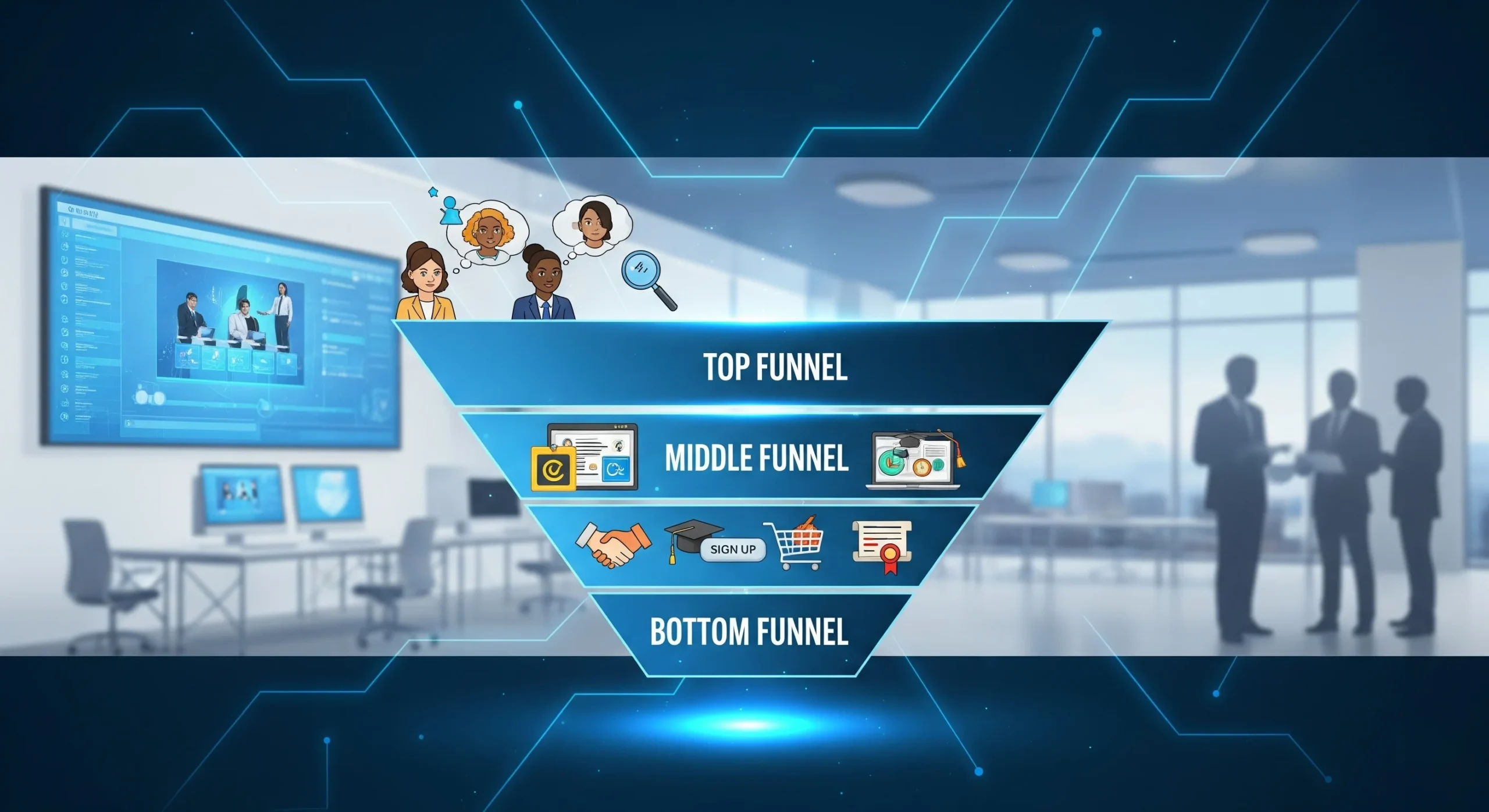
Focus on one cluster per funnel stage. Top-of-funnel content can answer broad questions like “How to start a tech career.” Middle-funnel resources should dive deeper, covering the likes of guides comparing program options or explaining industry certifications.
Use research tools like Google’s Keyword Planner or Ahrefs to identify high-value phrases. Pay attention to long-tail keywords; they reflect specific needs that signal higher intent.
By mapping search queries this way, your funnels address users at every stage of their journey. Relevant content keeps them naturally moving toward enrollment, rather than bouncing away in frustration over unmet expectations.
2. Middle-Funnel Content That Speaks to Prospects
At the middle of the funnel, prospects seek program-specific details. This is where Funnels for Career Training and trust-building content shine.
Use FAQs to address common questions like costs, schedules, and prerequisites. Clear answers eliminate hesitation and position your training as approachable. Also, highlight career outcomes prominently. Including expected job titles, salaries, and industry demand stats works well here.
For example, this program overview page for medical clinical assistant classes details timelines, expected outcomes, long-term prospects, and certifications awarded upon completion. It’s a showcase for how to do things right. Adding campus-specific details (class sizes or equipment access) can make your own efforts personal.
Successful middle-funnel content also encourages action with subtle prompts. Think “Schedule a Visit” buttons near graduation success rates or student testimonials on flexibility.
Relevant resources keep users engaged at this critical stage in their decision-making process. Such clarity moves them closer to booking visits confidently, rather than hesitating over unanswered doubts about their future paths forward.
3. Crafting Irresistible Conversion Offers
Prospects need a push to move from consideration to action. A well-crafted conversion offer can be that nudge.
Focus on tangible value tied to their goals. Free program brochures, skill assessments, or even career consultations are effective because they address specific needs without overwhelming users.
Personalization increases impact. Instead of generic offers like “Learn More,” try “Download Your Guide to Becoming a Certified Welder.” Include visual cues like clear call-to-action buttons in contrasting colors for better visibility.
Urgency works too. For instance, “Limited Spots for Our Upcoming Spring Cohort” creates FOMO without being aggressive. Ensure the landing page maintains this clarity by using concise forms that require only the necessary information (name and email).
Test your offers regularly through A/B tests, adjusting based on what converts best. Each click or form submission inches prospects closer to becoming enrolled students with confidence in their choice.
4. Retargeting Strategies for Higher Funnel Engagement
Not all prospects convert on their first visit. Retargeting is important as it ensures they don’t slip away unnoticed.
Start by segmenting audiences based on behavior. Visitors who viewed program pages show more intent than those who only browsed your homepage. Tailor retargeted ads accordingly, focusing on programs, benefits, or testimonials for high-intent visitors while re-engaging broader audiences with value-focused content.
Use dynamic retargeting to display personalized messages tied to specific interests. For example, someone exploring welding certifications might see an ad promoting upcoming start dates or alumni success stories.
Mix ad formats like carousel posts showcasing multiple programs or video ads offering campus tours. Maintain consistent messaging across platforms like Facebook, Instagram, and Google Display Network to reinforce brand recognition.
Lastly, cap the frequency of your ads to avoid annoying users while staying top-of-mind at key decision-making moments that drive them back into the funnel naturally.
5. Designing Consent-First Forms for Better Lead Capture
A user-friendly form respects privacy while encouraging action. Simplify your forms with clear labels and concise fields, and only request essential details like name, email, and program interest.
Add checkboxes to capture consent explicitly. For example, “I agree to receive information about upcoming classes” builds trust by being transparent about communication purposes.
Highlight security with a note saying data won’t be shared or sold. People are more likely to fill out forms when they feel their information is safe.
Mobile responsiveness is critical, too. Use large tap targets and auto-fill features for smoother interactions on small screens.
Placement matters, so integrate forms where users already engage heavily, such as after FAQs or success stories on program pages. Pair the form with persuasive language, such as “Request Info About Your Future Career Path,” instead of plain submit buttons.
Well-designed consent-first forms convert leads confidently without creating friction that deters prospects.
6. Using GA4 Attribution to Understand Your Funnels Better
Google Analytics 4 (GA4) provides insights into how users interact with your funnel, and is helpful for all facets of business. By setting up conversion events and paths, you can track where prospects drop off or advance.
For instance, mark critical actions like brochure downloads, form submissions, or visit scheduling as conversion points. Analyze the user journey through reports that show which pages engage most and what channels drive traffic.
GA4’s attribution models let you credit the right touchpoints. Use data-driven attribution to see how various ads, organic searches, or referral sources contribute to a lead converting.
Custom segments reveal trends, such as whether mobile visitors are less likely to complete forms than desktop users. This allows for optimization tailored by device type.
Export findings into dashboards for easy monitoring over time. These actionable insights guide decisions about reallocating ad spend or enhancing underperforming steps in your funnel.
7. Lead Scoring Tactics That Prioritize Quality Over Quantity
Not every lead is enrollment-ready. Lead scoring helps focus your energy on the most promising prospects.
Assign scores based on behaviors and demographics that align with your ideal student profile. For instance, someone downloading a program guide earns points, while viewing only a blog post earns fewer.
Incorporate program interest and urgency into the scoring system. Users exploring specific programs, such as HVAC training or scheduling tours, should rank higher than those who are skimming general content.
Use automation tools like HubSpot or ActiveCampaign to track actions and update scores dynamically. Tie these insights to follow-up strategies. High scorers receive personalized emails about next steps, while low-scoring leads may enter nurturing campaigns focused on general career benefits.
Periodically review scoring criteria as audience behaviors shift over time. This keeps outreach efforts targeted at individuals likely to enroll rather than wasting resources chasing lukewarm interest.
The Bottom Line
Building high-intent funnels for career training requires strategy and attention to detail. Each funnel stage needs content tailored to search intent, clear outcomes, and actionable offers.
From keyword clustering to retargeting paths, each step moves prospects closer to enrollment. Minor adjustments, such as implementing consent-first forms or effective lead scoring, can significantly enhance the creation of frictionless experiences.
Stay consistent with tracking using tools like GA4 while refining based on results. The right approach ensures your efforts turn interest into action efficiently.