

The state of digital advertising has shifted paradigm with the introduction of advanced Programmatic Advertising Platforms that have revolutionized the relationship between the brand and its target customers. Such automated advertising ecosystems have established the foundation of current marketing campaigns and allow businesses to reach desired demographics with the help of real-time bidding and sophisticated algorithm optimization.
When we begin to sail our way through 2025, there is no overstating the significance of programmatic solution selection, as it has a direct effect on the performance of the campaign, its ROI, and the success of marketing efforts, in general.
Programmatic advertising is expanding exponentially and has resulted in a highly competitive market where platforms keep innovating to provide more advanced programmatic advertising capabilities, improved analytics, and integration with multiple peers. Whether in display advertising, connected television, or any other means of reach, they have diversified and stretched their reach to every digital pain point where consumers are consuming content.
Marketers must be aware of the ins and outs of each platform when it comes to the benefits and pitfalls as well as how to best utilize the platform to ensure they can maximize their use of advertising on the platforms and also get the best use of the financial aspect of their marketing campaigns across various targets they may have as well as the target audience they have.
What Are Programmatic Advertising Platforms?
Programmatic Advertising Platforms are advanced automated tools through which the selling and purchasing of digital advertisement inventory is done based on real-time auctions and algorithms. The platforms do away with the conventional manual negotiations of advertisers and publishers and use data-driven transactions that happen within milliseconds of a customer opening an internet page or an application.
The main functionality of these systems is connected with demand-side platforms (DSPs), supply-side platforms (SSPs), and ad exchanges that cooperate synchronously to ensure the alignment of necessities of the advertiser and the supply. Using sophisticated machine learning models and large data stores, such systems can learn about the behavior of users, their demographic details, and context, and how to optimally place a particular ad and bid during a given impression opportunity.
Essential Features to Look for in Programmatic Advertising Platforms
Whenever comparing the various programmatic solutions, it is vital to be aware of the crucial factors that distinguish the top-quality solutions and inferior offers so that you can make a relevant decision, going hand in hand with your marketing goals and technical specifications.
- Audience Targeting: Audience targeting feature: Ability to target audiences using first-party, second-party, and third-party data to provide very specific audience segmentation, and allows targeting based on demographic, behavioral, and context across several touchpoints and screens.
- Real-Time Analytics: Powerful reporting dashboards to give real-time access to campaign-performance KPIs, enabling marketers to track important performance indicators, make biddable adjustments, and enhance content creation decisions using it as real-time data.
- Cross-Channel Integration: Integration of the display, video, mobile, connected TV, and audio advertising channels in such a way that there will always be a seamless connection that ensures the effectiveness of campaign management through a single interface with a coherent brand message.
- Fraud Prevention: A strong security mechanism with the presence of improved bot detectors, viewability checks, and brand safety units to safeguard the advertisement investment against fraudulent events, and the presence of ads in the right content environment that is of high quality.
- Inventory Quality: Access to premium publisher networks and clear inventory sources that can be relied upon to serve premium advertisements with high-level content standards, so that any brand ad is served alongside respectable content that complements the company ethos and marketing campaign messages as well.
Comparison Table for Programmatic Advertising Platforms
| Platform Name | Rating | Best Feature |
|---|---|---|
| Display & Video 360 | 4.8/5 | Enterprise-grade omnichannel integration |
| Amazon DSP | 4.7/5 | First-party consumer data access |
| The Trade Desk | 4.6/5 | access The Trade Desk 4.6/5 Advanced AI-powered bidding algorithms |
| Google Ad Manager | 4.5/5 | Seamless Google ecosystem integration |
| Xandr | 4.4/5 | Real-time bidding optimization |
| Blasto | 4.3/5 | ML-powered performance optimization |
| Adform | 4.2/5 | Privacy-focused cookieless solutions |
| Magnite | 4.1/5 | Premium publisher inventory access |
| PubMatic | 4.0/5 | High-quality content emphasis |
| Criteo | 3.9/5 | AI-driven retargeting capabilities |
Top 10 Programmatic Advertising Platforms
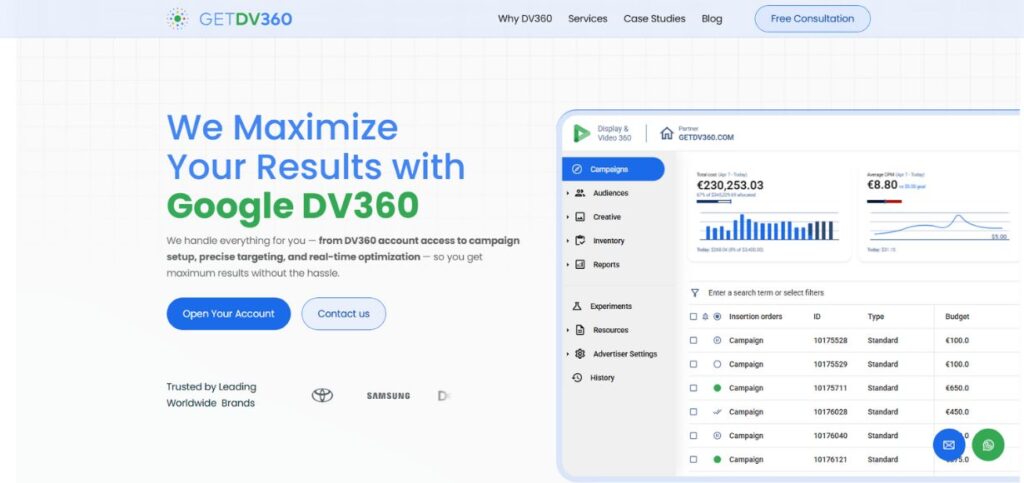
1. Display & Video 360 (DV360)
Rating: 4.8/5
Website: https://marketingplatform.google.com/
Best Use Cases: Enterprise omnichannel campaign management and optimization
The Display and Video 360 is the leading enterprise-level programmatic tool in Google, which provides extensive campaign management features across other advertising platforms. This advanced platform easily connects to the deep ecosystem of Google, offering marketers the capability to use powerful tools in cross-channel plans, execution, and optimization.
The AI-powered automation features of the platform support smart bidding algorithms and allow adjusting the campaigns in real time, which makes it a perfect platform in case of large businesses that need scalable and seamless advertising solutions. With its high level of analytics and reporting, it gives great insights into the performance of campaigns, enabling marketers to make their campaign and target decisions based on data to maximize their returns on the advertising investment.
Key Features:
- Cross-channel optimization
- Intelligent automation tools
- Enterprise-scale management
- Advanced reporting suite
- Seamless Google integration
Pros:
- Comprehensive omnichannel reach
- AI-powered optimization
- Extensive ecosystem integration
Cons:
- Steep learning curve
- High implementation costs
- Complex setup process
Pricing: Percentage-based on advertising spend, with customized enterprise pricing models
2. Amazon DSP
Rating: 4.7/5
Website: https://logistics.amazon.in/
Best Use Cases: E-commerce retargeting and first-party data utilization
The advertising delivery platform Amazon DSP uses its immense first-party data on consumers to send extremely targeted advertising campaigns into display, video, and offline venues (connected TVs). The platform is also particularly effective in cross-device targeting, and that attribute is especially useful to brands that need to boost e-commerce performance.
The compatibility of the platform with the retail system of Amazon provides unprecedented possibilities for retargeting campaigns and customer acquisition strategies. Audience insights can be provided in a granular manner based on the actual purchasing behavior, allowing marketers to be more accurate in targeting and result in better conversion rates than a demographic-based strategy.
Key Features:
- First-party data access
- Cross-device targeting capabilities
- E-commerce retargeting tools
- Comprehensive audience insights
- Multi-channel inventory access
Pros:
- Rich consumer data
- Effective cross-device targeting
- Strong e-commerce focus
Cons:
- High minimum spend
- Limited third-party integrations
- Amazon ecosystem dependency
Pricing: Customized pricing based on campaign objectives and advertising spend levels
3. The Trade Desk

Rating: 4.6/5
Website: https://www.thetradedesk.com/
Best Use Cases: Data-driven omnichannel advertising with advanced targeting
Being one of the fastest-growing independent demand-side platforms, The Trade Desk provides full-service programmatic advertising through display, video, audio, and connected television channels. Advanced audience targeting capabilities and a broad set of third-party data partnerships are the biggest strengths of the platform that allow a marketer to develop a very sophisticated targeting strategy.
Its bidding algorithms rely on an AI to constantly improve the functioning of the campaign, and its retail media integrations have a high level of possibilities to target more audiences. The fact that the platform is transparent and allows advertisers to exercise control makes it especially appealing to the brands that require finer information about their campaigns and want to have optimal choices in optimization.
Key Features:
- Omnichannel advertising reach
- AI-powered bidding optimization
- Extensive data partnerships
- Retail media integrations
- Advanced targeting capabilities
Pros:
- Comprehensive channel coverage
- Advanced AI optimization
- Extensive data partnerships
Cons:
- Requires technical expertise
- Higher cost structure
- Complex campaign setup
Pricing: Pay-as-you-go model with volume discounts and customized enterprise pricing
4. Google Ad Manager
Rating: 4.5/5
Website: https://admanager.google.com/home/
Best Use Cases: Publisher monetization and Google ecosystem integration
The primary purpose of Google Ad Manager is a full-featured ad serving platform, which is primarily used by publishers who want to generate as much revenue as possible with their digital content. It is specifically designed and fits well with Google Ads and AdSense, through which it automatically optimizes revenues and offers strong analytics capabilities.
With its advanced yield management features, it enables publishers to find the right balance between direct and programmatic demand to fully utilize all the sources of their inventory. The platform is versatile in terms of ad formats it supports, and these are: display, video, mobile applications, and connected TV content. Sophisticated reporting and metrics give more information about the behavior and revenues of the audience.
Key Features:
- Automated revenue optimization
- Google ecosystem integration
- Advanced analytics tools
- Multi-format ad support
- Yield management capabilities
Pros:
- Seamless Google integration
- Automated optimization features
- Comprehensive analytics suite
Cons:
- Limited customization options
- High competition rates
- Google ecosystem dependency
Pricing: Free Google Ad Manager and premium Ad Manager 360 with customized pricing
5. Xandr
Rating: 4.4/5
Website: https://events.xandr.com/
Best Use Cases: Enterprise-level premium inventory and privacy-focused advertising
Xandr is branded as a high-quality programmatic advertising platform that has advanced real-time bidding algorithms and worldwide scale access to the inventory. The platform focuses on privacy-first products and quality premium inventory, and is appealing to brands focusing on brand safety and quality of audience rather than volume of reach. It has optimal bidding algorithms that keep on optimizing campaigns in display, video, native as well and mobile ad channels.
The detailed analytics suite offers the platform with details on the campaign performance and the audience engagement success metrics. The attention to data quality and the clarity of inventory by Xandr is of interest to large organizations seeking to achieve priority advertising conditions with low content boundaries.
Key Features:
- Real-time bidding algorithms
- Global premium inventory
- Privacy-first solutions
- Comprehensive analytics suite
- Advanced ad quality controls
Pros:
- Advanced bidding algorithms
- Global inventory scale
- Privacy-focused approach
Cons:
- Complex setup requirements
- Less accessible pricing
- Technical complexity barriers
Pricing: Custom pricing models based on CPM, CPC, and CPA objectives
6. Blasto

Rating: 4.3/5
Website: https://blasto.ai/
Best Use Cases: AI-driven optimization for small-to-medium advertisers
Blasto is the pioneer of the programmatic promotion and uses its exclusive machine learning algorithms to optimize the campaign success in the display, video, native, and connected TV channels. The strength of the platform is its flexible pricing and open policy of running the campaign, which allows gaining access to advanced programmatic capabilities even for small and medium-sized adspends.
The AI-driven optimization constantly improves itself based on the data regarding campaigns, increasing both targeting precision and effectiveness when it comes to bidding. The platform offers a variety of ad formats and advanced methods of targeting that are not usually present on bigger and more costly platforms. Blasto will be a compelling option to advertisers who require the current state of the technology without the overhead of enterprise-level features.
Key Features:
- Proprietary ML algorithms
- Flexible pricing structure
- Advanced targeting capabilities
- Multi-format ad support
- Transparent campaign management
Pros:
- ML-powered optimization features
- Flexible pricing options
- Wide format support
Cons:
- Growing platform scale
- Limited market presence
- Newer technology platform
Pricing: Customizable CPM-based pricing with flexible payment options
7. Adform

Rating: 4.2/5
Website: https://site.adform.com/
Best Use Cases: Privacy-focused cookieless advertising and full-stack campaigns
Adform stands out because of its privacy focus and new cookieless ID Fusion technology, and is well placed as a leader in the new digital privacy world. The platform also provides omnichannel, full-stack functionality in facilitating the management of its campaigns that work with the channels of display, video, native, mobile, and connected TV advertising. The high value of privacy compliance and use of first-party data by advertisers is characterised by its pricing structure and focus on data security.
The high level of data protection and the cookieless future adjustment bonus will help the platform in the market in the case of further development of the industry’s privacy principles. The transparency policy and the flexible platform architecture of Adform provide advertisers with additional control over the campaign and visibility.
Key Features:
- Cookieless ID Fusion technology
- Full-stack campaign capabilities
- Advanced data security
- Transparent pricing model
- Privacy-focused solutions
Pros:
- Privacy-focused technology approach
- Full-stack campaign capabilities
- Transparent pricing structure
Cons:
- Limited market adoption
- Technical expertise requirements
- Platform complexity challenges
Pricing: Performance-based pricing model with transparent cost structures
8. Magnite

Rating: 4.1/5
Website: https://www.magnite.com/
Best Use Cases: Premium inventory access and high-quality content advertising
Magnite is one of the major supply-side platforms that has large-scale inventory on high-quality publishers and has a lot of support related to connected TV and video advertisement formats. The platform centers on clarity of bidding and advertising placement, creating the ability to supply the advertiser with an actual sight of likelihood and execution on their supply caliber and measures. Its associations with quality publishers guarantee its access to quality content surroundings that do not compromise on editorial content quality and audience participation needs.
Themes such as robust inventory quality parameters and content compliance attractions on the platform are attractive to brands that emphasize brand safety and high-class placement opportunities. Magnite is also specific on accountability and quality, which renders it good, especially for the large advertisers who look forward to premium sources of inventory.
Key Features:
- Premium publisher partnerships
- Transparent bidding processes
- Connected TV specialization
- Inventory quality guidelines
- Comprehensive analytics reporting
Pros:
- Extensive premium inventory
- Transparent bidding processes
- Strong CTV support
Cons:
- Higher pricing structure
- Large-scale advertiser focus
- Limited small advertiser access
Pricing: Variable pricing based on required services and campaign objectives
9. PubMatic
Rating: 4.0/5
Website: https://pubmatic.com/
Best Use Cases: High-quality content focus and publisher engagement optimization
Pubmatics concentrates on linking advertisers with high-quality content publishers with a very important quality criterion, as well as user involvement needs. The platform will also demand publisher properties to have a minimum NewsGuard rating and ensure serious user engagement so that advertisers gain access to good content surroundings. It’s suggested that full-scale reporting and analytics assistants give detailed remarks on the audience’s behavioral nature and engagement metrics, enabling the publishers to maximize revenues without compromising the quality of content.
It covers a variety of ad types such as websites, mobile application adverts, video, and connected TV advertising. PubMatic’s quality-based method, rather than quantity-based, attracts advertisers, who want to see brand-safe contexts with solid audiences and premium content regulations.
Key Features:
- Quality content emphasis
- User engagement metrics
- Comprehensive reporting tools
- Multi-format ad support
- Brand safety measures
Pros:
- High-quality content focus
- Strong reporting analytics
- Diverse format support
Cons:
- Limited self-serve capabilities
- High engagement requirements
- Publisher approval barriers
Pricing: Tailored pricing plans customized to specific advertiser and publisher needs
10. Criteo
Rating: 3.9/5
Website: https://www.criteo.com/
Best Use Cases: Performance-focused retargeting and AI-driven personalization
Criteo has become one of the major platforms of performance marketing that has advanced retargeting algorithms based on artificial intelligence and machine learning. The platform specializes in dynamic retargeting campaigns that offer individual product suggestions regarding browsing behavior and purchase history of the user. Its pay-performance pricing structure means that the cost of the platform is directly proportionate to the success of the campaign, appealing to advertisers with outcome-oriented and ROI-oriented campaigns.
The platform gives in-depth audience data and runs a variety of advertisement types such as display patterns, video advertisements, native patterns, in-app advertising, and social media promotions. An AI-based Criteo strategy invariably reads and optimizes the creative elements and the bidding strategies to ensure the highest conversion level and campaign output.
Key Features:
- AI-driven recommendation engine
- Dynamic retargeting capabilities
- Performance-based pricing model
- Comprehensive audience insights
- Multi-format ad support
Pros:
- Leading retargeting capabilities
- Performance-based pricing structure
- Strong personalization features
Cons:
- Limited campaign flexibility
- Industry-dependent performance variations
- Narrow retargeting focus
Pricing: Performance-based CPC and CPM models with no minimum spending requirements
How to Choose the Right Programmatic Advertising Platforms
Choosing the best programmatic resolution will demand proper consideration of many aspects that resonate with your marketing goals, technical needs, and, of course, your financial economy, which can offer the best performance of your campaign.
- Budget: a budget is an aspect to consider by considering how much you can spend on your advertisement, how the platforms that you are interested in charge, and how much you need to spend before you start performing, and then enterprise-level customization offerings that will comply with your budget and the anticipation of your ROI.
- Targeting: Review and assess the audience targeting capabilities, partnership of data, and segmentation of each platform to fit your particular demographic needs, behavioral targeting, and cross-device tracking options, so that there is a full scope of audience coverage.
- Integration: Evaluate the compatibility of the platform with a current marketing technology stack, analytical platform, and data management tools to allow a smooth integration of the workflows and measurement of all marketing efforts across channels and touchpoints.
- Support: Research on the provided customer support rates, trainings, etc., and account management services so that there is sufficient technical support and strategic advice during planning and implementation, and optimization of the campaign to make the most out of the given platform.
- Scalability: Look at the platform expansion potential, access to inventory expansion, and the feature growth plan across business objectives to guarantee a longer-lasting partnership as you require more advertising opportunities and things change concerning new markets and new partners.
Conclusion
The Programmatic Advertising Platforms market in 2025 will bring expressions to advertisers and publishers that can attain their marketing goals with higher levels of sophistication, automation, granularity of targeting, and all-encompassing analytics insights. All the described platforms are unique in their strengths and capabilities in that they are specific to various business needs, budget limitations, and technical knowledge levels.
Whether enterprise-level solutions such as Display & Video 360 or Display & Video 360 and Amazon DSP, Amazon DSP, or innovative platforms such as Blasto and privacy-oriented solutions such as Adform, the range of possible solutions provides any business with the opportunity to choose an appropriate programmatic tool. The only way to succeed is to thoroughly analyze your unique requirements, technical specifications, and future marketing goals, and then commit to any medium.
Frequently Asked Questions
What is the minimum requirement to get started using programmatic advertising platforms?
If not all, the majority of the platforms need a Google account and simple campaign setup, but there is a higher entry point when it comes to monthly budget, such as Amazon DSP, which has hundreds to even thousands of dollars of monthly spend.
What are the global advertising systems doing to guarantee brand safety?
Top platforms have cutting-edge technology to detect fraud, verify content and quality of inventory to present ads along appropriate, quality content, which aligns with the brand values.
Is a programmatic advertising platform usable by small businesses?
Yes, providers such as Blasto and Criteo have variable pricing and an easy-to-use interface that is specifically targeted at smaller advertising budgets and also people who do not have as much technical expertise.
What is the disparity between DSP and SSP in programmatic advertising?
DSPs allow advertisers to purchase ad inventory in an automated manner, whereas SSPs enable publishers to sell their available ad spots, and both systems are connected in an ad-exchange-based system to accomplish transactions.
What role does first-party data play in the success of programmatic advertising?
As privacy laws restrict the amount of third-party data, first-party data is becoming more and more important, and platforms such as Amazon DSP are also useful because of their potential to provide in-depth information about consumer behavior and their targeting.