
YouTube is not a video platform anymore, but the second-largest search engine in the world, with more than 2.7 billion logged-in users visiting it monthly in 2026. Having over 500 hours of video uploaded each minute, it has become more and more competitive to be found through organic discovery. As a matter of fact, 9 out of 10 YouTube videos that have the highest views depend on deliberate keyword optimisation to be on the first page. Be it the personal creator, a brand marketer, or an agency with myriads of channels, the difference between that video that only got to 200 views and that that got 200,000 views is using the appropriate YouTube SEO tools.
This is because this guide dissects the 14 best YouTube SEO tools, both free and paid, to get you ranked faster, smarter, and more consistently in 2026.
What Are YouTube SEO Tools?
YouTube SEO software is a type of software or browser extension that enables creators to optimise their videos in order to be more easily discovered. They support keyword research, tag creation, metadata optimisation, competitor research, and performance management – creators can use these features to align their content to what people are actively seeking on the algorithm-based search results in YouTube.
Why You Need YouTube SEO Tools in 2026
- Complexity of algorithms is increasing: the ranking metrics of YouTube currently consider engagement, relevance and watch-time together at once – tools decipher what is important.
- Competition on keywords is getting tougher: Millions of new videos are being uploaded every day, which means that keyword-based targeting requires data-driven competition in order to be a force in oversaturated niches.
- Metadata incorrectnesses cost rankings: Incorrect tags, the lack of descriptions, or inappropriate titles can drown even very good content — tools identify such invisible errors.
- Competitor intelligence leads to strategy; understanding what works with the competitors can help you gain on them sooner than guessing.
- The time-to-rank can be reduced by far: Optimised uploads rank faster — aids simplify the whole process of research to publish.
Types of YouTube SEO Tools
The fourth category of YouTube SEO tools usually includes:
- Key word and Tag Research Tools – Assist you in identifying high volume low competition keywords and relevant tags that enhance discoverability.
- Metadata Optimisation & Workflow Tools – Specialise in optimising your video titles, descriptions, tags and thumbnails either prior to or post-publishing.
- Analytics, Competitor Tracking & Channel Growth Tools – Gather in-depth performance insights, compare your channel with competitors and find areas to grow.
- Multi-Platform and Scheduling Tools – The tools allow you to plan and schedule, as well as cross-promote content on YouTube and other social sites via a single dashboard.
14 Best YouTube SEO Tools (Quick List) – 2026 Ranking
| Sr No | Tool | Key Features | Best For |
| 1 | TubeBuddy | Tag suggestions, keyword explorer, A/B testing | All-in-one creator SEO |
| 2 | vidIQ | Keyword research, competitor tag analysis, score cards | Data-driven creators |
| 3 | Keywordtool.io | YouTube-specific keyword suggestions, autocomplete data | Keyword discovery |
| 4 | Keyword Keg | Niche/long-tail keyword discovery, search volumes | Long-tail targeting |
| 5 | Kparser | Keyword parsing, multi-language support | Global keyword research |
| 6 | HyperSuggest | Niche keyword suggestions, Google + YouTube combined | Multi-platform keywords |
| 7 | TubeRanker | Tag generator, SEO score, title optimiser | Tag-focused optimisation |
| 8 | RapidTags | Free instant tag generator | Budget-conscious creators |
| 9 | SiteChecker | Metadata auditing, YouTube video metadata checks | SEO audits & metadata |
| 10 | MorningFa.me | Video optimisation coaching, beginner-friendly dashboard | New creators |
| 11 | Ahrefs | YouTube keyword data, ranking insights, backlink analysis | Advanced SEO research |
| 12 | SEMrush | Cross-platform keyword & trend data including YouTube | Multi-platform marketers |
| 13 | Social Blade | Public channel analytics, benchmarking, growth tracking | Channel benchmarking |
| 14 | Metricool | Scheduling, analytics, social-video integration | Content scheduling & analytics |
Top 14 YouTube SEO Tools for 2026 – Free & Paid (with Features, Pros & Cons)
A) Keyword & Tag Research Tools
1. TubeBuddy
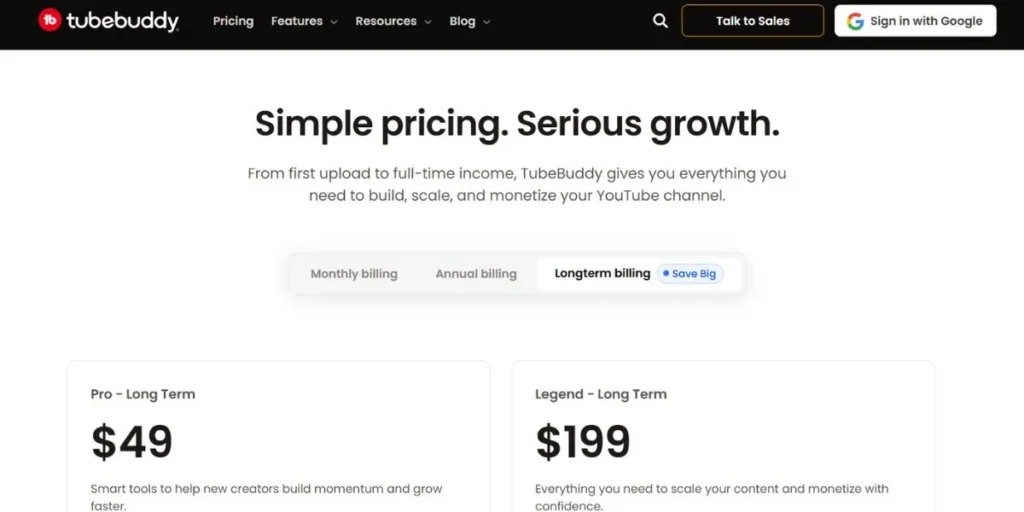
TubeBuddy is an example of the most popular YouTube SEO browser extensions that is trusted by millions of creators all over the world. It has been built into YouTube Studio and it is easy to remain in the same platform and obtain the data. The tools included in TubeBuddy are a full package of what is needed in search of keywords, tag recommendations, and testing of thumbnails and titles (A/B). Its Keyword Explorer tool gives an approximation of search volume, competition score, and other ideas in the key word.
Bulk processors to update cards, end screens and descriptions are also available on the platform. It is specifically a favorite with medium to large-sized channels that desire an integrated SEO partner within the current workflow.
Key Features
- Search volume data with search volume tool Keyword Explorer.
- Tag ideas and viewing of tags of competitors.
- Thumbnail/title A/B test.
Best For: Those who want to have everything under one roof when it comes to in-dash SEO.
Pros
- Works inside YouTube Studio
- Excellent tag & keyword tools
- Bulk processing saves time
Cons
- The free plan is heavily limited
- Large channels have some of the features that are lagging.
- Pricing can add up for teams
Link: https://www.tubebuddy.com
Also Read: YouTube Alternatives
2. vidIQ
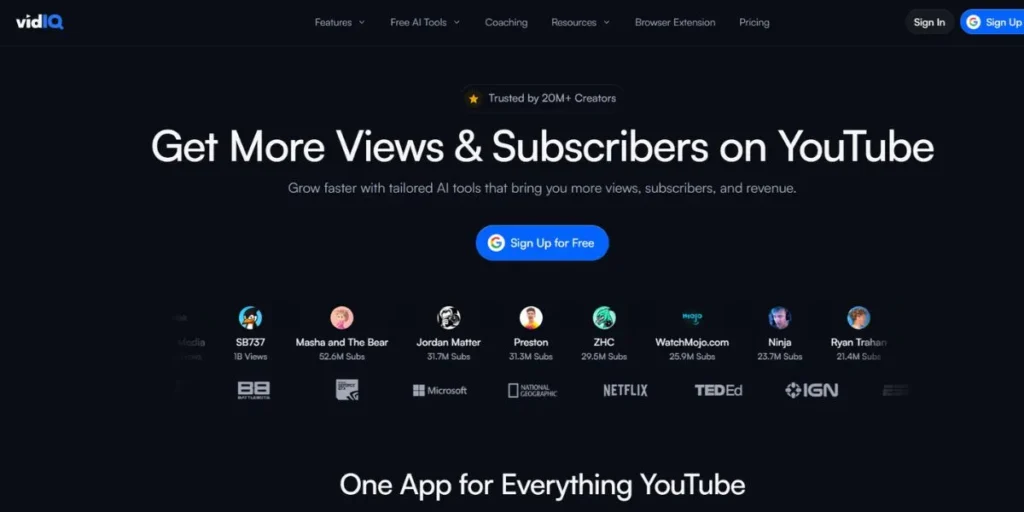
vidIQ is an electric YouTube search engine tool that integrates key research, competitive, and channel analytics into one web application and browser add-on. It gives you video scorecards in real time, which illustrate the degree to which your content is optimised at the time of upload. The competitor tag analysis is particularly useful – it allows viewing the precise tags used by competitors to rank the videos and sends daily ideas of the keywords to provide your content calendar.
Its AI coaching service takes creators through the process of optimisation with individual suggestions. It is among the most power-packed applications that creators can use in case they are serious about their channel development via search.
Key Features
- Video search engine optimization scorecards.
- Benchmarking and competitor tag analysis.
- Recommendations of keywords and topics using AI.
Best Suited: Data-intensive creators concerned with competitive research of keywords.
Pros
- Deep competitor insight
- AI-powered coaching
- High-trending topic identification.
Cons
- Free plan limits data depth
- Can be daunting to amateurs.
- Higher-tier plans are costly
Link: https://www.vidiq.com
3. Keywordtool.io
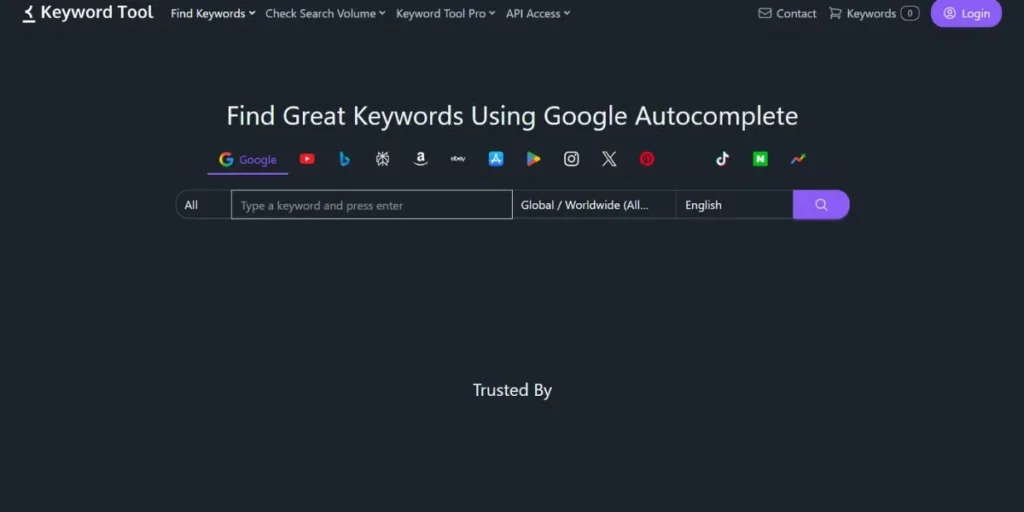
Keywordtool.io is a keyword research tool that directly scrapes autocomplete information out of the YouTube search bar to come up with hundreds of long-tail keyword ideas. It also uses the keywords that are typed in the search box of YouTube by actual people, and therefore, it offers suggestions that are very relevant. The tool is powered by more than 80 languages and regions; it provides localised keyword insights to global creators. It may also form questions, prepositions, and hashtag suggestions on your seed keyword.
No YouTube account or API access or scraping of autocomplete endpoints is required for Keywordtool.io, which operates as a scraper. This renders it quick, dependable, and permanently handy in unfolding preliminary keyword searches.
Key Features
- YouTube autocomplete keyword suggestion.
- Multi-region/Multi-language support.
- Hashtag keyword generation. Question generation.
Best With: Creators of You Tube specific keywords at scale research.
Pros
- Massive volume of key words per search.
- No login required
- Premier discovery in the long-tail.
Cons
- Paid plan is required in search volumes.
- Nonexistent direct YouTube integration.
- Limited free tier output
Link: https://keywordtool.io
4. Keyword Keg
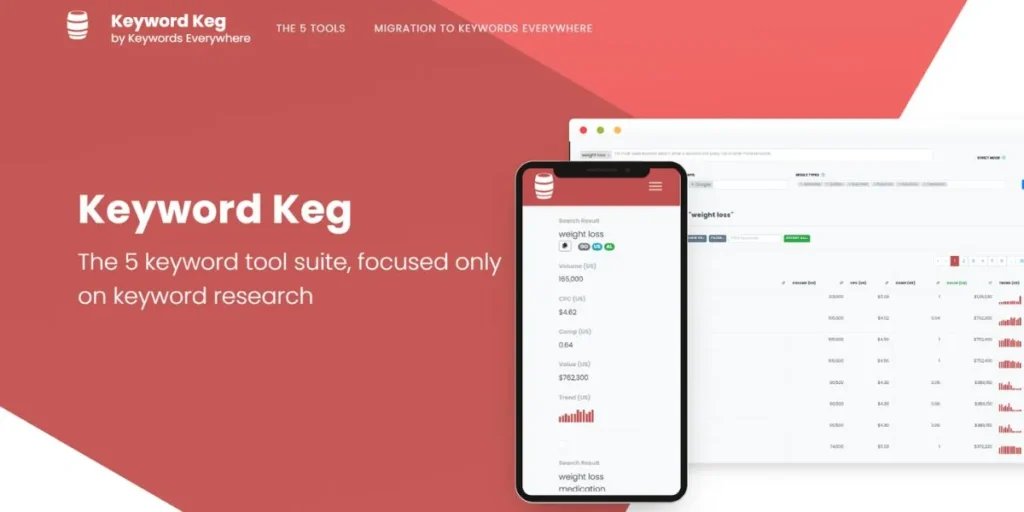
Keyword Keg is a high-end keyword search application that provides the exploration of deep niche and long-tail keywords on various platforms, including YouTube. It compiles information on several sources, giving search volumes, cost-per-clicks, and competition as well as suggestions of keywords. The tool enables one to filter based on the difficulty of key words and the trend in monthly search volume, which assists the creators to only target those keywords that can be realistically ranked.
Keyphrase Keg accepts a large number of keywords in bulk, thus effective to the agency or creators running a number of channels. It also gives SERP analysis capabilities where one can see who is ranking on target keywords. Its export capability is easily integrated with other content planning systems and spreadsheets, like other SEO workflows.
Key Features
- Aggregation of key data in multiple sources.
- Search volume, competition and CPC figures.
- Massive key word upload and exporting.
Best Use: Agencies and power users that seek niche/long-tail YouTube keywords.
Pros
- Reliable metric accuracy
- Good in long-tail discovery.
- Excellent bulk processing
Cons
- No free plan available
- Interface feels dated
- Steeper learning curve
Link: https://keywordkeg.com
5. Kparser
Kparser is a multifunctional key word parser which provides key word suggestions of various search engines such as YouTube, Google, Bing, and Amazon. It operates on a special engine of combining key words so that it creates complete lists of key words based on seed words and is therefore very good in finding variation and niche angles that a creator would not have found. Kparser has multi-language key-word search and permits the publication of the results by country and language.
It has a simple interface, which is easy to use by creators who do not want to use complicated dashboards. The device is especially useful to the content creators who work in several languages or address the global audiences on YouTube. Export facilities enable it to be integrated with spreadsheet processes or any other search engine optimization.
Key Features
- Parceling of keywords over multiple platforms (YouTube, Google, Bing).
- Filtering multi-language and country specific.
- Niche discovery engine based on key word combination.
Better: Multi-language creators, and those who aim at the international markets of YouTube.
Pros
- Covers multiple platforms
- Clean, easy-to-use interface
- Free tier available
Cons
- Limited metric depth
- No in-built YouTube support.
- Less functional than the rivals.
Link: https://kparser.com
6. HyperSuggest
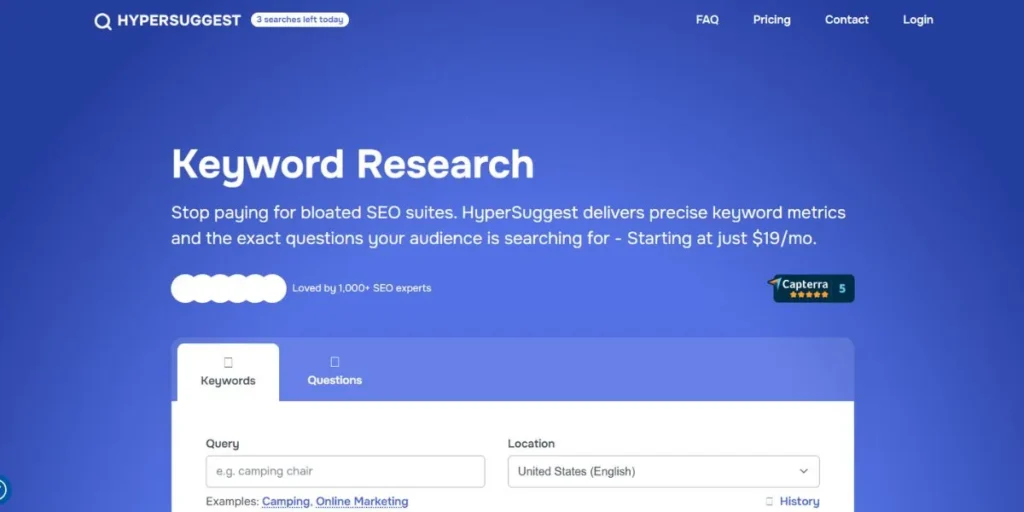
HyperSuggest is a tool to suggest keywords, which retrieves Google and YouTube autocomplete data at the same time, providing creators with a two-platform perspective on search intent. The feature is unmatched by any other cross platform features such as seeing the same topic appearing at a search engine and video platforms so that you can make smart content choices. The tool creates W-questions (Who, What, Why, Where, When) and preposition-based variations of the keywords automatically.
HyperSuggest also serves niche-based keyword clustering, where creators can plan series of content around related terms of the same topic. It can be specifically handy among creators posting on YouTube and a blog or a site and would like their SEO strategies to work in tandem with each other. You can have both free and paid plans.
Key Features
- Google and YouTube combined autocomplete key word suggestions.
- W-question and preposition keywords generation.
- Specific keyword grouping of a niche.
Best: Those who create on YouTube and on the web and require cross-platform alignment of keywords.
Pros
- Dual Google + YouTube data
- Efficient with question based content.
- Strong niche clustering
Cons
- No search volume on free plan
- Limited export features
- Less name recognition
Link: https://www.hypersuggest.com
B) Metadata Optimisation & Workflow Tools
7. TubeRanker
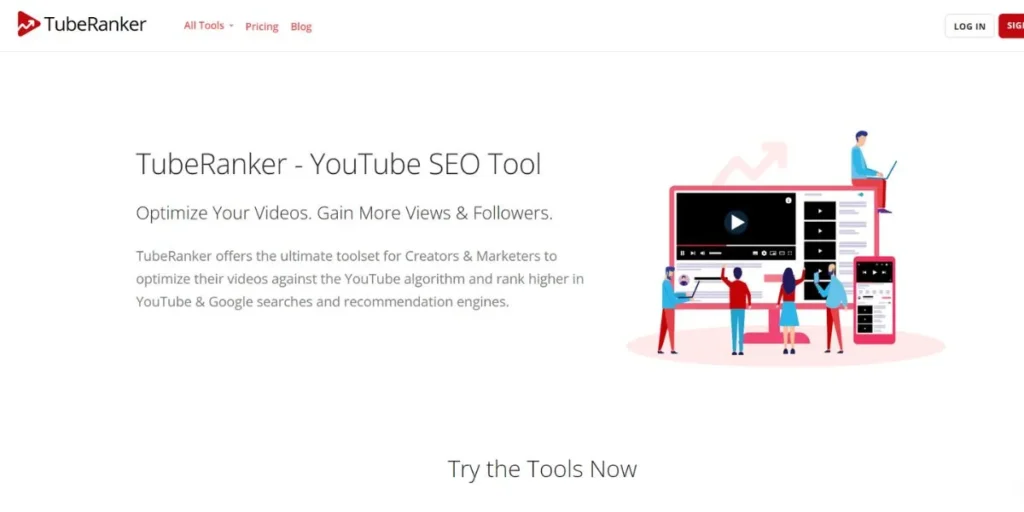
TubeRanker is a YouTube-based search engine optimisation tool that is developed on the basis of tags generation and metadata optimization. It will scan your video topic and immediately create a list of pertinent, ranked tags to get as many key-words as possible. On top of tags, TubeRanker has an SEO score calculator, which will also assess your title, description and tags as a whole to provide a general optimisation score. The title generator assists creators in creating titles that are catchy and rich in keywords and are in line with search trends.
TubeRanker also offers a channel audit tool to determine the gaps with your current video metadata. It is made in a manner that it is simple and action-driven to give immediately actionable recommendations as opposed to one having to possess deep knowledge of SEO. It is effective with individual creators in need of a specialized, effective metadata procedure.
Key Features
- Instant topic based YouTube tag generation.
- SEO score calculator: full metadata review.
- Keywords alignment based title generator.
Ideal For: Individual users who are interested in rapid and efficient tag and metadata optimisation.
Pros
- Fast, focused tag generation
- SEO scoring is actionable
- Easy for non-technical users
Cons
- Limited analytics features
- No browser extension
- Smaller feature set overall
Link: https://tuberanker.com
8. RapidTags
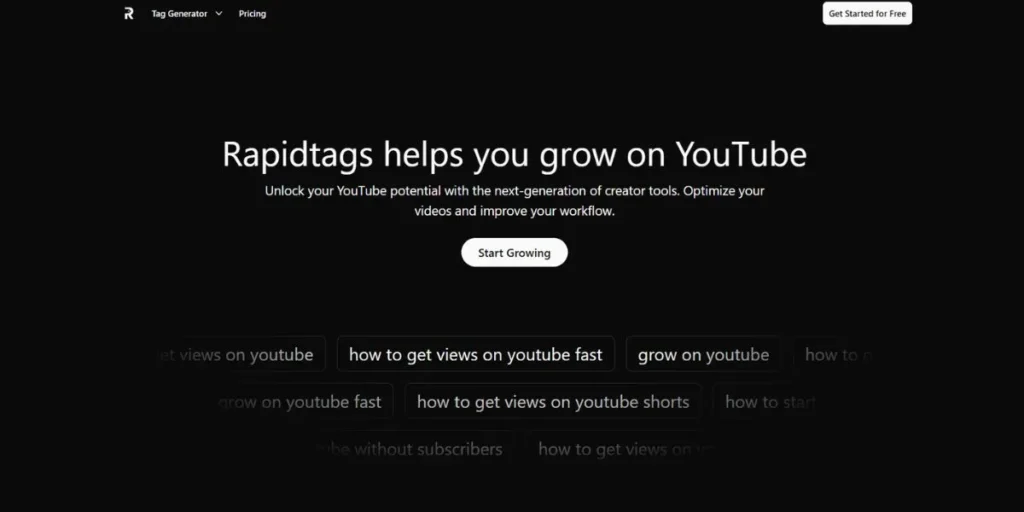
RapidTags is a free and web-based You Tube tag generator that generates a list of applicable tags in real time when provided with a keyword or a topic of video. It is considered one of the easiest to use in this list, you need no account, no sophisticated settings, just quick tag generation. When RapidTags generates suggestions, it is informed by suggestions generated by the suggested search engines of YouTube and related engines, thereby making the performance of the engine more or less consistent with the actual search behaviour.
One-click copying the created tag list allows its creators to directly enter it into the YouTube Studio. Although it does not offer the same level of depth as paid options, it is quick and free and is a great product to have in hand when you need to do some quick optimisation work. It is especially popular with novice YouTubers and small creators who do not require a subscription investment.
Key Features
- Real-time free tagging by keyword.
- One-click copy to clipboard on YouTube Studio.
- No account or login required
Best: Those with limited budgets who have less time and those with simple tags.
Pros
- Completely free to use
- Instant results, no login
- Simple one-click workflow
Cons
- No search volume data
- Very limited feature set
- No analytics or tracking
Link: https://rapidtags.io
9. SiteChecker
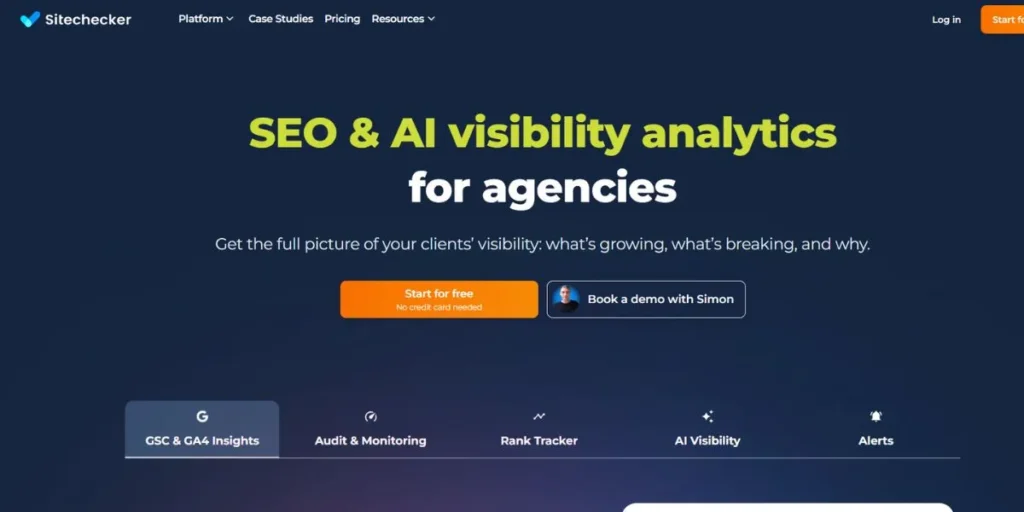
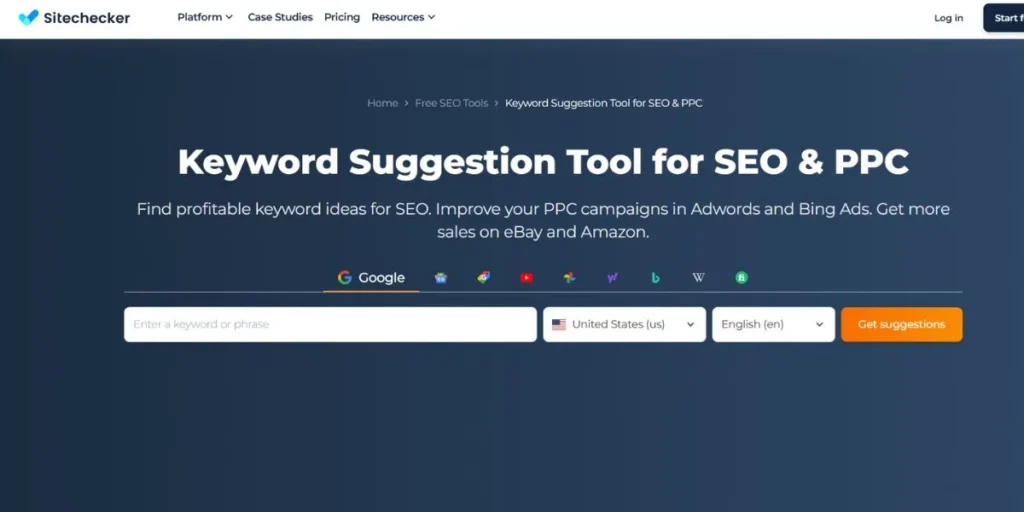
SiteChecker is essentially a web site SEO auditor, although it also has potent video metadata auditing features that render it useful to video marketers. It determines what is missing in your metadata, what is missing from your descriptions, how poorly your titles are organized, and so on, and it does this with your YouTube channel and with a single video. The tool does not give raw data dump, but actionable recommendations which are easy to prioritise the fixes.
SiteChecker also tracks the ranking positions of your channel in the long run with respect to target keywords, which provides you with a performance benchmark. In the case of a brand or business that operates both YouTube and a webpage, SiteChecker will have a single definition of SEO health. The addition of data to Google Search Console provides further analysis to it.
Key Features
- Metadata audit and identification of gaps of YouTube video.
- Time elapse in keyword rank.
- Integrated Search engine optimization health reporting of both websites and YouTube.
Best Use: Brands and companies that handle YouTube and Web based SEO.
Pros
- Audit oriented approach that is unique.
- Cross-channel SEO reporting
- Actionable recommendations
Cons
- Primarily a website tool
- The secondary feature of YouTube is features.
- Premium plans needed to be paid.
Link: https://sitechecker.pro
10. MorningFa.me
MorningFa. me is a YouTube growth coaching service aimed at smaller and newer creators who are overwhelmed by the more established SEO websites. It does not have the raw information, but offers recommendations on optimisation of videos in plain language providing a clear indication of what is wrong and why to the creators. The platform has a performance potential analysis of each video prior to and after upload providing a daily briefing of what to work on next. It also follows the channels of competitors and notifies the users about the appearance of other similar creators.
MorningFa.me’s topic ideation is also a trend-driven tool to create content that could be helpful when planning content by less experienced creators. Its user-friendly interface makes the barrier to entry in the field of video production with regard to SEO much lower.
Key Features
- Video optimisation coaching in plain language.
- Daily meetings on priorities of channel improvement.
- Publishing alert and trend tracking by competitors.
Best For: New and small creators who need to be guided with YouTube SEO without having to learn complex aspects.
Pros
- Beginner-friendly interface
- Coaching lessens the amount of guesswork.
- Useful competitor alerts.
Cons
- Low-end for high-end creators.
- Less raw data available
- Smaller support and community.
Link: https://morningfa.me
C) Analytics, Competitor Tracking & Channel Growth Tools
11. Ahrefs

Ahrefs is the most reputable SEO tool in the world and its capabilities of conducting the key-word research and ranking data offered on You Tube make it very useful to the serious video marketer. The Keywords Explorer tool has a YouTube mode to display a search volume, difficulty of keyword, click-through statistics, and history of ranking of any keyword. Ahrefs also appears where the YouTube videos are ranked in the search terms which permits content analysis of competitors. Its Content Gap feature helps you to know the keywords, which your competitors are ranking higher than you and you can use them to create strategic content.
To those who create and also operate a web site, Ahrefs offers a single ecosystem of both web and video material in terms of search engine optimization. Although it is also among the most expensive tools in this list, its accuracy of data and depth is industry-leading.
Key Features
- YouTube Explorer with volume and difficulty scorecards.
- YouTube competitor content gap analysis.
- YouTube video ranking insights of SERP level.
Best Use: Producers and agencies that desire premier keyword information on YouTube.
Pros
- Top of the line accuracy of keywords.
- Deep competitor analysis
- Combined web + YouTube SEO
Cons
- Expensive subscription
- Overkill for small creators
- No YouTube-native features
Link: https://ahrefs.com
12. SEMrush
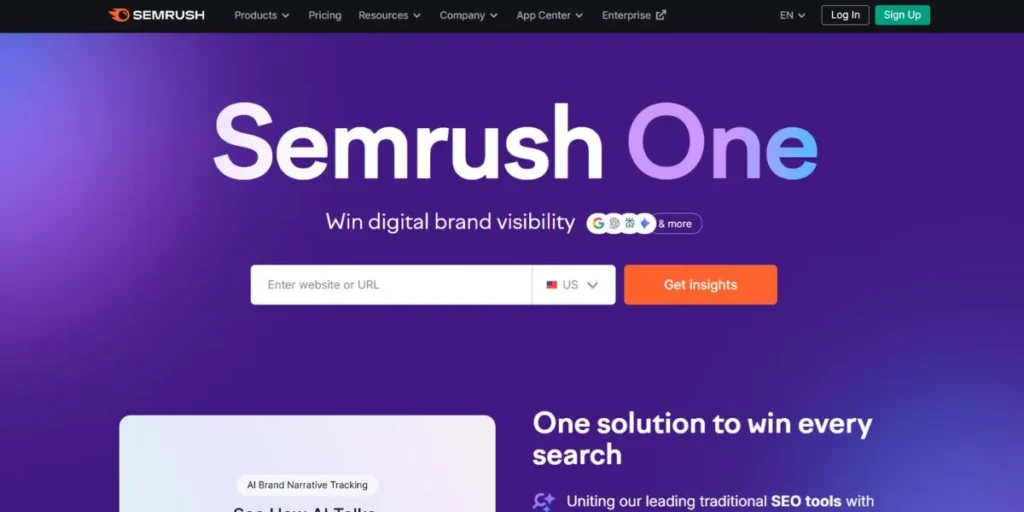
SEMrush is an online marketing tool that allows extensive research of keywords and trends on YouTube as part of its larger SEO system. The Keyword magic tool is used to produce volume, trend, and competition data of YouTube-relevant keyword ideas. Social Media Toolkit by SEMrush enables creators to examine the performance of YouTube in a single dashboard along with Instagram, Facebook, and Twitter. Its Topic Research option shows ideas of trending content based on the search demand across platforms, and it is strong in planning the content calendar.
Competitor traffic analytics are also available in SEMrush and will give you an idea of what YouTubes are winning organic search in your niche. SEMrush provides unparalleled cross-platform intelligence to marketers of a multi-channel campaign that involves YouTube.
Key Features
- YouTube-based video sharing cross-platform keyword and trend search.
- Multi-channel YouTube analytics Social Media Toolkit.
- Traffic and content gap analysis of competitors.
Best For: Multi-platform online marketers who use YouTube in expansion of wider SEO.
Pros
- The data is excellent across platforms.
- Most powerful content research tools.
- Super competitor intelligence.
Cons
- High cost for full access
- The secondary feature of YouTube is features.
- YouTube specific building is absent.
Link: https://www.semrush.com
13. Social Blade
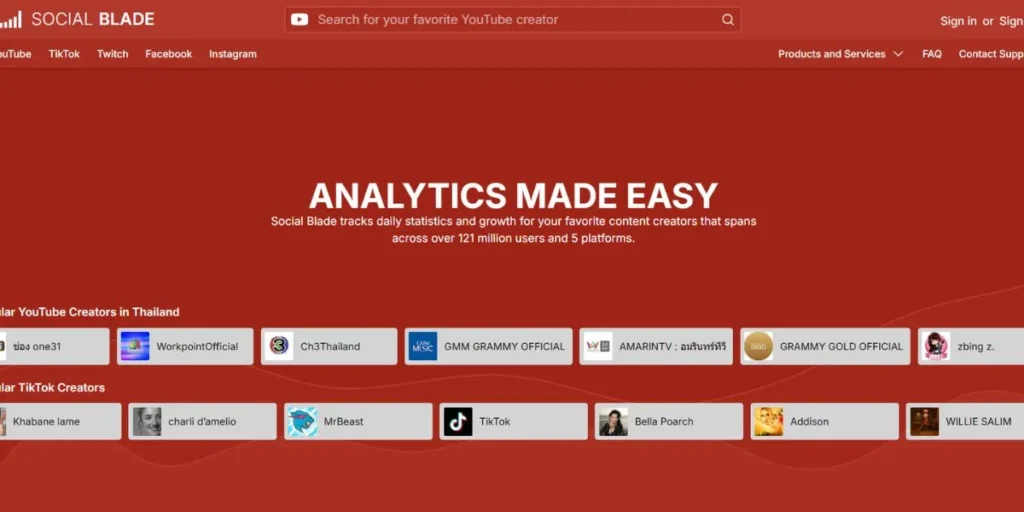
Social Blade is a free, open analytics tool that follows the YouTube channel statistics, growth rates, and performances of any open channel. It shows the number of subscribers, the number of views in every month of video consumption, the approximate range of earnings, and the grade rating, and it is among the most popular benchmarking tools used by the creator community. The Future Projections of Social Blade have the estimates of the state of a channel in 12 months, depending on the current growth rates.
It is used by creators to track their competitors, create achievable growth metrics, and ensure that their SEO success is being translated into channel growth in the long term. Although it does not offer any keyword or tag data, its competitive benchmarking feature makes it a necessary free complement to other YouTube SEO tools in this list.
Key Features
- Channel address analytics and historical growth.
- Grade rating competitor benchmarking.
- Subscriber and view projections in future.
Best Fit: The creators with the need to have a free channel benchmarking and growth analysis.
Pros
- Completely free
- No account required
- Excellent for benchmarking
Cons
- No keyword or tag features
- Estimates of earnings are crude.
- Data is surface-level only
Link: https://socialblade.com
14. Metricool
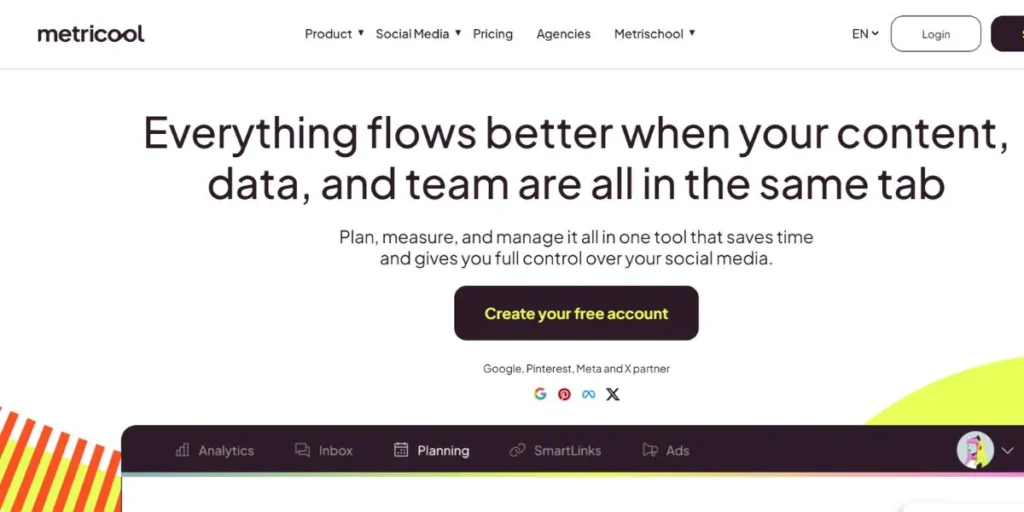
Metricool is a social media analytics and management tool that has integrated good YouTube features of scheduling, analytics, and cross-platform performance analysis. It enables creators to pre-plan the upload of YouTube videos and Shorts, organize community posts, and see the performance metrics of a video, such as watch time, impressions, and click-through rates, all in one dashboard. In Metricool, there is a competitor analysis option that compares your YouTube channel with at most 100 competitors at the same time.
Its inbox and content calendar feature is all-inclusive, and it is thus a viable tool to use by the content team managing both YouTube and other social media. When the management of agencies or brands operates YouTube as one of the components of a larger social media plan, Metricool makes the management of content across multiple channels much simpler.
Key Features
- Video and Shorts scheduling on one dashboard in YouTube.
- Multi-competitor channel benchmarking (100 channels or more).
- YouTube-Social media cross-platform analytics.
Best In: Content groups and agencies with YouTube and multi-platform social media.
Pros
- Very convenient in planning and analytics.
- Corporate benchmarking in bulk.
- Single multi-media dashboard.
Cons
- Not YouTube SEO-focused
- Keyword research is limited
- Full features need paid plan
Link: https://metricool.com
Free vs Paid Comparison
Free YouTube SEO Tools
| Tool | Free Features Available | Limitations |
| RapidTags | Full tag generation | No volume data, no analytics |
| Social Blade | Channel analytics, benchmarking | Surface-level data only |
| Keywordtool.io | Keyword suggestions (limited) | Search volumes behind paywall |
| Kparser | Multi-platform keyword parsing | Limited results per search |
| HyperSuggest | Basic autocomplete keywords | No volume data on free plan |
| TubeRanker | Basic tag + SEO score | Advanced features are paid |
Paid YouTube SEO Tools
| Tool | Starting Price (Approx.) | Best Value For |
| TubeBuddy | ~$4.99/month (Pro) | Individual creators |
| vidIQ | ~$7.50/month (Basic) | Data-driven growth |
| Keywordtool.io | ~$89/month (Pro Basic) | Keyword research at scale |
| Keyword Keg | ~$40/month | Long-tail niche research |
| Ahrefs | ~$129/month (Lite) | Advanced YouTube + web SEO |
| SEMrush | ~$139.95/month (Pro) | Cross-platform marketing |
| SiteChecker | ~$49/month | Metadata auditing |
| Metricool | ~$18/month (Starter) | Scheduling + analytics |
| MorningFa.me | ~$9.90/month | Beginner coaching |
How to Use YouTube SEO Tools (Step-by-Step Guide)
- Step 1 – Keyword Research: Use TubeBuddy, vidIQ, or Keywordtool.io to find target keywords that have both a high search volume and low competition. Target long tail keywords to get an early ranking.
- Step 2 – Competitor Analysis: Use vidIQ or Ahrefs to examine the number one videos in your target keyword. Examine their titles, tags, descriptions, and thumbnails strategies to determine trends and shortages.
- Step 3 – Metadata Optimisation: Compose a video title with keywords (less than 60 characters) and detailed description (300 or more with primary and secondary keywords), and a list of tags with TubeRanker or RapidTags.
- Step 4 – Upload and Score: Upload your video and check your optimisation using the scorecard of vidIQ or the SEO score of TubeBuddy. Address any designated concerns and then publish.
- Step 5 – Monitor Rankings: SiteChecker or Ahrefs should be used to track the progress of your video search on target keywords during the initial 30–90 days. Engagement indicators Track click-through rate (CTR), average view duration in YouTube Studio.
- Step 6 – Benchmark and Repeat: Use Social Blade or Metricool to benchmark your channel against competition on a monthly basis. Discover content that plays well and invest more on it.
Final Verdict
The most useful YouTube SEO tool will solely be based on your objectives and financial capability. TubeBuddy or vidIQ provide the most comprehensive value currently to most novice creators, as they combine keywords research, tag tools and analytics all in one. Ahrefs or SEMrush should be considered by power users and other agencies to extract more data. RapidTags, Social Blade, and Kparser offer substantial free features with a limited budget. A combination of two or three complementary tools in the area of keyword research, metadata optimisation and analytics is the most effective strategy.
FAQs
Which is the most useful free YouTube search engine optimization tool in 2026?
The best free solutions are RapidTags and Social Blade, that generate tags and channel benchmarking instantly, and it is free and no login is needed.
TubeBuddy or vidIQ: Which is better in YouTube keyword research in 2026?
Both of them are great – TubeBuddy is more efficient in integrating workflows inside YouTube Studio, whereas vidIQ has a more substantial competitor tag analysis and real-time SEO grading on upload.
How fast can I rank YouTube videos with the help of SEO tools and how fast?
Yes – with correct optimisation through keyword and metadata applications, most videos are ranked higher within 7 to 30 days, based on the niche competition and channel authority.
Should I invest in a paid YouTube SEO tool, or are free tools adequate in developing it?
Free tools are useful in simple optimisation, but paid tools offer the information on the search volume, competitor analysis, and rank monitoring to build a channel in a strategic and sustainable manner.