
The increasing rate of competition in the contemporary business world has made it essential to have effective time management in every organization. As a freelancer who works with several clients, a small business owner who handles a growing staff, or an enterprise leader who addresses complex projects, the use of effective time tracking software can make a significant difference in terms of productivity and profitability. However, these solutions have come a long way. They can now be found in the form of even more advanced functionality, which includes project management, invoicing, reporting, and resource allocation.
The contemporary working environment requires accuracy in time management, and such organizations are coming to appreciate the fact that accurate tracking of time is directly proportional to better project delivery as well as financial results of projects. Time tracking software is the foundation of effective work, as it allows companies to know how productive their employees are, how to estimate the price of the project correctly, and how to allocate resources based on the findings. Transparency and accountability in virtual work environments have made such tools even more necessary and made remote work/distributed teams even more essential.
What are Time Tracking Software Solutions?
Time tracking software is a type of digital tool intended to monitor, track, and nurture the use of time on several tasks and projects. Such applications act as complete programs, helping businesses to organize their efficiency of workflow efficiency and obtain knowledge about the patterns of productivity. The contemporary timekeeping software is not just tracking time. Most have incorporated project management, collaboration, billing tools, as well as performance analytics.
Most platforms give a variety of time recording techniques, such as manual key entry via timesheets, automatic time monitoring via desktop computer applications, and field employee cell-based tracking. This information can be arranged automatically by the software into meaningful reports, by which the managers and the team will be aware of how time is being used, and how it can be used better. Smart applications also use artificial intelligence to recommend time punches, idle time, and predictive information concerning project delivery.
Essential Features to Look for in Time Tracking Software Solutions
As I analyze the various possibilities, it is best to know what type of features would be of the most value to me in particular. The perfect mix of capabilities would allow changing the way your team approaches time and project management and can drive efficiency and deliver better business results.
- Intuitive interface: The system must be designed in a way that is user-friendly, which will require minimal training for the team.
- Many Tracking Systems: Seek a system that has illusions to diverse modes of time tracking such as real-time tracking, manual submission of a timesheet, or automatic tracking.
- Comprehensive Reporting: The efficient reporting functions must deliver all the critical information concerning time allocation, project progress, the productivity of the workforce of the project, and the analysis of the costs.
- Integration Capabilities: It can easily be integrated with other tools already used, including project management platforms, accounting software, and even communication tools, making the transitions between workflows easy.
- Mobile Accessibility: Workers are becoming more mobile, and principled mobile apps are required to work in fields, far-off staff, and wandering team members.
Comparison Table for Time Tracking Software Solutions
| Software | Rating | Best Feature |
| Scoro | 4.2/5 | Advanced project management integration |
| My Hours | 4.5/5 | Exceptional ease of use |
| Timely | 4.1/5 | AI-powered automatic tracking |
| QuickBooks Time | 4.0/5 | Seamless QuickBooks integration |
| Harvest | 4.3/5 | Comprehensive invoicing capabilities |
| Replicon | 3.9/5 | Enterprise-grade complexity handling |
| All Hours | 4.0/5 | Time and attendance management |
| Paymo | 4.2/5 | Pomodoro technique integration |
| actiTime | 4.1/5 | Workflow-based timesheet system |
| Timing | 4.4/5 | Personal productivity tracking |
Top 10 Time Tracking Software Solutions
1. Scoro
Rating: 4.2/5
Website: https://www.scoro.com/
Best Use Case: Professional services and complex project management
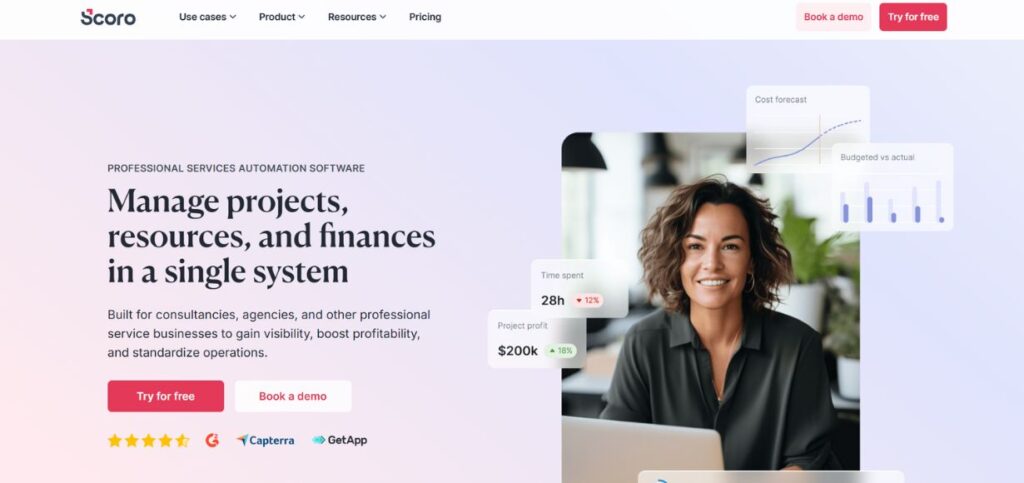
Scoro brands itself as an end-to-end business management solution that goes way beyond even simple time tracking capabilities. This powerful solution combines project management, customer relationship management, financial planning, and resource allocation in a single ecosystem.
The system is best suited for managing intricate business activities such that several departments should work in harmony with one another. It has very sophisticated budgeting functionalities and the ability to track its use, including organizations that offer services, as they need to know the level of profitability in different projects and different clients. Unlike the basic time-tracking software, the program is designed to cover the whole business circle: lead generation and invoice payment.
Key Features:
- Advanced project budgeting
- Resource utilization tracking
- CRM integration capabilities
- Financial planning tools
- Custom workflow creation
Pros:
- Comprehensive business management
- Advanced reporting capabilities
- Professional service optimization
Cons:
- Steep learning curve
- High pricing structure
- Complex feature set
Pricing: $20-$50 per user per month
2. My Hours
Rating: 4.5/5
Website: https://myhours.com/
Best Use Case: Small teams seeking simple, effective time tracking
My Hours has managed to become one of the leaders in the market of user-friendly time tracking software designed with simplicity and efficiency in mind. The platform is aimed at providing the essential features to manage time, as the company has almost twenty years of experience in the industry and is not willing to complicate its users. The software is versatile as it works well on real-time tracking and also on correcting and entering timesheets, which makes it flexible to different working styles and preferences.
It can handle unlimited projects, tasks, and clients, which makes it scalable when a business grows and still has its simple core. Its advantages are that it allows delivering high reporting and project profitability analysis without making the interface too dirty and hard to navigate, while also offering a free pay stub template to simplify payroll documentation.
Key Features:
- Unlimited projects and tasks
- Detailed profitability analysis
- Automated workflow reminders
- Export and billing rates
- Real-time tracking options
Pros:
- Exceptional user experience
- Excellent support team
- Cost-effective pricing
Cons:
- Limited resource scheduling
- Basic visual design
- No advanced integrations
Pricing: Free plan available
3. Timely
Rating: 4.1/5
Website: https://www.timely.com/
Best Use Case: Teams requiring automatic time tracking and visual planning
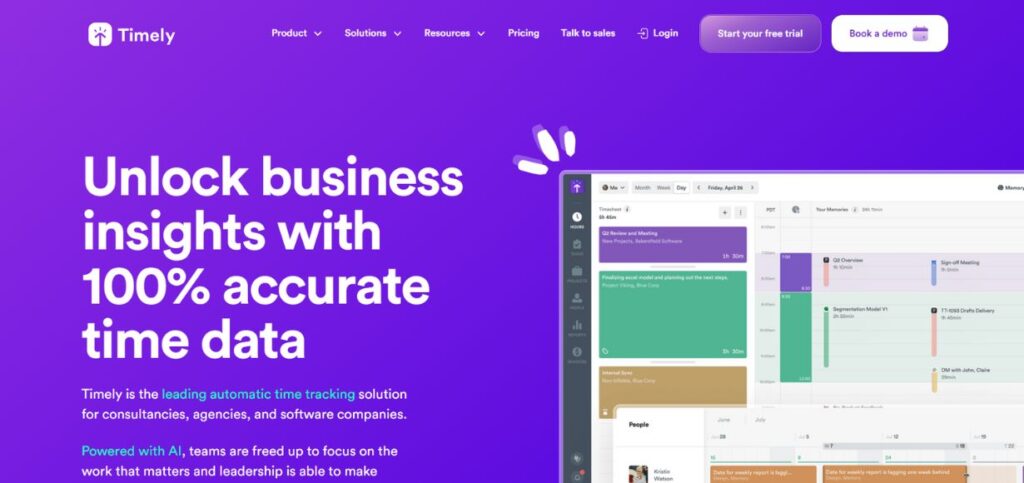
Timely is the leading example of new-age time tracking automation technology, as the application makes use of artificial intelligence to reduce the dependency on manual time input. The software will track the work and make itself smart to make time entries on the side, learning patterns to get more accurate the more it sees the user. Its ability to plan tasks and projects by means of a visual interface, coupled with dynamic Gantt charts, makes it of special interest to visually aware teams, who may appreciate both functionality and good looks.
Memory created the platform that focuses more on the privacy and protection of the work information that needs to stay secure, and provides a great insight into the productivity patterns. Modern, streamlined interface with a design-sensitive attitude, combined with the powerful feature to manage project timelines.
Key Features:
- AI-powered automatic tracking
- Visual Gantt charts
- Privacy-focused design
- Mobile synchronization
- Task drag-and-drop
Pros:
- Modern interface design
- Automatic time capture
- Strong privacy protection
Cons:
- Higher pricing tiers
- Learning curve required
- Limited customization options
Pricing: $9-$22 per user per month
4. QuickBooks Time
Rating: 4.0/5
Website: https://quickbooks.intuit.com/
Best Use Case: Businesses already using QuickBooks for accounting needs
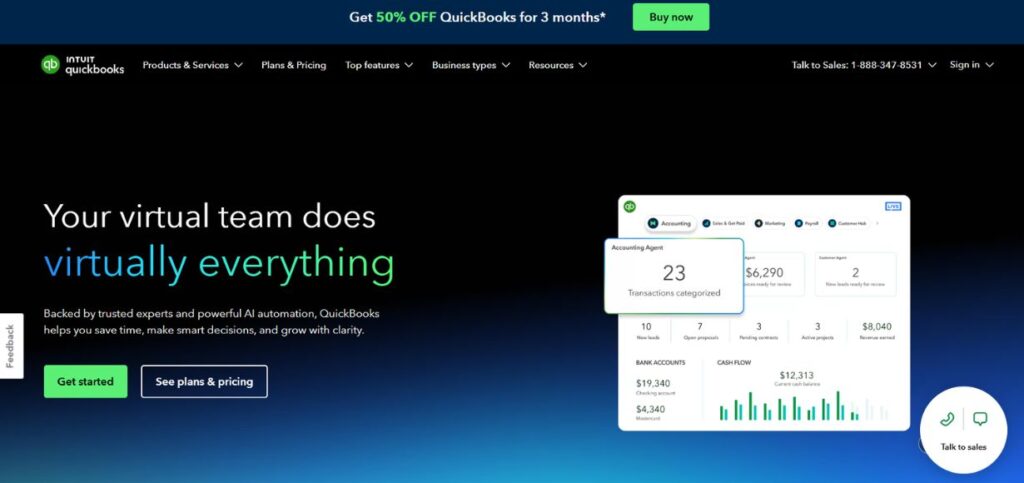
QuickBooks Time, previously called TSheets, offers a special solution to those companies whose needs are a direct connection with the QuickBooks accounting system. It is particularly good at scheduling field teams, field workers, and mobile teams, providing powerful scheduling tools, but also the more familiar time tracking options. Its advantage is overcoming the intersection of time tracking and payroll processing, so it is priceless in terms of business with complicated schedules and job sites, with numerous job locations.
Clock-in/clock-out software is especially suitable for hourly workers and field service businesses. Although the interface might appear outdated compared to new options, its stability and intermittent connection in the QuickBooks environment would suit already established business enterprises.
Key Features:
- QuickBooks seamless integration
- Employee scheduling system
- Mobile clock functionality
- GPS location tracking
- Payroll data export
Pros:
- Excellent accounting integration
- Field worker management
- Reliable scheduling features
Cons:
- Outdated interface design
- Limited desktop functionality
- Intuit acquisition issues
Pricing: $20-$40 base fee plus $10 per user per month
5. Harvest
Rating: 4.3/5
Website: https://www.getharvest.com/
Best Use Case: Freelancers and teams focused on billing and invoicing
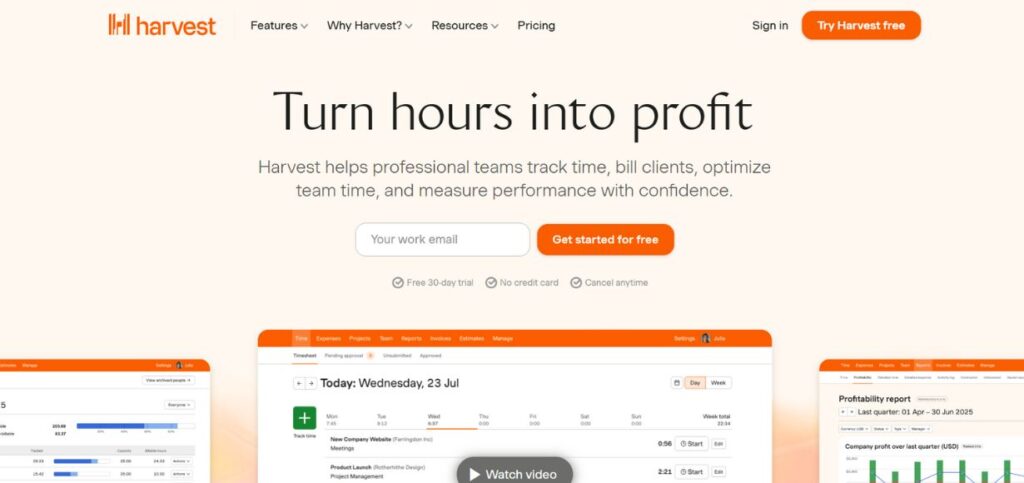
Harvest has designed a unique niche because it pays attention to the end-to-end process of time tracking to receiving money after work. The beauty of the platform is the fact that it is simplistic and gets the hustle of billing an activity done to a high extent, therefore appealing greatly to the freelance community and companies that deal with services.
Its extensive invoice capabilities, along with payment received via PayPal and Stripe, result in an elegant client billing process. Its functionality includes a wide range of integration.
Key Features:
- Integrated invoicing system
- Online payment processing
- Extensive app integrations
- Timesheet reminder system
- Expense tracking capabilities
Pros:
- Simple, focused design
- Excellent invoicing features
- Strong integration ecosystem
Cons:
- Limited reporting detail
- Basic project management
- Minimal customization options
Pricing: Free plan available, Pro at $11 per user, Premium at $14 per user per month
6. Replicon
Rating: 3.9/5
Website: https://www.replicon.com/
Best Use Case: Large enterprises with complex time and attendance requirements
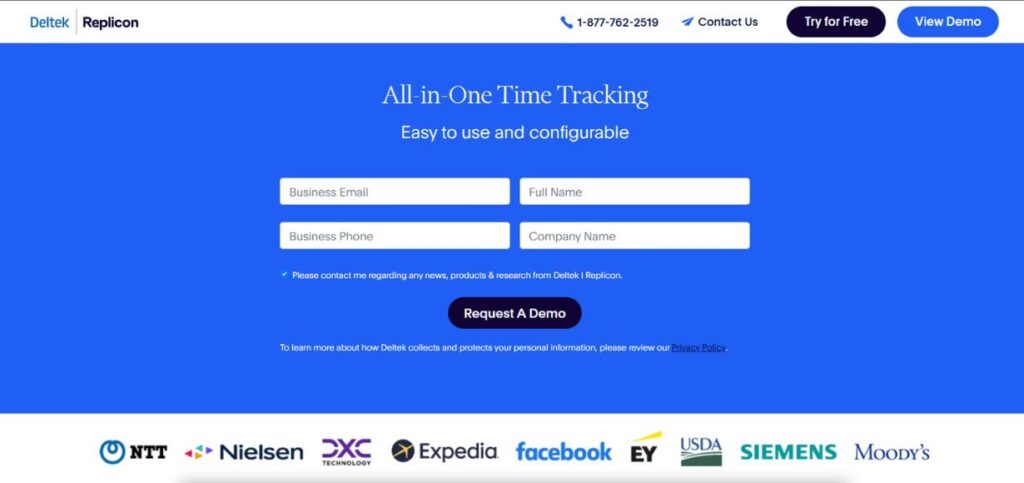
Replicon is the enterprise-level offering within the tough tracking software market; it is specifically built to support the extensive needs of big organisations with complicated operating needs.
There is strong support for the platform in terms of the handling of a mixture of departments, the needs of a different type of employee, and complex reporting requirements that cannot be provided by small solutions. It’s an end-to-end solution that features time tracking, expense tracking, resource management, and absence management in one place.
Key Features:
- Enterprise-scale architecture
- Advanced reporting system
- Expense management integration
- Absence tracking capabilities
- Custom configuration options
Pros:
- Handles large teams
- Comprehensive feature set
- Advanced customization capabilities
Cons:
- Complex user interface
- Poor customer support
- Steep learning curve
Pricing: $12-$29+ per user per month
7. All Hours
Rating: 4.0/5
Website: https://allhours.com/
Best Use Case: Medium to large businesses requiring time and attendance management
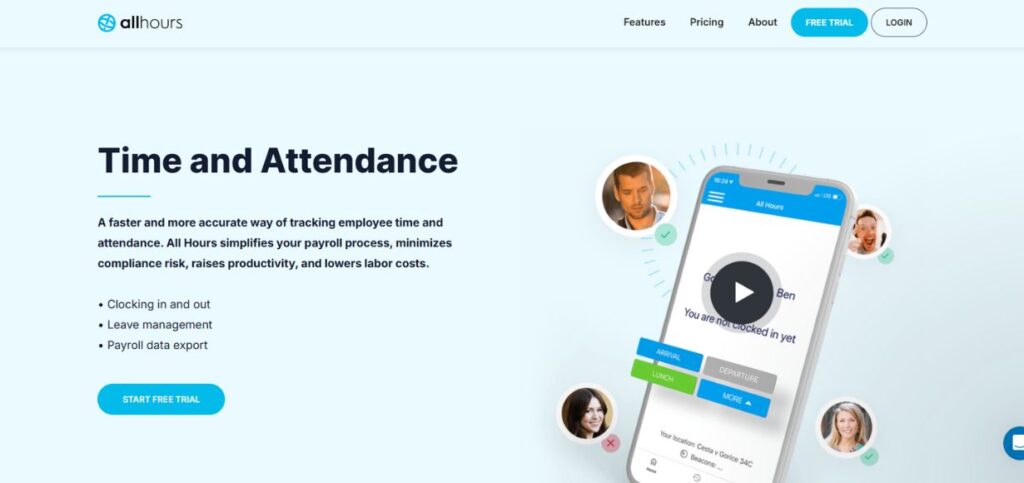
All Hours excels in providing all-round solutions in the area of time and attendance management and provides a flexible approach to such management with the option of customizing clocking methods through web, mobile, and hardware terminals.
The exporting of payroll-ready information in the software simplifies exporting time tracking data into compensation processing. Although it is too complicated to be adopted in small organizations, medium and large organizations can take advantage of the overallness of workforce management.
Key Features:
- Multiple clocking methods
- Hardware terminal compatibility
- Absence management system
- Overtime calculation automation
- Audit trail maintenance
Pros:
- Payroll integration ready
- Legal compliance focus
- Flexible clocking options
Cons:
- Complex for small teams
- Higher pricing structure
- Limited project features
Pricing: $2-$3.50 per user per month
8. Paymo

Rating: 4.2/5
Website: https://www.paymoapp.com/
Best Use Case: Small businesses needing project management with the Pomodoro technique
Paymo stands out among its competitors by offering more than just project management options with possibilities of specialized time tracking, such as the commonly used Pomodoro technique. The platform has grown and expanded from its original idea of being a time tracker to a comprehensive solution for project management, retaining its core competency of being a time tracker.
It also has automatic time tracking as well as a well-designed desktop widget that makes time tracking hassle-free. The Pomodoro feature responds to the increasing need in finding methods of productivity that achieve more concentration in work. The free invoicing functionality of the platform, combined with the included payment gateway, makes it especially suitable for small businesses and freelancers, who need a single platform to coordinate their projects, manage their time, and be able to bill their clients.
Key Features:
- Pomodoro technique integration
- Automatic time tracking
- Project management tools
- Free invoicing capabilities
- Desktop widget functionality
Pros:
- Pomodoro productivity technique
- Strong time tracking
- Free invoicing included
Cons:
- Complex interface design
- Steeper learning curve
- Limited enterprise features
Pricing: Free plan available, $5.90-$16.90 per user per month
9. actiTime

Rating: 4.1/5
Website: https://www.actitime.com/
Best Use Case: Teams requiring structured workflow-based timesheet processes
ActiTime is specifically concerned with the development of an efficient workflow in the management of time tracking and its subsequent approval, which is why the product is suitable for companies that demand the structure of time management processes.
It is a workflow-based approach, which is very accurate and accountable, and gives the managers the control they require over the processes of managing time tracking.
Key Features:
- Workflow-based timesheet system
- Administrative approval process
- Advanced reporting capabilities
- Time locking mechanisms
- Cost-effective pricing structure
Pros:
- Structured workflow system
- Powerful reporting tools
- Competitive pricing
Cons:
- Cluttered user interface
- Steeper learning curve
- Limited modern features
Pricing: Free for up to 3 users, $5-$6 per user per month
10. Timing
Rating: 4.4/5
Website: https://timingindia.com/
Best Use Case: Individual freelancers and Mac users seeking personal productivity
Timing is the best example of personal productivity tracker tools, and is de facto narrowly focused on individual users who would like to know and enhance their working habits.
It has an analytical feature that can give a detailed overview of the productivity, with the help of which a freelancer and an independent professional can find out what their best and most prolific time is, so that he/she can schedule his/her own work accordingly.
Key Features:
- Automatic time tracking
- Daily approval workflow
- Productivity analysis tools
- macOS optimization
- Project assignment system
Pros:
- Extremely user-friendly
- Powerful analytical features
- Automatic time capture
Cons:
- No team functionality
- Limited billing features
- macOS dependency
Pricing: $8-$17 per user per month
How to Choose the Right Time Tracking Software Solutions
To choose the right time tracking software, you have to pay much attention to your corporate demands, its long-range goals. The ruling must match your immediate operational requirements and leave an opportunity for extending and broadening in the future.
- Team Size and Scalability: You should also take into consideration your current team size and then take into account the future expansion when considering your solutions. Other platforms work best with small groups and are too unwieldy with bigger organizations, and enterprise solutions might be too complex with small groups.
- Integration Requirements: Think about what software tools are applied by your team to manage the projects, to work on the accounting, communication, and other spheres of the business.
- Budget and Cost Structure: Study the total cost of ownership, which is not limited to the monthly subscription charges. Jointly consider costs of implementation, training needs, and possible loss of productivity over the transition period.
- Feature Requirements: Break up what is necessary or desired, depending on your individual use cases. The basic features will most often be proper time tracking, general reports, and data export.
- User Experience and Adoption: User experience and adoption make a more feature-rich solution useless, considering the team members will not use it regularly. Appraise the characteristics of user interface design, operation on mobile, and the learning curve of each of the options.
Conclusion
Time tracking software is one area that is developing at a fast pace because of the evolving workplace and technology. With work stepping further out of the office and a growing demand by businesses to improve the efficiency of their operations, the current state of time-tracking tools has been overturned, with readily available business intelligence platforms taking on the role of a time-tracker instead of being used as a straightforward alternative to the traditional time-tracker. Solutions that were reviewed in this analysis are the current solutions of the art because each of these solutions has its strengths that a particular business requires and its structure.
The key to the success of the implementation of time tracking software is your choice of the solution, which should match the working style of your team, technical needs, and shape the course of your business. Depending on whether you want simplicity and ease, the sophistication of project management functions, or enterprise-level features, the market will have answers to fit various needs. The trick is to realize the particular needs of your organization and to select a platform that will complement your current working processes.
Frequently Asked Questions
Q: How do time tracking programs differ from project management programs?
A: Time tracking software is used to only track and record time on tasks, whereas project management tools have more functionality detailing including assignment of tasks, scheduling, and collaboration of team members. Most modern solutions have a combination of the two abilities.
Q: Is a time tracking system suitable for remote teams?
A: Yes, most current time tracking software tools take remote working into consideration, and provide mobile apps, cloud-based synchronization, and capabilities that offer transparency and accountability of remote teams.
A: Is automatic time tracking of any accuracy when compared to manual entry?
A: Automatic time tracking is usually more accurate and it avoids human error, but it could also have blank memories, but which is because it cannot be set up immediately and verified sometimes to maintain adequate allocation of activities.
Q: Do creative industries fit the use of time tracking software?
A: Absolutely. Numerous creative experts take advantage of time tracking software to track their project time, set the correct billing rates, and understand the productivity cycles to maximize their creative activities.
Q: How do I go about an organization’s time tracking software implementation?
A: Concentrate on user adoption through selecting easy-to-use software, give sufficient training, clearly explain to your team the value the new software will bring, and begin with simple functions, introducing more complex functions with time.