
Starting up a business is a very exciting experience with numerous challenges and opportunities. Being a founder, you have to constantly balance between various tasks because of being in charge of customer relations and marketing campaigns, arranging worker collaboration, and project monitoring. A proper technological foundation could be the difference between coming out of thin air and performing effectively. Access to powerful, yet cost-effective solutions is essential in the current competitive world of firms that are at an early stage of operations, with limited budgets.
Luckily, the digital ecosystem presents a wide range of advanced platforms that fulfil the demands of upcoming companies. These solutions assist in the automation of routine operations, optimisation of operations, as well as generate insights that are valuable in strategic decision-making.
Whether you are an individual developer who just has to create your MVP or a team of three who have a small team that is working towards product-market fit, choosing the right digital infrastructure can go a long way in boosting your growth curve.
What are Startup Tools for Founders?
Founder Startup Tools, Founder software programs and platforms are specifically made to solve the problems that early-stage companies have. These solutions allow entrepreneurs to run numerous aspects of the business without having to spend much money or technical skills. They normally concentrate on addressing typical areas of pain like customer engagement, team coordination, brand development, market visibility and operational efficiency.
The majority of the sites are based on cloud-based architecture that allows them to be accessed from any location and can be expanded as your business expands. The key feature of good Startup Tools that founders should have is that they should be able to provide enterprise-wide functionality without being complex enough that it takes small teams a long time to integrate, without conducting long-term training and onboarding.
Essential Features to Look for in Startup Tools for Founders
To choose the technology infrastructure properly, you should pay sufficient attention to your business needs and development goals. Startup Tools are not made equal, and what would be brilliant in one startup may be utterly inappropriate in another Startup. In deciding on possible solutions, founders must focus on platforms that can be easily adapted, scaled, and connected with the existing systems.
- Intuitive User Interface: The interface is expected to be simple, and it needs very little training, making your team productive in a short period of time.
- Scalability and Flexibility: The platforms that you have adopted should be able to meet the demands of your business as it grows to serve many users, with more transaction volume and functionality.
- Integration Capabilities: The contemporary business operations are based on several interrelated systems.
- Affordable Pricing Model: Identify an open pricing model that fits your level and has liberal free plans or a plan targeted at Startup Tools.
- Good Customer Support: Customer service is sometimes required on the most user-friendly sites. Receptive support services, comprehensive documentation and a user base can be priceless during troubleshooting or getting to understand more about the advanced functionality.
Also Read: Top Startup Companies in Delhi
Comparison Table for Startup Tools for Founders
| Tool Name | Rating | Best Feature |
| Asana | 4.5/5 | Real-time project tracking across teams |
| Canva | 4.7/5 | Million+ design templates and assets |
| Slack | 4.6/5 | Centralised workspace communication |
| BoldDesk | 4.8/5 | AI-powered customer support automation |
| Zapier | 4.5/5 | 3,000+ app integrations without coding |
| Google Workspace | 4.6/5 | Seamless real-time collaboration suite |
| Trello | 4.4/5 | Visual kanban-style task organisation |
| MailChimp | 4.3/5 | Comprehensive email campaign analytics |
| Zoom | 4.5/5 | HD video conferencing with recording |
| Calendly | 4.6/5 | Automated scheduling with calendar sync |
| Hootsuite | 4.2/5 | Multi-platform social media dashboard |
Top 11 Startup Tools for Founders
1. Asana for Project Management
Rating: 4.5/5
Website: https://asana.com/?noredirect
Best Use Cases: Coordinating cross-functional teams and tracking multiple project timelines simultaneously
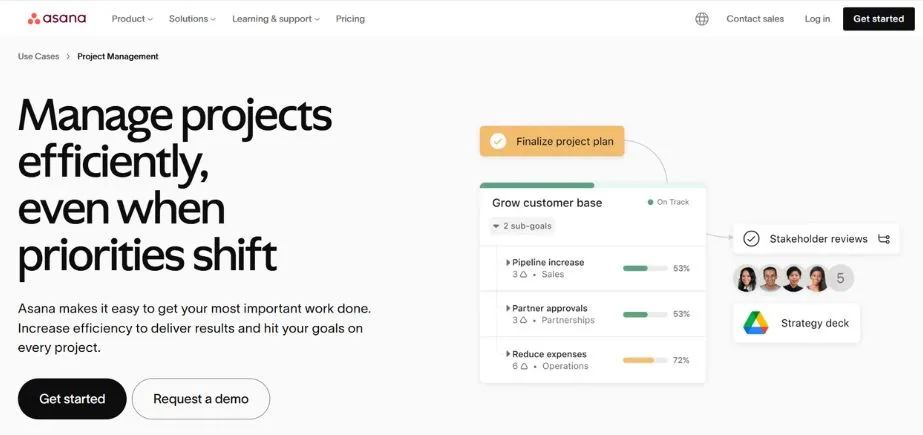
Asana proves to be a holistic solution to founders who must remain visible in many initiatives at the same time, keeping their teams on track. The platform converts the disorderly work processes into organised and transparent processes that can be adhered to by all. The free plan offers a lot of functionality, such as unlimited tasks, projects, and storage with small teams.
The flexibility of Asana enables it to fit in a wide range of methodologies, whether it be a waterfall system or an agile one. The platform is good at breaking down complicated initiatives into small parts, giving tasks specific owners, and creating real deadlines. Its communication system updates everybody without making them overloaded, and the mobile applications would make sure you are not out of touch even when you are off your desk.
Key Features:
- Customizable project views
- Task dependencies tracking
- Timeline and calendar integration
- Progress reporting dashboards
- Team workload management
Pros:
- Highly intuitive interface
- Excellent collaboration features
- Robust free plan
Cons:
- Advanced features require an upgrade
- Can feel overwhelming initially
- Limited automation on the free tier
Pricing: Free for teams up to 15 members
Also Read: Top AI for Market Research
2. Canva for Graphic Design
Rating: 4.7/5
Website: https://www.canva.com/templates/s/graphic-design/
Best Use Cases: Creating professional marketing materials and social media content without design expertise
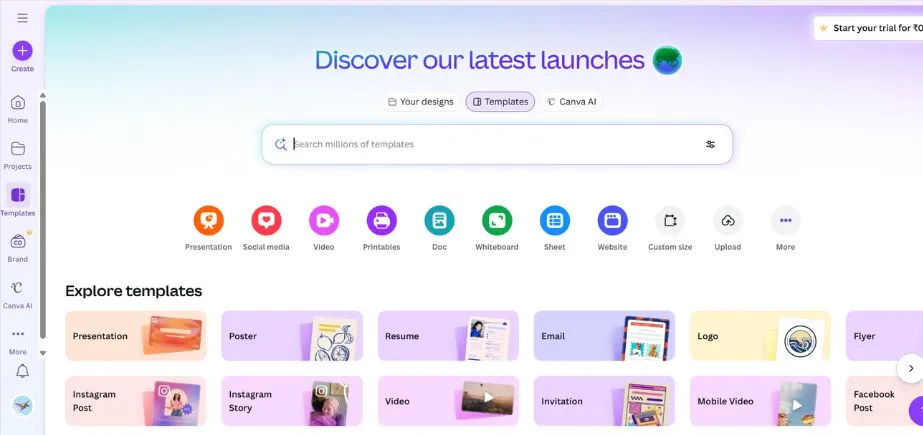
Canva is a democratisation of graphic design since the tool enables founders to have high-quality tools without necessarily taking years to learn. The platform has a large library with more than a million stock photos, fonts, illustrations, and templates to cover literally any possible application scenario. Canva has readymade templates, whether you want to create pitch deck presentations, social media posts, business cards, or web banners; they come as great starting points.
The platform keeps reviewing its template library to keep up with the latest design trends so that your materials are always up to date. Canva helps even founders who have no specialised design tools to compete on a visual playing field with much larger and better-funded companies.
Key Features:
- Million+ templates and assets
- Brand kit management
- Collaboration and sharing
- Resize to multiple formats
- Video and animation creation
Pros:
- Extremely user-friendly
- Massive template library
- Strong free tier
Cons:
- Premium assets require payment
- Advanced features need Pro
- Export limitations on free
Pricing: Free version available
3. Slack for Team Communication
Rating: 4.6/5
Website: https://slack.com/intl/en-in
Best Use Cases: Centralising team conversations and reducing email overload across distributed teams
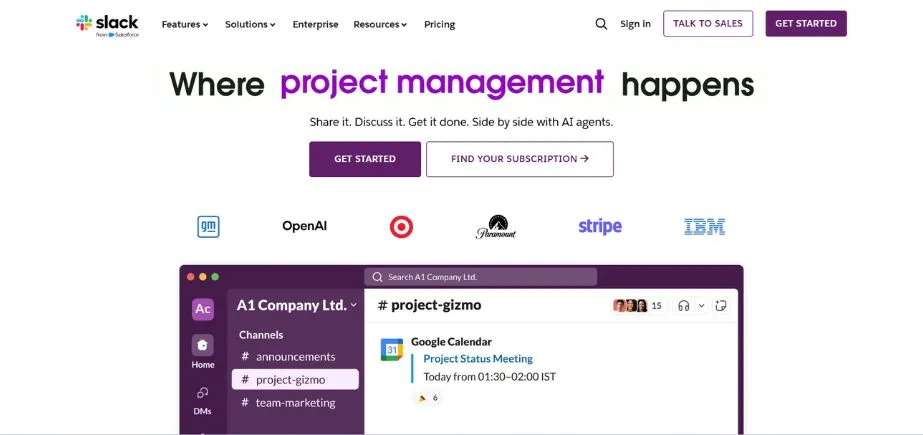
Slack transforms the communication process within the Startup Tools team by auditing the email trails, having messages in different messaging platforms, and using a single workspace. The channel-based architecture enables you to sort your conversations according to project, topic, or team, best suited to make sure that the relevant information is shared among the right people without clogging everyone with notifications. Direct messages help to maintain one-on-one conversations quickly, and threaded responses maintain good organisation and follow-up conversations.
The platform is connected with hundreds of other tools, which makes it a central point where the notifications of different systems are brought together. Such consolidation minimises context switching drastically and assists members of the team to remain focused. The mobile app keeps you in touch with your life on the way to work or when you are working away.
Key Features:
- Organised channel structure
- Direct messaging capability
- File sharing and storage
- Powerful search functionality
- App integrations hub
Pros:
- Reduces email dependency
- Excellent organisation system
- Real-time communication
Cons:
- Message history limited (free)
- Can become noisy
- Storage restrictions on free
Pricing: Free version with limitations
4. BoldDesk for Customer Service Management
Rating: 4.8/5
Website: https://www.bolddesk.com/contact-management
Best Use Cases: Managing customer inquiries across multiple channels with AI-powered support automation
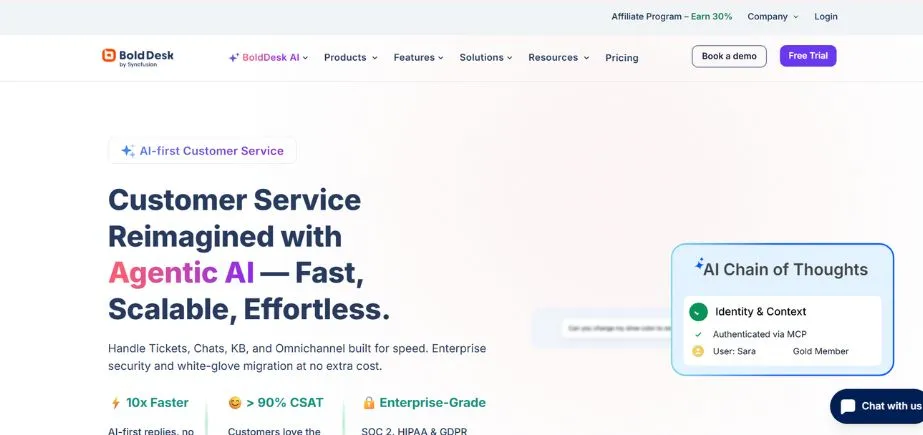
BoldDesk is the new dawn of the customer service technology and the Startup Tools that founders who know that customer experience is the secret to retention and growth. The platform will integrate the email, chat, social media, and messaging applications to facilitate requests into a single ticketing service; thus, there will be no customer inquiries that are not retrieved. It has an AI copilot that assists agents by providing responses, sentiment identification, a summary of a conversation, and even creating content in other languages.
With Startup Tools that do not have support tools, the AI agent feature is an autonomous environment where common inquiries are given and different functions are performed with the use of the AI agent, including order tracking, refunds, or updating of account information without the interaction of a human being. This is why it is ideal when a firm wishes to access the international markets within a short period of time, and this is due to the multi-linguistic nature.
Key Features:
- Omnichannel e-ticket management.
- Recommendations for AI-based responses.
- Autonomous AI agent
- Self-service knowledge base
- Ability to provide multilingual services.
Pros:
- Advanced AI features
- Extensive channel coverage.
- Excellent automation further.
Cons:
- Requires initial setup time
- Learning curve for features
- Premium pricing for scale
Pricing: Startup-friendly pricing available
5. Zapier for Workflow Automation
Rating: 4.5/5
Website: https://zapier.com/workflows
Best Use Cases: Connecting disparate applications and automating repetitive tasks without writing code
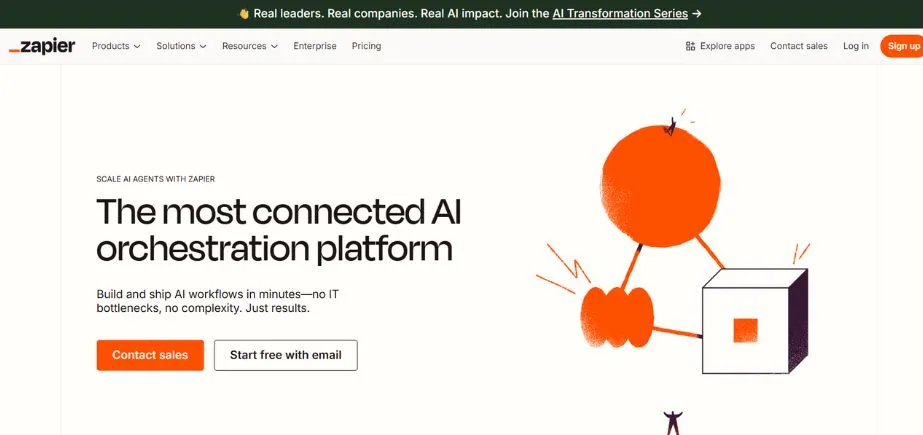
Zapier is the gum that holds all other applications in your technology stack together. You do not need to manually transfer data, nor do you need to repeat yourself and be counterproductive. The platform integrates over three thousand applications, such as CRM systems and email marketing solutions, project management solutions and accounting software. It requires virtually no programming to create automated workflows, which are called Zaps; all one needs to do is select an event in one of the applications and define what actions need to be taken in the other applications.
Such automations are effective in the background since they do not require your workforce to work on them, but focus on high-value activities that will see the business grow. The time saved is multiplied quite fast, and the reduced human error ensures standardisation of data across systems.
Key Features:
- 3,000+ app integrations
- Multi-phase automation processes.
- Conditional logic support
- Reader library of standard operations.
- Error monitoring and management.
Pros:
- No coding required
- Massive app ecosystem
- Significant time savings
Cons:
- Task limits on the free tier
- Can become expensive
- Complex Zaps need planning
Pricing: Free for 100 tasks/month
Also Read: Best Productivity Tools
6. Google Workspace for Collaboration
Rating: 4.6/5
Website: https://workspace.google.com/intl/en_in/
Best Use Cases: Enabling real-time document collaboration and professional email communication for distributed teams
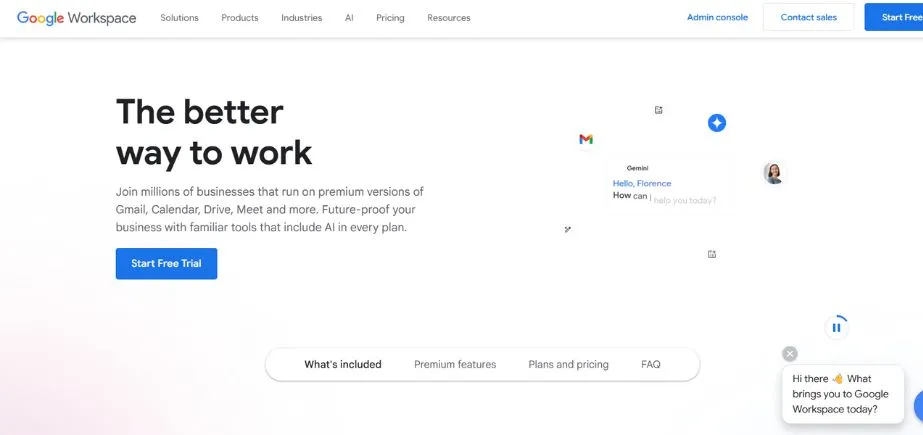
Google Workspace is a combination of key business tools in a unified environment that allows effortless cooperation despite geographical location. Gmail also offers professional email using your own domain, which builds credibility with customers and partners. Google Drive has cloud storage that is available to access from any type of device, and it has a large space allocation that can fit most startup requirements.
The combination of these elements is incredibly well-integrated; it is possible to add Drive files to emails, create meetings directly in Calendar, or get video calls with a single click. Sensitive business information is secured by strong security features such as two-factor authentication. With your Startup Tools, Workspace is easily scalable, and users and storage can be added without the need for disruptive migrations.
Key Features:
- Professional email hosting
- Cloud storage and file sharing
- Real-time collaborative editing
- Video conferencing integration
- Calendar and scheduling tools
Pros:
- Seamless integration across apps
- Real-time collaboration
- Strong security features
Cons:
- Storage shared across services
- The free version is very limited
- Requires an internet connection
Pricing: Free personal accounts with limitations
7. Trello for Task Management
Rating: 4.4/5
Website: https://trello.com/home
Best Use Cases: Visualising workflows and organising tasks using flexible kanban-style boards
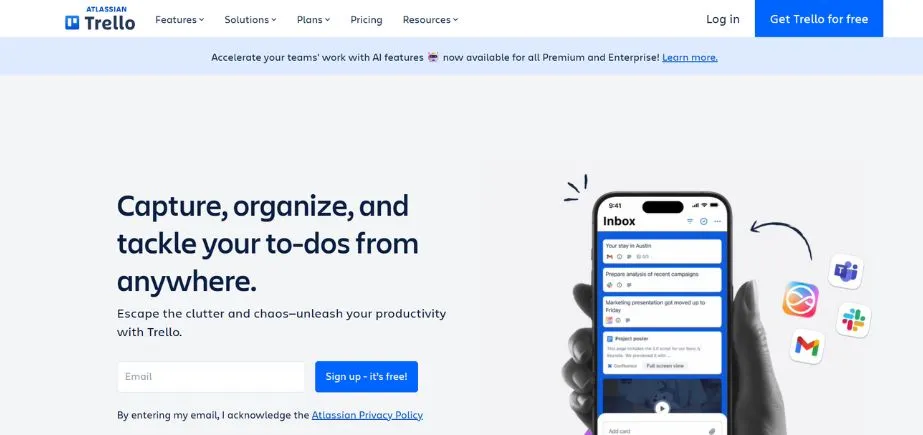
The visual clarity of Trello as a visual task management system is based on the board, list, and card structure of the system, which resembles the way humans are used to organising information. Individual cards can be delegated to the team members with accountability and responsibility. Trello has power-ups, which are extensions of the tool, and they can be integrated with Slack, Google Drive, and calendar programs.
The platform is flexible and can be used in a wide range of applications. It is not just built to track tasks, content calendars, recruitment pipelines, product roadmaps, or event planning; all work beautifully in Trello. Mobile life is not bad, and you can keep track of your strides or review tasks on the move.
Key Features:
- Visual kanban boards
- Flexible card system
- Team collaboration features
- Power-up integrations
- Mobile accessibility
Pros:
- Highly visual interface
- Extremely flexible
- Easy to learn
Cons:
- Limited reporting capabilities
- Can become cluttered
- Free version lacks automation
Pricing: Free for unlimited cards and boards; Paid plans from $5 per user/month
8. MailChimp for Email Marketing
Rating: 4.3/5
Website: https://mailchimp.com/features/email/
Best Use Cases: Building email campaigns and nurturing leads through automated marketing sequences
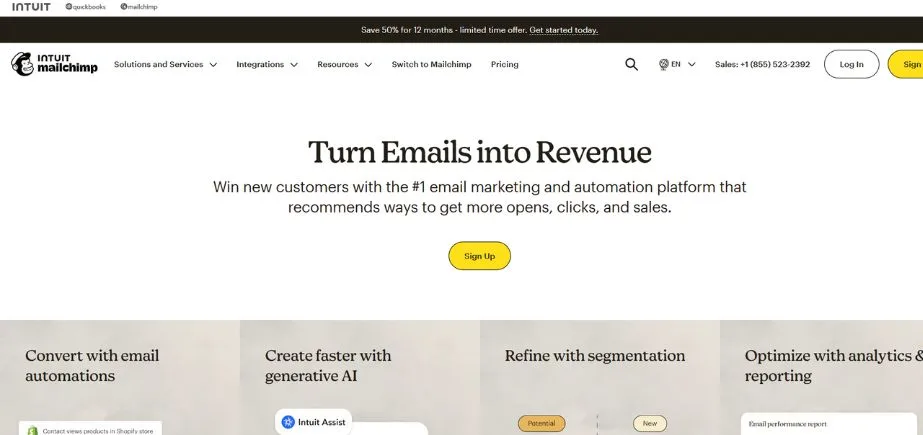
MailChimp allows startups to use email marketing without having to invest in any specialised knowledge or substantial amounts of money. The platform offers all that is required to create lists of subscribers, create compelling campaigns, and determine their success. It has a drag-and-drop email builder, which makes it easier to create, and professionally designed templates act as the base to get and make them fit with your brand.
Advanced sequences- welcome series when someone is new to the subscriber list, abandoned cart messages when using e-commerce, or re-engagement reminders on dormant contacts are made possible by automation features. The free plan of MailChimp supports two thousand contacts and twelve thousand emails per month, which should be enough to allow most early-stage startups to get their email marketing base.
Key Features:
- Drag-and-drop email builder
- Audience segmentation tools
- A/B testing capabilities
- Automation workflows
- Performance analytics dashboard
Pros:
- Generous free tier
- Comprehensive feature set
- Good template library
Cons:
- Interface can be complex
- Email sending limits
- Branding on free emails
Pricing: Free for up to 2,000 contacts; Paid plans from $13/month with increased limits
9. Zoom for Video Conferencing
Rating: 4.5/5
Website: https://live.zoom.us/
Best Use Cases: Conducting virtual meetings and client presentations with high-quality video and audio
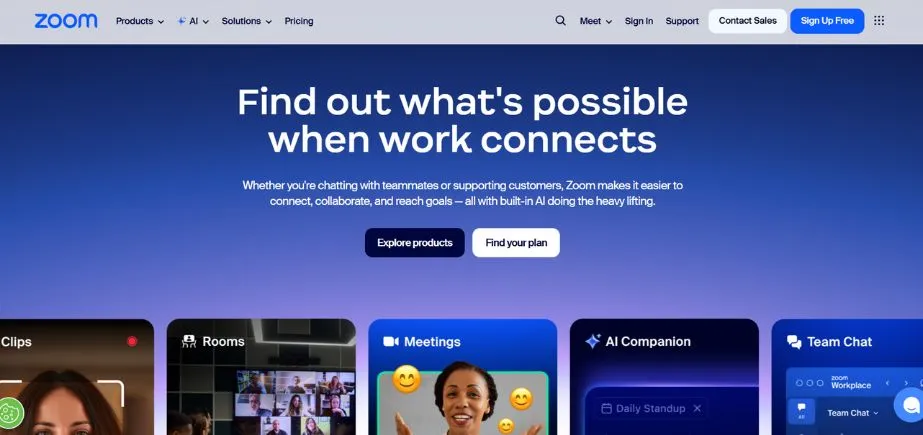
Video conferencing has become a part of Zoom, and it has become the company that can provide quality and reliable virtual meetings to maintain the connections of distributed teams. The platform is capable of managing all the faster one-on-one check-ins as well as bigger team meetings with exceptional stability and a sense of clarity.
Although the free version restricts the duration of the meetings to forty minutes and allows more than one person in a conference, the limitation, in fact, stimulates meeting efficiency. Zoom offers the much-needed infrastructure to enable founders to reach their remote team members, interview candidates, do customer research, or pitch investors.
Key Features:
- HD video conferencing
- Screen sharing capabilities
- Meeting recording function
- Virtual backgrounds
- Breakout room functionality
Pros:
- Excellent video quality
- Reliable performance
- Easy for participants
Cons:
- 40-minute limit on free
- Security concerns previously
- Can drain battery
Pricing: Free with time limits; Paid plans from $14.99/month per license
10. Calendly for Scheduling Automation
Rating: 4.6/5
Website: https://calendly.com/scheduling
Best Use Cases: Eliminating scheduling back-and-forth by automating meeting coordination with external contacts
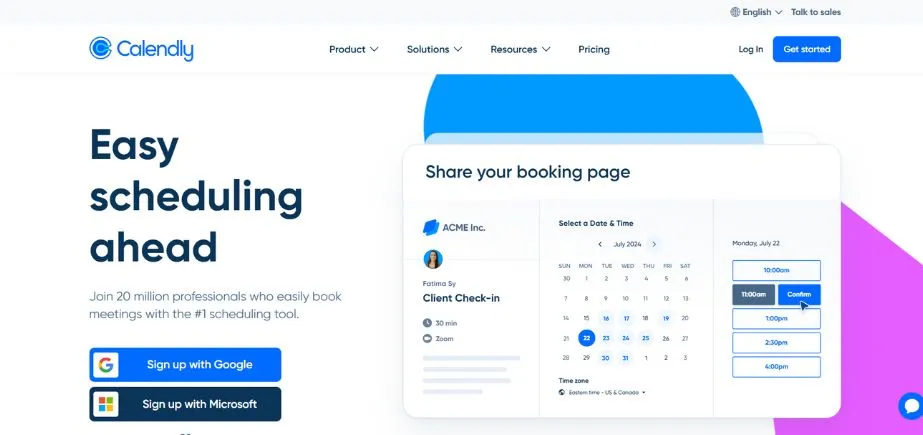
Calendly cuts off one of the most boring parts of the business communication process, an endless exchange of time trying to find a meeting point when both sides are free. Rather, you specify your preferences in terms of availability, and the platform will create a personalised booking page that you can share with other people. The platform also assists in scheduling teams, which enables the prospect to book a team member who is free or specific individuals.
In the case of startups, where founders have many external communications to carry on, such as investor meetings, customer discovery calls, and partnership discussions, Calendly has saved hundreds of hours that would have been spent on setting logistics.
Key Features:
- Automated availability sharing
- Calendar integration syncing
- Customizable event types
- Time zone detection
- Email reminders and confirmations
Pros:
- Massive time savings
- Professional appearance
- Easy for invitees
Cons:
- The free tier is quite limited
- Customisation requires an upgrade
- Less control over timing
Pricing: Free version available
11. Hootsuite for Social Media Management
Rating: 4.2/5
Website: https://www.hootsuite.com/
Best Use Cases: Managing multiple social media accounts and scheduling content across platforms centrally
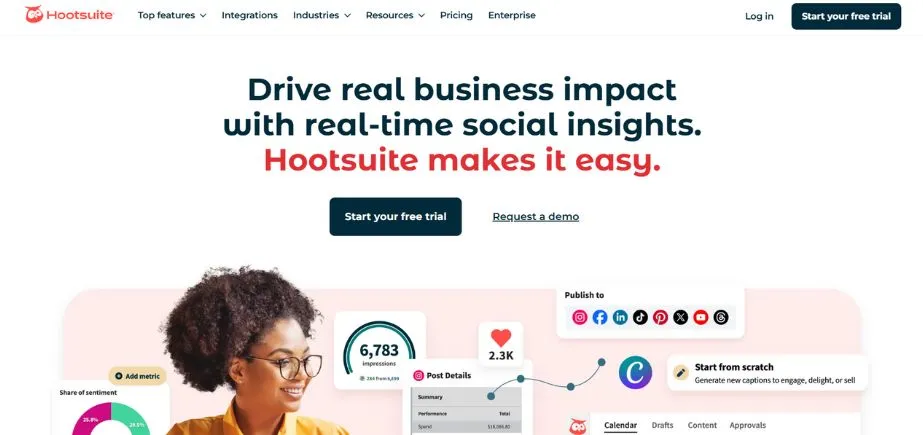
Hootsuite brings all social media management under one dashboard, which allows startups to have a presence on various platforms without the need to spend days on social media applications. It can work with such large networks as Facebook, Twitter (X), LinkedIn, Instagram, and YouTube, allowing scheduling posts ahead of time, as opposed to publishing in real-time.
Team working characteristics involve delegation of tasks, approval workflow, and similarities of brand voice among various contributors. To founders who are establishing brand awareness and community interaction, Hootsuite will turn social media into a strategic and manageable segment of your marketing mix, as opposed to a reactive and time-consuming area.
Key Features:
- Multi-platform post scheduling
- Unified social inbox
- Brand and keyword monitoring
- Analytics and reporting
- Team collaboration tools
Pros:
- Centralised platform management
- Efficient scheduling system
- Good analytics insights
Cons:
- The free version is very limited
- Interface feels dated
- Steep learning curve
Pricing: Free for limited use
How to Choose the Right Startup Tools for Founders
Choosing the proper Startup Tools is one of the most fateful decisions that young companies can make. Good decisions increase the speed of growth and efficiency, and bad decisions squander resources, build up technical debt that grows progressively harder to pay off. Critical analysis done based on your own situation produces far superior results than just a simple adoption of anything that your competitors are doing or software that is trending on your social feeds.
- Evaluate Your Real Needs: Starting with what is really needed, and what is a nice-to-have convenience, it is time to honestly examine just what needs technology solutions, and what does not.
- Take Account of Integration Requirements: The business world has become interconnected with the flow of data between applications.
- Consider the Long-term Costs: Although the free tier seems to be the focus, it is better to know the entire cost curve as you grow, as you can avoid an unpleasant refrainment in the future.
- Test Before Buy: Before committing resources to a software, most sites will give you a trial version or a free one to assess how it works.
- The Reliability and Support should come first: Startup Tools have narrow profit margins, and any downtime or technical problems of important business systems may prove devastating.
Conclusion
A great idea and relentless implementation are not enough to build a successful startup, but the ability to use the appropriate tools that will multiply your efforts and offset the lack of resources is. The eleven platforms that have been identified in this guide are potent solutions that punch way beyond their weight, and they carry with them functionality that would have demanded a huge investment a few years back. Regardless of the management of customer relationships and team teamwork, building brand identity, and marketing performance analysis, these Startup Tools targeted at founders cover the most frequent pain points that arise as a company.
The secret of maximising value out of these platforms is not to adopt all of them at once, but rather to carefully choose the solutions to resolve the most urgent issues. Begin small, with some basic communication, project management, and customer engagement tools and add more speciality tools as you need them. It is important to remember that technology must not determine your business strategy but be useful in it, and the tool of technology that can be used regularly by your team is usually the best one, even though it does not belong to the list of impressive features.
When you are growing, at a set time, once again review your current tools to see whether you still need them or you have already surpassed their restrictions. Startup Tools is also a dynamic process, and your technology infrastructure must change with you; it should always enable you instead of limiting you in the process of creating something impressive.
Also Read: Top Startup Companies in Delhi
FAQs
Q: What are the tools necessary for any startup founder the most at this moment?
A: Communication (Slack), project management (Asana or Trello), and customer support (BoldDesk) should be brought into focus first. These basic tools form the foundation of basic operational efficiency and then move on to special-purpose platforms.
Q: What is the way to provide startups with high-quality features without necessarily emptying their wallet?
Answer: There are numerous platforms that have Startup Tools that are discounted or free of entry into the premium options. Moreover, free plans with generous features can be used when the feature is in its initial phases, and the upgrade is not warranted by revenue.
Q: What is the best tool to use in a startup to develop new things or buy existing ones?
A: In any business but one that relies on that particular functionality, you should always use a developed platform. Custom creation is a colossal waste of time and resources that would otherwise be used in your real product and customers.
Q: How are the number of tools should be used by a startup use at the beginning?
A: Intend to have 5-8 core tools with all the basic functions instead of dozens of speciality platforms. The problem is that having too many tools makes your team more complex, more expensive, and divided into multiple interfaces.
Q: At what stage must the startups upgrade from free to paid versions?
A: Upgrade once free tier restrictions are truly limiting the business expansion – storage limits are preventing business running, user limits are barring team members, and features are absent that are directly affecting the revenue. Error upgrading on the basis of need rather than convenience.
Explore more: Top Fast Food Business Ideas